

Show Notes
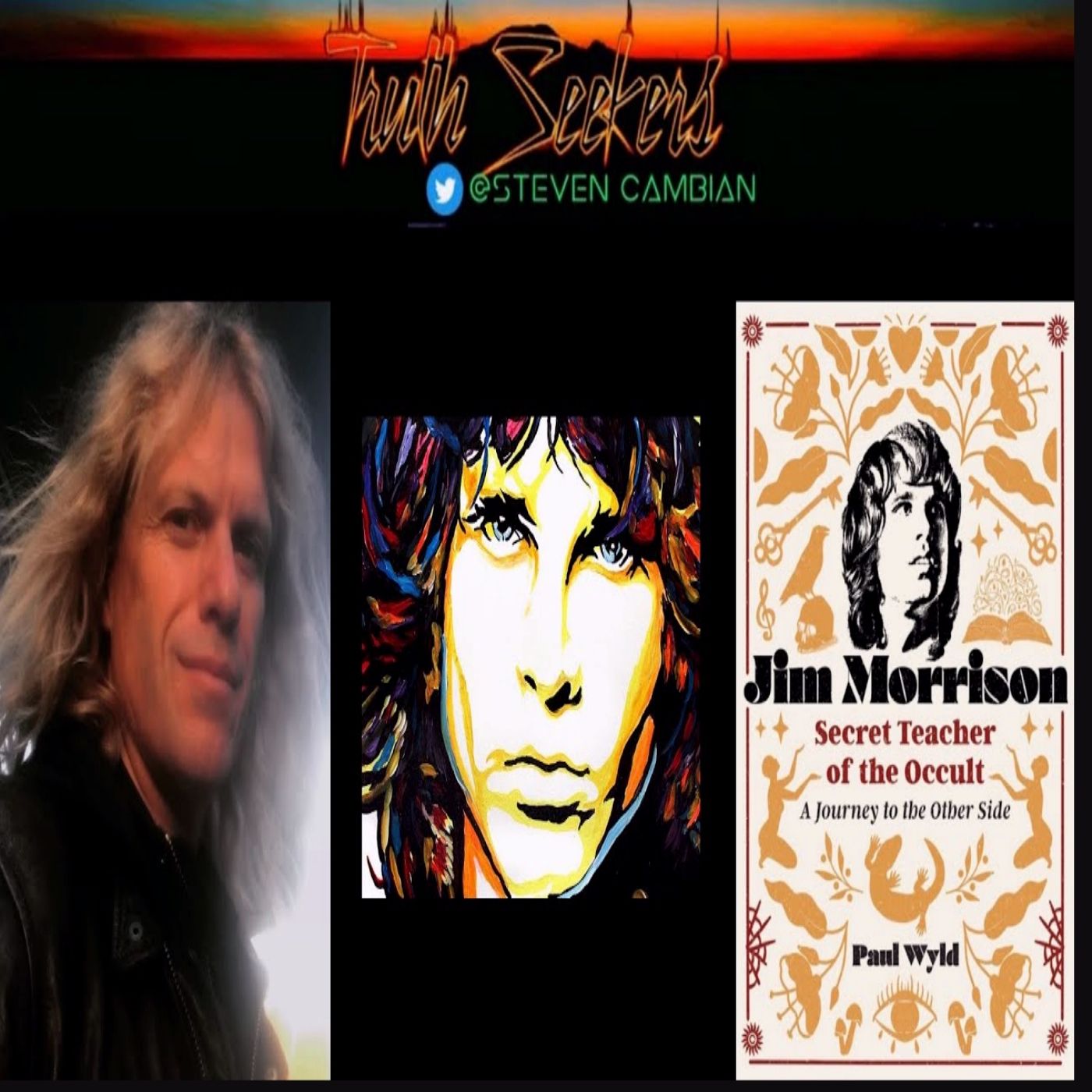
Jim Morrison, secret teacher of the occult, with author Paul Wyld.Music by Karl Casey @WhiteBatAudio
Content created here by Spectral International, LLC.
Buy me a coffe (or 100) to support the show :
https://buymeacoffee.com/truthseekers
Music videos by Simon Fly.
Visit our website here : https://truthseekershow.com
Buy some merchandise to support our show :
AMAZON STORE :
https://www.amazon.com/s?rh=n%3A7141123011%2Cp_4%3ATruthseekershow+Official+Merch&ref=bl_sl_s_ap_web_7141123011
Subscribe to our youtube channel here :
http://www.youtube.com/c/truthseekershow
Follow Steven Cambian on twitter : @stevencambian Join our Patreon : https://www.patreon.com/stevencambian
Donate by paypal : Send a paypal to TRUTHSEEKERSHOW@GMAIL.COM
Any amount you wish. Please include your chatroom user id, and any message you would like me to read on air. We read every paypal message we are sent and thank every person who sends any paypal support. Listen to the audio podcast : https://www.spreaker.com/user/14526799
Email us : TRUTHSEEKERSHOW@GMAIL.COM
We use streamyard to run our show! Use our referral code to sign up for or upgrade streamyard. https://streamyard.com/pal/d/6711617069252608
Show Transcript
Straight. When you're strange. Pass you do when you're not. Wag when you're on one streets, when your stove.
Pacis when your strange, when your stay. One nine person, you straight, you shri strange when your. Story when you're string. Faces will go.
When you're. When when you're long, nor shame. When mister, if you're stay, you want to do. When you st.
When you're straight, when you greetings and salitations, friends, and welcome back tonight. We're going off on a tangent, and to be honest with you, have a lot of tangent shows planned with different subject matter. We can't keep covering the same subjects and people, and so I've been sort of trying to broaden our horizons. And one of the things that I love best here is the ability to interview authors of interesting books, and tonight will be one of those kind of shows.
For those unaware, I was a huge Doors fan growing up. Now I realized that the Doors were way way before my time, but the nineteen was it nineteen ninety one film that Doors really did change my life. I was kind of directionless, and I know I want to be some kind of artist involving computers, maybe music, film, not really sure what I wanted to do, and that film sort of really changed things for me. I kind of watched that movie hundreds of times and when, yeah, I think I want to do that.
Not the darker side and some of the stuff, but certainly the songwriting and Jim Morrison became sort of a pivotal figure in my life. I started researching him, reading all the books, I watched that movie over and over. I start buying the entire I still to this day, I still have the entire Doors discography on vinyl. I would go to the used music stores and collect any Doors albums, and then I would sort of listening to the Doors music, especially because I was sort of a keyboard player synthesizer guy, and I would focus on Raymond Zerk's keyboards in many of the songs.
Taught me how to play sort of for some of my own songs. And by the way, I realized that I had covered that People Are Strange song some I think it was twenty years ago now, and so I decided to start the show with it. So the book is called Jim Morrison's Secret Teacher of the Occult, A Journey to the Other Side, and it's by Paul Wilde here. I'll try to give him a good plug and hold this up here.
And I'm a terrible show host. Things are a little rush today, so I don't have the links for where you could purchase it, but we'll get it from him and we'll put it both in the live chat and in the description of this video or podcast. I don't really to be honest. I got the book a little late, so I haven't gotten through the whole thing, but I did make some marks, and there's some incredible points made in this book For those unaware.
Jim Morrison was very into the esoteric and the occult. Was a truth seeker of that error, and many of those sort of ideas that he had in that search for secret knowledge made it into the song lyrics and music, and I really think that he was an an incredible and interesting figure. Selfishly, I'm so sad that he died so young. He was a member of the so called twenty seven club.
He died at twenty seven years old, much like Kurt Cobain and many other rock stars. I always selfishly think if he had just lived, how many more incredibly great albums of music would we have possibly gotten out him? I know that's a selfish thought, but that's what I think every time a songwriter. I really enjoyed dies.
I thought it with Tom Petty, I thought it with Kirk Cobain and all of those grunge guys, you know, Chris Cornell and so many other great rock musicians. So let's begin our journey. We'll bring in Paul Wilde. Welcome, mister Wilde.
Thank you, thanks for having me. Oh, it's so good to have you here, because you kind of reminded, you know how you you're a musician, and you know how you get so into a certain band or artist, but then then he kind of burn out of it and you move on to other things. Like right now, I'm I'm listening constantly to Genesis, Bill Collins solo albums and uh and Peter Gabriel solo albums, and I haven't really listened to the Doors. But I spent so much of my childhood in my room with a record player, you know, uh, and it really made me want to be a songwriter.
That movie, The Doors made me want to be a songwriter. Kind of scared me a little bit about the darker side. But let's begin with a little bit of history. A lot of people may not be aware, but Jim Morrison's father was like a Navy admiral.
Right, And there's someone in a live chat claiming that his father worked for the CIA, and your research have you what do you think of that, because a lot of people think that he was so sort of a anti CIA, counterculture guy. Jim Morrison's father was like one of the most outstanding officers like America ever produced. He is a graduate of Annapolis, the Naval Academy. He flew Hillcat fighters in the Navy during World War Two.
He was present at Pearl Harbor the day that it was attacked, and he was an aircraft carrier captain the commander the USS bon Hambi Richard, and he became a rear admiral. I mean they were grooming him for like to become part of the Joint chiefs of Staff one day. Is it possible that he was an intelligence work connect with the CIA, Probably, but I haven't found any evidence to back that up. Oh, and.
A lot of the Jim Morrison mythos revolves around his sort of shamanic figure, right, being sort of a shaman and the teacher of the tribe. And when you see and and his incredible use of hallucinogenics. Like I have to say that, like, I think that influenced me as well about Jim Morrison because when I got a little older and those things became available to me, like I wanted to see what that was about. And he certainly, uh you know used was was a big supporter of like expanding your mind.
And there's that famous scene in the movie where he's arguing with the band and the band tells them, we took drugs to expand our mind, not to escape. What do you think of Jim Morrison's sort of exploration of all those hallucinogenics and how that might have influenced him artistically. Well, well, first, just like you and I when I read No One, You're good said alive, like great book. My yeah, my friend jimmy nine high school.
So we got to find out what this acid is all about. You. I've talked about that in the introductions. Look firstas trip.
Yeah, that's what got Jim Morrison's what got me off on like the crazy path pathage like at Elex. Also, that's a that's like a huge topic, right, So. The GMT is becoming hugely popular now did you know that they're doing experiments with long dose DMT, trying to keep people in that d MT environment for hours on end by IV dripping it now, and they're trying to map hours, and they're trying to map the d MT sort of realm. They're trying to map it, and they're finding some crazy things, like people from different cultures, different religions will say the same things about the d MT realm that they go to.
It's almost as if it really might be a real reality or altered reality, but you know, like a different dimension that you visit when your mind is influenced by this. I haven't tried d MT. I have a friend that he said he did it and he had a an out of body experience, like he could he was high up on the ceiling in his room and you could see himself down on the couch and with what seemed like an eternity. We're starting to go places again with psychedelics, and GMT is a is a big part of that for sure.
So when Jim Morrison was born in nineteen forty three, like I start off the book this way, like, yeah, I. Didn't know that that's the year they LSD the same year he was born. What a coincidence, right. Enable lover of LSD and that that experience it happened he was three years old.
You know where where it took places? Right where they the Manhattan Project happened at Los Alamos. But the Adam and Oppenheimer convened those scientists to begin the Manhattan Project in April nineteen forty three, And that it was the same month and year that Sandoz accidentally spilled the l the LST twenty five things called scientifically that he put on a shelf in nineteen thirty eight and nineteen forty three. It down to just be examined on what he was doing with it.
But he spilled some of it on his hand, and he had a had a very interesting bike ride going home, right you. Know, yeah everything, yeah, yeah. Do you imagine like you're a chemist and you and you just spill it on yourself and like you're the first guy in mystery to have an LSD trip. I mean what it would did spill the whole file on his hand?
I'm like, esus, like how much how many micrograms did this guy take? Right? So he went back to his boss. He's like, I had a pretty interesting time here.
We got to check this out. So somehow LSD makes its way to UH to the United States, the CIA, and the CIA tried to use it as a truth serum. Yeah, backfired on them. Their CIA agents were like discovering God and we're like, all right, I'm out of the agency, Like I don't want to do this with my life, you know.
And America's top favorite CIA project was that Operation Night Climax where they got hookers and they dosed everybody. That's crazy. Our government did that, like, hey, you come into this whorehouse and get dosed. You know.
I think they did that. And they did that in San Francisco, right, They had the hook yeah, bring them off. Yeah, And they had like secret cameras behind there and they were filming them and all that. They wanted to see what they would do, Yeah, what would happen?
And what are you gonna do. You can't go home to your family and say like, oh, I was at this whorehouse and I got toased with some kind of loucinogenic drug. So it was a good cover. Nobody talked.
They just you know, trip their balls off and then they got to learn about the effects of it. I guess. But yeah, it's crazy that the government is fof of this kind of stuff, you know. I strongly recommend reading a book called Acid Dreams.
I forget the authors, but the title is Acid Dreams, like the Social History of LSD. I think the stuff title excellent book and the best reads I've ever had, an amazing read. So Jim Morrison would when he graduated UCLA he you could buy acid over the counter. When in nineteen sixty five, when when Jim graduated from UCLA.
So he was just eating up like M and M's man, you know, yeah, just. Like I remember growing up. I remember growing up. I would only take one tab, but there was always a friend of mine he would eat like so many tabs, and I would go, dude, you're gonna go insane if you keep eating these things like that.
When I was doing it, it was just a little paper, you know, and you put under your tongue. So that's some girl in high school. Some girl was like dealing out LSD and the cops came looking for it in the school one day and she stuck that whole sheet not to get caught down to her pants and all hundred hits like soaked into her skin. We never saw her again.
Pretty pretty freaking crazy stories, right, But so they outlawed it. So it's a strange history. So the so tried to you as a tree here, that didn't work, and then it just somehow got into the hands of the pharmaceutical industry they could just sell. And then in October sixth, nineteen sixty six, sixty sixty six, they stayed at California outlawed LSD.
They were using it up in Canado to for alcoholics and to great success. People were just they just stopped drinking. After the head LSD experiences. Well, yeah, I certainly remember that there was like a lot of weird Yeah.
I used to call them like emotional tremors towards the end of an LSD experience, and you had these profound realizations about all these different things. So I could see where somebody that's, you know, having a real tough time drinking themselves too much or drinking themselves to death could have a trip and think about that and reflect on that, and maybe the drug shows them the error of that path and they figure it out. Right. Yeah, so many, so many people have like you know, they become Christians, they become Buddhists, they've become you know, activists, environmental activists.
They've it has done something like you know, to them that the most part has a really positive effect on your life. And I, you know, I just just looking into all of that. It's like, you know, you know, the creators, like, right, so, if you're gonna build a weapon of mass destruction, like you know, here's a here's a drug that's going to make you realize just what you know, you're gonna blow life up? Would you know what the fuck?
You know, it's just very strong. It's very strange that those things happen at the same time, you know, and Jim and you know Jim Morrison's birth year. You know, then Jim Morrison has that experience with the Indians that that the dying Native Native workers that leap said leaped into his soul when he was three years old at the traffic accident. And those nations are on their way to work at the at the laboratory that they were going to build make a permanent installation the Natives in the area in New Mexico.
They thought, well, they're doing something contemporary, but didn't they stayed. They went on to make like you know, the first humor, thermonuclear weapons and all that kind of stuff, and the names were like, you know, we're about life, like we don't want this fucking shit around here. It disturbed the whole community, know, the National Laboratory and all that. It's just strange that that happened to the eldest son of America's like you know what, America's most outstanding military officers.
Like yeah, and for those Indians, for those not familiar with the story, Jim Morrison was in his in his father's car and there was a car accident up ahead of them, and some Native Americans died in that car accident. And I think to the end of his life, Jim Morrison swore that those Native Americans as they died, flew into his soul and and sort of affected him in some way at three years old, which I guess that. That was the most he said, that was the most significant experience of his life. And after writing this and looking and it's like I really have to walk with Jim Morrison to write this, like I believe him and like I can see why he just felt so so strongly that that that happened to him and the effect that had happened, that it had on for the rest of his life.
It just seems, especially from thirteen years on years old on, his spiritual wakening really begins in high school. I mean he's he's he's checking out, you know, books on thirteenth fourteenth, fifteenth century demonology and all kinds of other spiritual stuff in the Library of Congress, and he's going to always obscure bookstores, you know, all over like you know, Washington, DC and Alexander, Virginia. He was a voracious reader. By all accounts from people who knew him.
He was constantly reading books, which is interesting exactly because he wasn't just a blown out, like drug addict rock star. He was a oh no, not at all, Yeah, not at all. This is somebody that could have been a sociology professor. If rock and roll hadn't existed, he probably would have been an experimental filmmaker because he wanted to go work with Jonas Me because he is considered the godfather of experimental film in America New York.
Yeah, and interesting that you said in the book. You said in the book that he decided music was easier to break into because you didn't need all that equipment and extra and extra personnel. You didn't need all that gear and all the all the expensive equipment. You could just buy a couple hundred dollars worth of you know, instruments and be a rock band, you know, find two or three friends.
That's interesting. You'd have to go to New York where it's cold and get a job and pay rent and bills. I didn't think you want to do that. He was like, fuck it, and I'm just going to go to the beach and sleep under the pier.
Right. So when he graduate from Muslin sixty five, you had an amazing and amazing girlfriend named Mary Warbelow. Murray's IQ was higher than Jim Morrison's. His was one hundred and forty nine.
She was even more well with than he was. This was before Pamela e then right, yes, And when. He graduated his parents he was living in his Goshen Avenue apartment in Westwood over there by the over here by the hospital, and his parents pulled the plug on the rent and Bill said, hey, I'm graduating and you're on your own, right, And Mary was like, all you know were books, Go find yourself. I think Mary was like, and if you think you're moving in with me.
You know that's not gonna happen. They broke up, and yeah, and Jim didn't. He hated Hollywood, he said, like he told his friend Bill Cosger, Hollywood seir for the masses. Jim Morrison like French New Way films.
He led contempt by a dark. His favorite actor was Jack Palance in that movie with Bridge of Bardou, amazing film I saw in the theaters a few months ago. He like friends, watch True Fox movies on YouTube. You can see him walking on the set with his friend Agnes Farda on one of friends.
Watch your Fau's films. That's the French guy and uh and Close Encounters of the Third Kind if you've ever seen that movie. My whole audience as as well. Yeah, yeah, does a doesn't you know.
Jim Morrison was like in some very intelligent, very artistic, you know, really really cool stuff. You know, it was all about He seemed to be all about art, music and culture and literature and ancient teachings as well, which is a weird mix. And you could kind of see that in his or hear it and in a lot of his lyrics kind of reflect this sort of like weird sense of artisticness. And one of the things I like about the Doors is they weren't like a lot of the other bands of their error.
They were very unique, you know. And you know what's interesting too, is I remember trying to I was trying to start this band and we couldn't find a bass player. And due to my fanhood of the Doors, I said, we have a keyboard player, but get a second keyboard, learn to play the bass part with one hand and play the other stuff, you know, And that's what we did. Yeah.
Yeah, we were very successful. And no one ever said where's the bass player? Not one person ever said where's the bass player? And uh, you know other rock guys, Oh no, you got to get a bass player.
Then occasionally we had one, but they did ever last that the band was a guitar player, a drummer, the keyboard player, and me and I just sang because I couldn't I could barely sing, let alone sing and play an instruments see time. So that's how that worked. Yeah, do you think that, uh do you think that if he if he hadn't become a musician, he would have eventually made films or do something else. He was so artistic.
He had him do something in the arts. He couldn't do like a day job, you know. No. So I mean, if it wasn't for rock music, he, like I said, he would have been a filmmaker.
He would have been you know, he definitely would wrote poetry, because that's what he's one of his first loves. He would have wrote novels, he would have painted, he would have found the traditional you know, artistic outlets. But you know, rock and roll was brand new. He said, it coincided with his life, you know, the birth of rock music.
And like the very creative person that he was, he's like, wow, this is this is I can be artistic in this whole new realm. I can I can bring my shaman itself to the stage and opened up my secret teacher soul this way. This person was on a mission. That's what I picked up after I read The Secret Teachers of the Western Role by Gary Lackman.
Jim Morrison was something called a secret teacher. This is a person who is deeply in touch with that other reality. That's why I chose a quote to begin my book, the first Jim Morrison quote from his poetry where he says reality is what has been concealed from us for so long, and that's what he wanted to turn people back onto, like this thing that's been buried for four hundred years. That if you know, if you went out there and said, hey, like you know, you know, I'm being in touch with cosmic consciousness and the unseen realms and the spirit world.
Yeah, getting in touch on my Yeah, I'm getting in touch on my divine self. They're like, hey, man, you're off to the stake, buddy, Like you're off to the inquisition. You're out here, you know. And suddenly in the nineteen sixty.
But it was such a rebellious time, the nineteen sixties, right, so people were looking for other paradigms of of you know, knowledge and things like that. So he he came along at the perfect time. And it is a it's in the It's in the It's in the movie too. And most famously like he uh, I had the same problem when I first started.
I was terrified of the audience. He would turn he turned his back to the audience, and the band would have to like yell at him to turn around and face the audience. He would just turn his back and sing the songs. He wouldn't even look at the audience, like so he's a little bit.
Of it like this, this is a this is a really big this is I have lots of problems that movie. We'll talk about that movie, but that that whole thing where it took him a while to turn and face the audience. Like, this is someone for eight years was reading. He was you know, reading and writing in his in his notebooks.
He was inspired by Franz Kafka to take journals because Franz Cofka, the European writer, journals all the time. So this is someone who was very private. He was a poem. Now he's like he was an inward looking person, right, he was an I n f P, just like Edgar Allan Poe was.
So that's what he was doing for eight years and then But if he's he's got astrologically speaking, if you're if you're of that frame of mind, like the guy has a Leo North node and Leo North node. People, when you go in your North node, you're you're born to be out there in front of other people. The champion was something really big and that was that poll. Right.
So not only did his life coincide with the birth of rock music. It coincided with the Western world's first occult awakening, like at the nineteen sixties, like you know, everybody was trying out well for four hundred years that stuff. Yeah stuff. Jim Morrison's rising sign was an aquarius.
You know this, this this person mentally physically is like if you want to go through his astrological chart, all this stuff, it all just comes together. And Fine just said to myself like, gosh, like the creator just have this guy made in a certain way just to do all of this at a certain time. It's just it's actually it's really breadthcha. He was so compelling him, like this is gonna be my first book.
You know. Yeah, it's interesting how he became. He really did become like the arc type of a frontman, and so many people, including me, I'll admit it, I emulated him. I got leather pants.
I was like, I'm gonna wear leather pants and black shirts on stage. And the reason why is because, yeah, but I knew that was timeless. And to this day, Paul Wilde, I can look at pictures of myself on stage and I don't look like like a you know, like a glam rocker or something that's stupid now, you know, just black leather pants and a black shirt and uh, you know you're the front man. You know, it's interesting that he kind of started all of that because so many others emulated that sort of style.
You know, I could think of so many guys with black leather pants and black shirts today. You know, I just saw, not that I'm a fan of them, but they're making your research and I just saw Creed and he black leather pants and a black shirt. You know, very more Morrisons guy. Thought when I saw that, you know, he sort of created that.
But it's interesting that he was so introverted because maybe you've experienced this too, if you're sort of an introverted, shy nerd and then suddenly you're fronting a band that's a total one eighty and you're expected to just do that. You know, so maybe that's right. I struggled with that a little bit, but it was easier for me because it was almost like a character that you create to do that, like a defense mechanism or something like that. But on the side, I tell you, eventually he just had to open up his gold right if he's gonna yeah, his mission through with music, he had to just open up.
So, like I said, like with poetry, it's a private actor, or if you're making film, it's a temporary thing you do with people then they're gone. You write a novel, that's a private actor, like a painting. But when you're a rock band, you're open to the public up live like that's yeah, yeah, that that that you're dropping everything. You're just exposing yourself that way.
So Jim Morrison, you get to two things. One, you know, he had the physical stamd and the looks and the talent to be a great entertainer and a great rocker. But at the same time you're getting you're getting this whole other person that comes along every once every one hundred, one hundred and fifty years, somebody is born to just like you know, wake you up. Yeah, poet, poet in the prophet.
That's what I always think about him. Maybe a poet and a prophet and we're the you're gonna make me go back on a doors kick and listen to I love. One of the things I love to do Paul Wilde is take an artist or a band and listen to their entire catalog from beginning to end, So I think I have that in my future. But on the esoteric and occult side, I know the movie, uh and the and that book.
Uh. They they mentioned like he was involved with some women that were like witches and things like that, right, So he was. He, yes, he was. He got he got involved with Patricia Connelly who was a practicing wick in ju was a witch and they were I don't know if if it went as it's depicted in the film, but they were married in something called the Celtic not tying ceremony.
Yeah, so it's like a wick and wedding, not a legal one. Right, that's right. Like someone asked me in the previous podcast, they thought that Jim Morrison ever participated in any kind of a cult ceremonial, magical rituals. It's possible that he did with her, but there's none that I could find that are documented.
But Patricia Conneely was was certainly certainly someone who who participated in those things, that's for certain. Jim Morrison as far as his own when you talk about the occult In relation to Jim Morrison, I discovered that he got a book called the History of Magic and the occult by Kurt Seligman and high school. And this is one of the very first written counts of the Western esoteric tradition that talks about these secret teacher type people. And I read that book carefully because I I knew that there was a relationship between that book and Secret Teacher of the Western World that I just that i'd read, and there is, I mean, it's just an earlier version of the same thing.
And I found out about this on YouTube. He had a roommate at FSU in nineteen sixty three named Ed Martin, and he was trying to auction this book off and Jim Morrison signed it to his friend a Christmas gift nineteen sixty three. There's a picture of it in my book. And Ed Martin said that he was one of the smartest part of the smartest person that he ever met.
Right. And he found that book in the last two years of high school in Alexandria, Virginia. So Jim Morrison kept that book for a few years. You know why he gave it away, as is anybody's guests.
But after reading this book, it's a magical book. It's a very artistic book. Kurt Sullivan was a surrealist artist who escaped the Nazis in the forties, moved to New York. Like the rest of them.
They intermingled with all the local you know, painters like Jackson Pollock and all that. But there's surrealist surrealism ideas that that is birth and Freud and the Unconscious and everything like that that gave birth to abstract expressionism. And Kurt seldom decided that he was going to write a book that goes to the roots of of modern art, what people were doing in experimental filmmaking and and uh and symbolist poetry and and and surrealism and data and all those things. And I'm sure Jim Morrison just just took to that.
The fun. The fun that I got is that the same effect that Gary Lackrin's Secret Teachers the Western World was having on me was the same effect that Kurt book was having on Jim Morrison. Because I'm going to have to read that now, But I love stuff like that. With Jim Morrison, you got you gotta do some geeking out, you know, yeah, yeah, sure, but all great reading, fantastic reading.
And so then after that I knew that I was onto something and that I saw Lawrence of Arabia. I found out he watched that film too, and in film school. And you know that film comes out of original film, Yeah, comes out of nineteen sixty two, the same year The Rolling Stones were formed, and that film is all about this person. It goes off into the desert and they become somebody else.
You know, they they wreck their identity and you know he's t Lawrence is like, you know, the first rock star of the twentieth century. When he was leading the Arab revolt between nineteen sixteen and nineteen eighteen during World War One, he's like, here's like this obscure British officer who decides he's gonna go lead the warring Bedouin tribes to freedom. He's gonna fight off the dying Automan empire of the Turks, and he's going to make sure the French and the British don't colonize them. And you know he was up there getting like, you know, photographed and his white cafea and everything like that.
And I think that film helped to put a lot of ideas into Jim Morrison's mind that you can have a very very elegant, flamboyant looking rebellion like t Lawrence in that movie. I'm sure make Jagger had the same idea. A lot of rock stars from David boy On say that that film had a big effect on their own on their on their their own conscious, isn't it? Isn't it interesting that?
And I kind of, to be very honest, I was having a bad family situation when I really started playing shows and touring, and uh, Jim Morrison sort of divorced himself from his own family, even going as far as telling people his family was dead, and and sort of recreated himself in whatever image he wanted. That's interesting from a psychological standpoint. You know, what the risk between him and his parents were that may have contributed to that, or it wasn't just he felt so strongly that he wanted to recreate himself that he wanted to just divorce himself from his previous self, or you. Know what I mean.
I think, yeah, I've thought about this, right, that's great questions. So you know, his like I said, his father was this like, you know, very intelligent, you know, very you know, commanding officer. Jim Morrison called his father the commander throughout his childhood. You know, then you have Jim Morrison, right, you know, who has an entirely different, you know, life path like the Morrison family.
You know, they they they have a long tradition of having contributed family members to service in the navy. And you know, Jim Morrison did not go in that direction. His father saw that he had no interest in that and kind of in his way, you know, it came to accept that, you. Know, he's forced men to it.
I know people who were forced into a military career they didn't want and it never goes well because they don't want to do it and they don't want to be there, you know. But some families have that tradition that sort of pushes you. You do it. So, yes, that's right that that didn't seem to happen here.
The Morrison family was not. That was not an abusive household. What was going on there is his father was a way a lot of as you know, his naval duties, right, and his mother she was doing the best that she could. She married a naval officer.
She did not marry an artist that was not his you know, Claire Morrison wanted was attracted to a military man, and Jim Morrison was anything but so I'm sure the relationship is kind of difficult, right, But Jim Morrison had to cut ties because you know it, he just he needed the space in the room, you know, to become himself. When he said, like, my parents are dead, I think he meant that in the spiritual sense, like they're they're just dead to me in this way that we we can't relate to each other. My father is commanding an aircraft carrier and I'm out there becoming, you know, a champion for something that is erupting in the world that hasn't happened in four hundred and fifty years. Like you see, the just hee, this needs space.
Interesting enough, I resonated with that myself because my dad was like a drill sergeant at home, you know, he was so strict and and so I went off on my own. We had a big going out, and I just went off on my own and like did the same kind of thing, just found you know, made figured out who I was without my family's involvement or influence, you. Know, And I think your experience that that's mine. Like, you know, my family, you know a lot of my people in my family wanted to me to become a Catholic priest because we're in the guns.
That's funny. Did you know I I spent twelve years in Catholic school and I even spent time at Saint Charles Seminary to become a priest. That's what my family wanted me to do. Yeah, and we're in the gad wanted me to be a priest.
We're in the Beguinness wil Book of Records of having contributed the most Catholic priest to the Catholic Church of any family in Europe. And I kind of said no. I'm like, hey, like I like girls, and like this is this. Is that was the deal breaker for me.
And you know, I don't know about your experience, but mine is they send you to the seminary. They start sending you to the seminary when you're still in high school. And then they they sort of needle you know, like, oh, you know, this is going to be a great life. You'll be an educator, you'll be helping people.
And they try to bringash you into it and I wasn't having it. I was like, now that the monogamy is the deal breaker for me, not monogamy celpsy. I just saw early on. I just saw it early on.
I'm like, you know, the Roman Catholic Church is just an extension of the Roman Empire. It's just like a like you know, spiritual colonization. That sold to me, like everything you guys are doing in the Catholic mass like you take straight out of like ancient Greek, you know, cult rights and things like that. I mean, even like that that thing on the pope's head, you know that that that that thing that Yeah, I don't know, I don't Yeah, it looks like it so it it looks like a fish's mouth because it is like like that that comes from a god, an ancient Phoenician god called Dagon, a fish god.
And that's that's It's in honor of a fish god. It's got nothing to do with Jesus Christ. So that was my That was my I called them out and all their shit growing up, and I just found myself in rebellion just by fucking being myself, you know, So. I know something about that.
So I'm also I was not aware. Are you aware of what his family's religious beliefs were like? Because I don't believe that I've ever heard about that, And I wanted to ask you question, what's his religion, what was his family's religious beliefs, and do you think that that influenced them, either positively or negatively in his music career. I could not find anything that indicates that his parents what his parents like religious spiritual preferences were.
I can't find anything that says that the family you know, went to Sunday, went to church on Sunday, or anything like that that they might have been a prosting. I don't know. I read that when Adamal Morrison Rear Admirald Rear Admiral Morrison retired, he was getting into reading the Bible and things like that. Beyond that, I don't think Jim Morrison was exposed to like anything having to do with Christianity, like through his family.
So you years of brainwashing, then there many years of brainwashing. Now that said, I don't know if you got to that point, And I know you just got the book recently, but I don't know if you got to that part of the book where in Florida, when Jim Morrison begins college and he's living in Saint Petersburg and after he meets Mary, Mary decides that she's not sure if Jim Morrison believes in God. So she takes Jim Morrison to a church and I. Think this is I didn't get to that.
Yeah, I think it's just as. Important as the experience of the Indians the three years old. They got to the church and Mary starts praying in the church to have the church of themselves, and you know, Jim Morrison's looking around like, you know, if the ship's crazy, like can watch you take me here? And this light, this little beam of this little point of light starts to grow in the back of church until it's a blinding light.
It scares the holy living ship out of both of them. And they did they run terrified out of the church. And Mary said, uh, that that was her answer from God to Jim. And Jim said, I don't know what it was, but he definitely was real.
Now it does surface, I believe that experience. In his poetry, he says things like, you know, thank you, oh Lord, for the white blind light. And at the beginning if you read the was in one of his poems, if you read at the beginning of the collective works of Jim Morrison that he talks about you know, the you know light, you know, why is why is light and blindness associated with holiness? And he concludes, you know, he talks about Saul of Tarsus, you know, like it was blinded, like gone on his way to Damascus and he became Paul right.
And then Jim Morrison concludes, you know, a man can assist in the salvation of light. So that those are some pretty astute spiritual observations about a pretty heavy subject when you're that young. Jim Morrison was a his his mind was was really quite advanced, like when it notes on vision, all of the and his post your book The Lords and the New Creatures, all of his observations about alchemy and his relationship with cinema. It's some pretty amazing stuff when you're eighteen, nineteen, twenty years old.
I'd say, this guy, when you graduate in sixty five, you had the intellection maturity of a thirty five forty year old with a PhD. I was, you know, I was continually amazed as I did my research. Yeah, maybe that comes from being a voracious reader. You know.
Like one of the things about people that read a lot that I find interesting is that they learn a lot, but they learn about what they want to learn instead of the formal education system where they sort of cram this is what you're supposed to know down your throat, and you may have zero you know, Like how many people have a real interest in things like trigonometry or sociology maybe, you know, or literature, French literature, some other stuff that they try to cram. You know, you go, I have zero interest in this. I just got to get through this class, you know. But when you're self educated by reading a lot, you know.
And I just wanted to show this collective works of Jim Morrison poetry, journals, transcripts, and lyrics. It's available and awesome. Yeah, it's available in audio book as well, which I like because I have long rides to a cabin in the Poconos, so I like audio books. And I mentioned that I'm a terrible show host.
So before I forget, where can people get this book? Before I forget? Your book? So the book came out a week ago today, and right now you can order from Barnesnoble dot Com and Amazon and your favorite online vendor.
Okay, and some just starting to get shelved in the Barnes and Noble source and other bookstores around the country. Good for you. Yeah, so then it's it's it's going to be released in the United Kingdom on October twenty fourth, and then in Australia in the on November thirteenth. I have a Barnes Noble not far from me, so I'll check it out.
One of the things I always doing when I interview an author, if their books in Boards and Noble, I go and I turn it so that it's right in front of people instead of you know, sometimes they just put him in a row and you see the spine, but you don't see the cover. I go and I turn it. I do the same thing with my favorite authors. That's awesome.
Good for you, yeah, well, good for you getting in all the bookstores too, because Amazon is one thing. But you know, people are some people are still buying uh, you know, physical books, and and they only buy what they see at the bookstore. They don't go on Amazon looking for certain things. You know.
I'm only a few chapters in because I got the book a little later, but I already see this as a great companion to some of the other books about the Doors. So if you are a Doors fan, you're gonna love this book. And even if you're not, I think you're you'll like the book when you see some of these esoteric and occult connections that Morrison had and put into his work. Yeah, it's tragic that he died so young.
And is he like the first Well, him and Jimmy Hendrix. I don't know who died first. That that whole twenty seven club, which was sort of resurged in the nineties when so many rock stars died at twenty seven. It's a real shame.
Yeah, it's so. Jimmy Hendricks and Janis Joplin. They Joplin too, they went. Before Jim Morrison, and Jim Morrison used to, you know, get drunk and tell other people, Hey, you're drinking with number three, you know.
So the end of his life is terrible. And that comes after the conviction in Miami of the famous you know, March first, nineteen sixty nine show, where it's alleged he exposed himself to Yeah I did. I did. I have that part bookmarked because it was such a pivotal part of his life and I thought that sort of contributed to like maybe some depression or some there was a marked change in him for those unaware.
At a famous show in nineteen sixty nine, he sort of I don't know if he got too high or what happened, but he was like yelling, screaming, raving and ranting. He would sing one song and then he would just mumble to another song, and then he allegedly exposed his himself that you know, showed his private parks. And then the system, which was don't you think that the whole sort of system was sort of scared of him because of the rebellious teens and the rebellious youth that he was sort of a figurehead leader for, and they pounced on that situation where he allegedly exposed himself to try to take him down. It seems so stupid today because Paul Wilde, have you seen that they have these I don't know if they're gay pride parades or what they are where people could walk around totally nude.
Today you can do that. But back in nineteen sixty nine, he apparently allegedly pulled his pecker out or something. And one thousands photographs were submitted in evidence. Not one showed it, not one eyewitness testimony.
Yeah, but they crucified him over pulling his pack around. Basically, they crucified him they kept him tying up in court for months right over this stupid charge and. Robe Robert Kreeger in his book to Set the Night on Fire, he says, like the one charge that did drop was the one who's actually guilty of, which was public drunkenness, like he should have wasted to the show. So yeah, they found their excuse to nail them.
So five days after that show, on March fifth, nineteen sixty nine, the day the warrants were issued for his arrest, the Miami FBI Field office, they sent a description of that show saying that he exposed himself and they sent that memos straight to the office of none other than j. EDR. Hoover, the FBI. Yeah, it's just crazy to think about today that, like you know, like what, like, let's think about this for a second.
If a rock star today pulled this packer out in the middle of the show and then put it back and just went on with the show or whatever, I don't think anybody would even care. Right that happened, Like that happens like back. In nineteen sixty nine, they wanted to get this guy and shut him up and shut him down so bait because he was so rebellious, an anti establishment that I think they needed. This was a good excuse, and they sent these reports to the head of the FBI.
It's crazy to me that he had an eighty page Yeah, that's right. When he had an eighty page FBI file. His father actually like tendered his resignation and went to the Navy say, hey, I resigned because you know, my son is such an embarrassment. That's a big deal.
Oh that is a big guy. Didn't know that. I never heard that before his father resigned his commission with the Navy. He offered to resigns offered to resign.
That's a big that's a big step, Like, I'm just gonna end my career because my son is like that, being that embarrassing. So they just weren't gonna on top of Jim Morrison's like very flamboyant rebellion, which I'm sure he must have had thoughts, like I think, you know, he must have felt that the US government at some point was was gonna come at him because of what he was doing. Right, But I just don't think that the especially the Christian right, which has so much influence, to put Nixon in the White House.
Nixon was the guy who was also the same trying trying to get John lenn out of the United States because John Lennon was about to go on on an anti Nixon, anti war tour with the likes of Jerry Rubin and Abby Hoffman, Like they're just not gonna have Jim Morrison out there like turning America's baby boomers onto cosmic consciousness and waking up to the other side and the spirit world and all this kind of stuff. Like they thought they saw him as a satanic threat, and that's what they were telling their politicians, like this guy's got to go. And they had their chance in Miami at him convicted, he had to part of his sentence with six months of hard labor, and his lawyers are like, if you know, they want to send you to Rayeer Prison and that's that's Florida's most notorious prison to this day.
Yeah, And just so people understand back in the day, they they would send prisoners and hard labor meant that they would basically give you like a sledgehammer and you'd be turning big boulders into little rocks all day. Just nonsense work, not real work, just like make you make you suffer. You know, all right, some of those inmates would go crazy and they'll take their sledge hammer and like crack it down on another inmate's head, like all kinds of shit like that went on. Yeah.
This so Jim Morrison remained on bond pending his appeal, and his lawyers told him, hey, like this is such such bullshit. We're pretty confident we're going to get you off, but you know, you're Jim Morrison. And he went to Paris to go find himself again, to start writing poetry again in March nineteen seventy one, and he was telling his friends, though, I was like, I want kind of reassurance that I'm not gonna end up in rape for prison. Of course there isn't.
There's no guarantee. Yeah, So it's lawyer is Laurya is just saying we're gonna get you off. But if I was Jim Morris, I'm like, well, fuck, like I have already been convicted of something that I didn't that I didn't do. It's clear that they're trying to nail me.
Now. Now France doesn't have an extradition treaty with the United States, he could have probably he could have just stayed there, you know. But I think I think it's pretty clear that this made Jim Morrison very very anxious, very anxious, and I think it contributed to just kind of you know, pushing him over the edge. Yeah, I would think that that would create a tremendous amount of anxiety thinking that you're going to go do our labor for time.
I mean, when he was in Paris, he stayed in Oscar Wilde's room where he died while he was waiting, while Pam and him were await. He's going from we're waiting to move into their apartment, which is located in the Maria district of Paris. And they they threw Oscar Wilde, the famous English author who wrote the Picture of Dorian Gray. They threw him in jail for two years in England, you know, for corrupting the youth of England, you know, with his with his literature in his book.
Yeah, Tolly fucked his health up. He's like, just like Jim Morrison, He's like, I'm gonna go to Paris and like, you know, see if I'd get my life together again. It didn't happen. He died, and then here's Jim Morrison staying in the same room, and three months later he's buried in the same cemetery as Oscar Wilde.
It's crazy, it's crazy. That's a weird, strange coincidence. And they they are among many. Yeah, so let's suffer a little bit about his sort of darker drug use, because he's most famous I think for you know, for the hallucinogenics.
But at some point he became addicted to heroin, and I don't think that goes well for anybody, but it became an increasing problem for him as time went on. Right, No, he was never addicted to heroin. He tried heroin in Paris, and I think that's what pushed him over the edge with a heart attack. That that's a that's the that's the complicated and mysterious that that's like literally a whole podcast in itself.
Everything in Paris. His girl, it was his girlfriend, Pamela, Pamela Curson who was addicted to heroin. Jim Morrison, Jim Morrison hated this. She was dating She's having affair at the French count Jean de Bitui.
You know, well he was she was dating Jim, and Jim just kind of turned blind a blind eye to that. You know, he didn't like it, you know that all very much. So, No, Jim Morrison wasn't wasn't on heroine. Now, Jim Morrison's drug of choice was alcohol, which is all kinds of every writer in poet existence, you know, likes her alcohol.
His friend, his friend link Franklesandro, his high school, his high school, his his college, his film school buddy that remained friends with him when after he became famous. To the Doors said that Jim Morrison liked to just go to the liquor store and buy alcohol because he felt like the whole underworld, you know, act of like buying drugs and the whole sneaky outlaw thing of it was beneath him that he just would rather legally go to the liquor store, you know, and buy alcohol and do that. And yeah, the Doors try their interventions. Robert Creeker said that, you know that he had his father talking about the drinking, and that he was off the drinking for two weeks then he went back on.
And Robert Krueger makes a point like, you know, back then it's his sixties, man, we were partying, we were young. It was like, yeah, it was maybe or it was. It was it was like aa and very you know. I think that that Robert Creek was like it wasn't like I could take to the Betty Ford clinic because no Betty Ford clinic existed back then, you know.
So yeah, but don't you think you're an artist? Don't you think that artists sort of draw from that Well, like you mentioned, there's so many, you know, great writers, artists, musicians. Sometimes they're big, they're big drinkers, you know, sort of loostens the gear of creativity. It has for me in the past, you know.
It can I remember one night, my h You're recording a song at the studio. You know, we're getting high and doing some drinking and having a good time. Then next day we went to go listen to what we did, thinking. We made a massive playback.
Yeah, we made ship. What the hell is this? Yeah, well you always made a sober guy in the band, that's like the designated recording guy, because no, come on, dude, you guys can drink. A couple of guys could drink a couple and we could get through this.
But you're not drinking twelve drinks and we're not doing this. I think with us artists, Like, we're sensitive people, and I think it's just like a natural thing to kind of want to heighten who you already are with like you know, with alcohol and with getting. And drop those inhibitions. Yeah, drop those inhibitions.
I ran a recording studio in Philadelphia for many years, and I was amazed at the number of people who would pay me good money to come in and record garbage because they were too wasted to actually do anything constructive. Some of mine would tell the truth, so like, look, you guys got to sober up where you're never going to get you know. Guys would come to me, like we want to record a full album and they could barely get through one song because they were so blasted, you know. And this was before, right before there was everything was so easy to edit, you know, so like there was still tape machines and punchins, you know, And I was amazed at how many people would get just totally blasted and not get anything done.
I need lots of money to hang out in the studio and get blasted. So you're right, there's a I don't know, maybe there's a sweet spot, right like some guys can figure that out. I used to know a guy that was a great vocalist, and he would drink two glasses of wine and then he would do his vocal tracks, and then maybe four hours later he drank two more glasses of wine through some more vocal tracks, just enough to you know, I guess some guys figure out the secret sauce and some guys go too far, right, and Morrison is one of those people that didn't have an off switch. You think he was definitely an alcoholic then right, Like he wasn't a guy that could have to drinks and stop.
He was a guy that went full till it seems to me. Right, I, well, I don't. That's another like really big topic. He did drink, and sometimes he drank all the way to excess.
It was just determined to get as fucked up as as possibly till Robert Kreeger. One night before they they went on there they did a tour this at the show this place called the Singer Bowl, that he was just determined to get drunk that night, you know, before they went on. It was a show that they were gonna play with the Who. But first of all, it was just Jim Morrison's like he was just hardwired you know, to see just how far he could push it, you know, that whole testing the balance of reality that he was into and just sometimes getting getting really drunk.
Was was it just this guy have a good parties and he would just open his mouth and people would just like throw pills into his mouth and he had no idea what the fuck was going into his system. There was a time, you know, there was a time when as as a frontman for a band, I thought that was my sacred duty, Like if I went to a party, like whatever there was. And this is in my younger years. I'm married, very stable children, but back then I felt like like if somebody had offered me something, I felt like I had to take it.
You know. I had some wild nights, especially mixing things. I always wondered about guys that mixed different stuff, like you didn't even know what you especially pills, you don't even know what you did, what it is or what you're taking, you know, And you're right. So he would just go to a party and if people had queludes were big back then, he would take those and then drink and then yeah, it's got it's gotta It's kinda wear you down, do you think that like when he first started doing that kind of stuff, it was like all fun and games, but then it got dark as as things progressed for him.
It seems to go that way for many. So in the beginning, he was generally very interested on breaking through in a very spiritual sense with with psychedelics, like his his friends that he that he that he hung around with and that he spent the night with, places like that. In between graduating from UCLA, when his parents pull the plug on his apartment, up until the time I guess when he could finally get his own place of Pamela with the doors, he was generally on a very very spiritual path of breaking on through to the to the spirit world in a shamanic initiation sense, you know, with psychedelics. You know, it wasn't just all about you know, partying at all.
Like he took that pretty seriously. That was that was part of his and that's the part of who he was to come to come through shamanically on stage. So in the beginning it was it really was about breaking on through and that's what that song is about. Like you know that he's he's he's quite quite committed, you know, to to this idea to affect the change in consciousness, you know, through his very provocative stage appearance in those songs and breaking on through his psychedelics.
He saw is the way at that time. So it didn't start off like the idea of access and everything like that. I just think, you know, suddenly he was homeless in Venice Beach and then you change. Man gets famous and suddenly like you're you're rolling in cash and you're famous.
So you made a point in the book that he was making a huge amount of money and all he ever bought himself was a Mustang GT. Know this either. I was very interested in that part of the book because I thought I know a lot about him and his history and saying the book that all he really ever bought himself was a Mustang GT. And he bought his girlfriend a Porsche yeh.
And he sort of favored like dive hotels and dive bars and like the gritty side of a city. You would think having all that money, he would have bought a mansion or you know, I mean they were making for the time, they were making huge amounts of money, right yep. So the ray Man Eric and John Denis Moore, Barbar Kreegor, Like, you know, they did a typical I want to typical. They did what I think, would anybody money invest by a home that kind of thing.
Not Jim Morrison. He's just like Bill sit and said, like his concerns were just of another world, like that just didn't interest him at all. He just wanted simply, he just wanted his mustang, a really good book, his journals, quiet time at his hotel room, the liquor store close by. That's it the guy, that's all he needed.
Frank Cassandra said, at any given time, sometimes you could see him when in between tours, he's just hanging out. So Frank Alesandra said, on tour he was, you know, he was more or less some better shape when he came back, like you know, he kind of gained a little bit. Wait and the beard came out, and he was very much in that whole Alan Ginsburg looking Alan Ginsburg about the beard, right, And you could just see him talking to himself, like sitting in the cafes and restaurants and bars in Santa Monica Boulevard, just scribbling away in his journals. Because the guy's a writer.
The guy's a poet. You know, his mind is just so you know, just so open, like so you've got eight years of like you've got eight years of him just like just reading so much and then just suddenly he one day he just lights a match to it with all the LSD and like the marijuana and the ideas and the sixties are exploding around you and all this stuff. So you know, his thoughts and everything going on with him, like demanded to pay he pay attention to them, so you know, he just could care less about the lawyers and with the money and all that, I mean, I think the most extensive thing he might have done with his money was he he got his uh he invested in a closing boutique that Pamela Cross and his girlfriend was interested in getting. They called it femous.
I don't know what happened to that boutique. I think there was a lot of partying on them. I can image, Yeah. I can't imagine.
To get to heroin that she was a very good business woman. So maybe it was just like a vanity project and he funded it for a while for. Happy you know, it was pretty expensive. I don't know exactly what became of the boutique or anything like that.
But so do you think you know I was going to ask, then do you think that he was better when he was on tour because he was surrounded by his friends and bandmates and maybe some more support. But when he got on tour he would he would go off on his own and do the tortured artist thing by himself. I've kind of wondered that, like, maybe he would have been better off to be on tour more because you know this being a musician, like you party, but most serious, most musicians, if they're serious about the songs and serious about the band, they party to a certain level knowing there's a show tomorrow night, do you know what I mean? So, do you think that he would have been better off continuing with the Doors instead of the breakup and all that stuff, because at least he would be surrounded by his friends and have more support.
He really enjoyed being on stage, Like he told his sister that when the Doors became various famous and the tickets got more expensive than suddenly they're they're playing much much bigger venues and all like the hip underground clubs and around America, that he felt like he really had to give them their money's worth he took that seriously. He wanted people to it came for and he really really loved performing and he loved singing. He was he was born for that, right, So probably that you're probably right about that. In the beginning, the you know, the Doors were seen as as an avant garde, you know, kind of art house type of band, you know.
There those first two albums are just so wild and strange, right, but then you know, light my Fire got got really big, so at the same time that he felt the duty to give everyone their money's worth, you know. He told also told his sister that when he went to do recite his poetry, like the audience just didn't give a shit, you know, like just when when like American teenagers just come into your show just to like, you know, get drunk, have a good time to watch Jim Morrison. Like, I mean, they must have been like, man, I hope he starts a riot tonight. I hope he goes crazy.
And then you get there and you're getting always like you know these these I mean, I would have loved it, but and you're getting always like simplest surrealists inspired, you know, poetry lines and all that kind of stuff. That must have been like, well, what the heck is this right? And so that disappointed him that that did that part just you know, did disappointment. I don't know what Jim Morrison would have expected.
I mean, you get you know that that's not what what teenagers go to rock shows for, you know. To begin with that said he he really loved performing. So yeah, yeah, well you got to know the audience, I guess, right, because remember, you know I had I had so many different band members for some of the bands I was in, and one guy was like a classically trained pianist, and he decided that we should do like a twelve minute you know, symphonic sort of introduction. With no singing, and you know, and like I I went, okay, but I don't think this is gonna this isn't gonna work, Like this is going to go over well, the audience is like leaving the front of the stage as soon as two minutes of that when you know need a little more active, you know, like the kids were coming to mosh and party and have a good time.
They were coming to listen to a symphony for twelve minutes or whatever it was. I think it might have been fifteen minutes, you know, which at first I thought this is a great idea because I'll be backstage, they can go play that shit while I get ready Now didn't work at all, so maybe he Yeah, but I can understand. And just like Morrison, that guy was so pissed that nobody liked it because you worked so hard on it. And I'm sure he worked very hard on I mean, I've never really written poetry.
I write lyrics for songs and songwriter, which is sort of don't sort of poetry. But I can imagine, like people, you work so hard on something. I don't know about you, but like I make a whole album and like not a lot of people buy it. It's just disappointing.
It's disappointing, right you go, Man, I work so hard on this and the world doesn't appreciate it. But then he was so appreciated and in the more pop I guess top forty hits that they had, and they had how many do you do you know? Like how many big would you consider really big hits that they had, Another's break on Through and light My Fire the number one. Yeah, the tunes that went to number one were light my Fire, Hello, I love You Hello, I love the Street.
I think love Street hit number one also, but don't quote me on that. He did tell Jack Holsman that the owner of Letcher Records, like, I just I just can't fucking sing. I'll be told him. But one day he told somebody that's I read the summers, I just can't fucking sing.
Light my Fire one more time live, I'm gonna go crazy. Yeah, And then there was Alabama song was pretty big, wasn't it the Whiskey Bar song. Yeah, he loved singing that. That's what got them signed.
That. That's that's you know, that's inspired by Berthold Brett, because you know, Paul Rothschild had Jack holes and fly to Los Angeles saying, I must be fucking crazy. I want to sign this band. Can you come here and you know check this out.
So Jack Holesman shows up at the Whiskey and listens to all the songs like you go out your mind, Almans, sign these people. And then they played the Alabama song and then Jack Colesan was like, oh wow, they're doing We're told break this is really cool. Sign them. Yeah, and to those I really wish that we could play some more clips.
But they copyright, strike the hell out of anything like that. So for those that are where it's well, show me the way to the next whiskey bar. Oh donas squy donas squy show me the way to the next whiskey bar. I'll tell you we must die.
I tell you we must die. It's pretty dark for the time, right, but it was. It was their first big, big song, I think. And I was going to ask you about their progression of material because when they first started they seemed a little more straightforward, forward to the floor were they became a lot more experimental as they progressed as a band.
And one of my favorite is the Soft Parade album, which is nothing. If you put that next to their first album, it seems like two different bands, almost right. Yeah. Yeah, So though to me, like artistically their their best record is their second one, Strange Days.
Yeah, that's probably my favorite. So the Soft Parade is is is Jim Morrison like entertaining madness, Like yes, he's going he's you know he's going there, right and uh, It's like there's like the three big anthems. There's the end on the first album, and there's when when when the music is opened. The second one, which I think is their best song, my favorite anyway.
And yeah, that's my favorite's third out the Light. Yeah, and then the third song is that's like anthem nk is is a soft parade, and you know that that's Jim Morrison, like, you know, when your mind is blown and you've been like you've been drinking and like you've been you just that's somebody who's just going slam decades of living into just six years, right, and you know the soft Parade kind of like you know, reflects that kind of madness, that that kind of hole that you're in. That's what that album is to me. I like that album though, I like a lot of the tracks on that album.
Their best album. A lot of people think their best album is their last one, La Woman. They went to the studio and they've they've produced that themselves. Paul they're playing Riders in the Storm and Paul Rothschild's like, you know, I don't want to produce you guys anymore.
This just this garbage and then uh, it turned out to be a really popular and a very critically, very well received record. The last conversation Jim Morrison had any any of the doors in some Paris. You called John Densmore and yes, John Denzy, how's the record La Woman doing? He's like, man, it's just it's just taking off.
It's like really really doing great. So Elie Woman. They they got back to their sixth album, their last one. They were getting back to their roots.
I really love so they don't know if you've listened to the poetry album An American. Prayer the one, Yeah, An American Prayer, Yeah. I think the music that The Door has made for that album, I think it's just as good as some of their best stuff. I think it's a great record.
Yeah. But I guess if you're if you're looking for interested in like the singing Jim Morrison, it's a little different, you know, because it's just spoken word and the Door is providing the music and the backdrop, right, So it's very different. Was that that Was that a commercial failure? Do you think?
I think so? Maybe compared to their other albums. Right, you know, I don't. I don't so with that album, I don't see that it's a failure of any kind.
I think that's a that's a fantastic record musically. I think the poetry on it is great. It's great to hear Jim Morrison's voice and you get to be intimate with him in a way that you never see on all the other albums. Just is just spoken word poetry.
And when he was young, when he was thirteen years old with his friend fud Ford and Alameda, California, that's where his love of poetry really begins to take off. You would buy to get the poetry albums, the spoken word albums by some of his best poets like Kenneth Rexroth, and they would play them. And then finally, if he got to make his own poetry album, I think it's a fantastic record. I mean commercially, you know, you know what's success, and it's successful if that record really, you know, if the right people really like it a lot loves.
My definition of a successful album is I have very low expectations. Mine is did it make more money than it costs me to produce? Not counting my time because I enjoy One of my favorite things is recording songs. Just I will always do it.
I think I'll be I'll be eighty and I'll still be have a little studio and record songs because it's cathargrapher for me. So I'm sure. I'm sure. I'm sure it made them more than it cost them to make.
I mean a little bit of studio, a time to drop the you know, have Jim Morrison read the poetry, and and the and the Doors produced some music. So yeah, I guess you're right, you know, but you know, everybody is always so focused on the financial aspect to decide if that's you know, you know, like some of these artists today, it's it's it's really unfortunate, you know. I heard here's some people are talking about. I think it was uh, I think it was doctor dre or or Snoop no Snoop Dogg talking about he got like tens of millions of streams on Spotify, and he got a check for like a few thousand dollars for tens of millions of streams.
So I got to produce. I got a a friend of mine is a producer here in l a And and he's produced everybody. And he was telling me the day that Cardi B, you know, made this, made her record label like twenty one million, and all she's seen is three hundred thousand. You know, it's just ridiculous.
Yeah, And I thought that the age of the Internet would kill a lot of these record companies from being so predatory, but it just they just morphed than to things like Spotify. Spotify is the worst. They don't pay. I don't.
I just I don't even I have a whole catalog of albums. I won't put them on Spotify because I don't want to check for twenty seven cents, you know, like and I know people that are getting checks like that from you know, it's just crazy, the predatory nature, right. I think I think more and more artists are just saying fuck Spotify, you know. I think I think all of this is gonna is it's going to come full circle.
As talking with a friend the other day, I think people are gonna start rejecting all this shit and we're going to go back to, you know, just going about music the old fashioned way, word of mouth, and if like you're good, if you're artistically good, you got them to offer, you know, you're you're gonna find those people who are are looking for that authentic thing. And if you've got it a I think you're years ahead. A lot of artists that I know went back to making physical CDs and even vinyl and they I have one friend, he says, I made more money selling vinyl and CDs from physical you know, physical album than I made from iTunes selling the same album because people want to People still maybe want that physical album. I still love the big vinyl because you get the nice artwork.
It's big, you can hold it in your hands, and you remember that experience. I mean, I could buy music on iTunes, It's okay, but like I love that experience and you to go to the music store, buy five or six albums that you've never heard and bring them home and experienced that. Now, you know, kids today, I'm going to feel like an old man like these kids today. You know.
You know, I've gotten nieces and nephews and I talk to them about music every thing. The only thing that they know is iTunes and Spotify, and if it's not on there, they'll never hear it, which is kind of sad. But they do have most everything. And you pay the nine to ninety five a month or whatever you pay, you have unlimited music.
It's it's a very different landscape. Now do you think the doors would survive in a landscape like that today? I don't know, Probably not. Yeah, David David Crosby before he died, said you know, there may be no way Krosby still as an astronomic gets signed today.
You know, Joni Mitchell, the great singer songwriter from the sixty two, she was at an A and R party a couple of years ago. I've read this in an article. She ever heard this conversation with these an R people saying, and we're not looking for talent, We're just looking for a particular look and a cooperative attitude. You know, we're just looking for people.
Yeah, it's you know, it's just pretty fucking soulless. Well, there's an awful lot more agism than there used to be. Do you remember, like the eighties and nineties pop stars they were all middle aged, you know, like Phil Collins and some of these people, they were already middle aged and they were doing their thing and very successful. Peter Gabriel or you know, Uh, a lot of these guys were middle aged and women were middle aged.
And now it seems like you've got to be you know, seventeen, and you're right in cooperative. Yeah. I took the the second half of my book advance and I bought myself some rolling Stone tickets. I've never seen him.
They came here to La. I'm like, I gotta see him. I heard that. I wasn't I heard that.
Shit. It was incredible. And they're in their seventies, so that's amazing. I wasn't expecting much.
But what I saw blue my fucking mind. There's he's eighty years old, he just turned eighty one. There's an eighty year old guy running around entertaining like seventy five thousand people, and it turned into the best concert ever seen. I saw him on a one and then I saw him on a Saturday with my friends, like, we got to go back and see this again.
I never saw anything like that. And the songs, with the songs, it was like going to see Lawrence. Like so Lawrence of Arabia, the movie we talked about, came out in the same year The Stones came out sixty two, and you go see Lawrence of Arabia here in La. The whole city shows up, but soul's out.
That's just like the Stones. Like the songs are great, They're great. It was. It was fucking amazing.
So I think you know rock and ball, you know, you take care of yourself, you rock out you've got great songs, someone's gonna give a shit about your age. Yeah, he's got a hole. He's got a whole semi truck follow him around on tour, and that in that semi truck is an entire gym. Yeah, and he gets in there on YouTube.
He gets in there three hours a day. So the difference betwe is Jim Morrison and and and Mick Jaggers that So, Jim Morrison was always naturally like, you know, he never in most of his life he didn't look like the live sexy lizard king. Right. He was chubby.
You know, this guy when he was in was in college, is like he said, I would get up and go to the you know, the cafeteria six in the mornings. I felt like I didn't go, I'd be denied, like all the free breakfast food. You know. Like Mick Jagger near the hand was always slim and plus slim.
And his father was a physit teacher, so like taking care of herself and exercising was in Mick Jagger's mind like at a you know, at a very young age, like he just. Yeah, And I guess the other difference is that Mick Dagger got out of his drug phase, and many people know he did. You know he did, Yeah, he did. I think a lot of artists do do better work when they clean up, like you know, like David Bowie.
I think his best albums were after he was well. Some of his albums on drugs are great too, but some of his albums when he was cleaned up were better. I think we're more focused, at least right. After after he left here.
After he left l A, he was he was doing lots of cocaine here in l A. And you know, he decided that he hated hates the fucking it's sometimes I hate this fucking place. Then he went back and he made some of his best records after that. All David Bowie's records are pretty good if you asked me so well.
This last album, Lazarus was very sad because he knew he was dying while he made that album and he but I have such tremendous respect for him because he made that album knowing he was dying, because he wanted to give that album to his fans. He wanted to give them one more you know, one more ride on the on the train here, let's do you know, on my way out let me, And it's so reflective and sad because you know that you could read the lyrics and know that he knew that he was dying through the making of that album. And Leonard Collen too, gave us two amazing albums right right before they passed away. I thought that was really incredible.
Yeah. I guess Fred Mercury too, right, he was dying when they made the last Queen album. I guess that's it gets in your blood so much that you want to do one more before you, you know, go. I guess I think if Jim Morrison was able to clean up, if like he could have survived all that, that the Doors would have made at least a couple more great records.
Yeah. I was gonna ask, do you think that they would have made some more records if he didn't die tragically? Like, do you think they would have gotten because they were so young, right, they were all like twice seven thirty there were. They weren't old men, you know, And it's kind of like it wasn't like a like we're never we're breaking up forever.
It was kind of like, well, I'm gonna go do my own thing. This kind of played its course for now and maybe they were open. Yeah, I guess I think like for that to happen, Jim Morrison would have had to do win Big Jagger did. It's like get on some kind of like he would have to change.
No more drugs, no more drinking, you know, take care of yourself. You know, rock and roll, rock and rolls blood sport. You got to be in shape, man, you know, to get out there and rock it me in the audience like you've been on sabe that you know. What I'm working on it.
I'm working on a hard rock album right now, which is not my usual thing. And I suddenly realized, like I got to start doing more cardio because I'm not in the shape to do this. I'm just not in the shape to sing hard rock songs. Like you know, I got to go do You're right, it's a blood sport, right, So I start start sort of exercise plan and the whole thing in my mind is I cannot be fat Vince Neil.
I cannot be fat Vince Neil. I cannot be fat Vince Neil and do this. I got to be in shape, you know. So oh fat Axl Roses band too, right, But that's another band.
That like does incredible live show, just incredible, And they're older guys, well comparatively, But like you're right about I've heard so many of my friends. I'm not a huge Rolling Stones fan. I realized their significance. I realized their importance and their status as legends.
But just my brother killed Rolling Stones for me because he played that Beast of Burdens song over and over and over again, and we shared a bedroom and after a while I was like, I hate the Rolling Stones. Whatever album the Beast of Burden song is on. He played that album so much that I couldn't stand Rolling Stones. But I certainly, you know, Sympathy for the Devil, and they didn't have so many incredible songs.
Oh My point was, I've had like a hundred friends tell me that they went to see the Rolling Stones and it was like the greatest rock show they've ever seen, and they were most of them were surprised, Like you said, they weren't expecting that once their eighty year old dudes. You know, God bless them. You know that that track Sympathy for the Devil, like that that backdrop on that stage, that was a badass shit man. It's like wow, Yeah, all of them, all of them.
Can we can we talk because I don't. I don't know somebody that like you, that knows all this history, and I would love to know. After Morrison died, was there any discussion of getting a new singer and continuing in some way or like did they just go without gim it's not going to work. I mean, there were some attempts, like didn't they have they had in the late nineties or early two thousands.
I think they had sort of a you know, they would get like a guest singer and do some things. But why do you think they never try to continue like so many bands do when a singer, you know, we just had. I'm not a huge fan of Red Jim Morrison. How can you repai?
But bands do it? You know, I'm not a huge fan of Lincoln Park, but they just reboot it with a female singer, and uh, interesting, everybody I know whatted that gig? I know five singers that tried to send demos in to get that gig, but the Doors never really even attempted it. They never And it's surprising to me because did they just live off in the financial line?
Did they just live off of the royalties, so they were okay and they didn't need to keep going, and that maybe that contributed. They were financially well off, so it wasn't a big you know, like they didn't need to make new albums or get a new singer. I was always curious about the aftermath with the remaining members because they're up until recently, they were all still alive, like a couple of years ago, right, is there one. Still John Densmore, the drummer and Robber three guitarist, is still alive of Raymond Zero.
Raymond Zerich died a few years ago. Yeah, right, Yeah, they talked about it, but I mean they and they finally they chose somebody when they went on tour in the year two thousand is the twenty first century Doors. I thought they picked a cool person. They're picking an Asbury from the cold and I saw that show.
Oh you're right, I remember this now. I remember this now. Because of that, Because of that Doors film, they got hugely popular again, so I guess, yeah, they went into the tour right right, and then at Great Singer. So they showed that movie came out in ninety one, and then they went on tour with Ian Asbury in two thousand, I think, no, two thousand and one, two thousand and two, but I saw them in two thousand and three and on an Indian reservation in Tucson.
It was awesome, man Like, So there was a it was monsoon season and a thunderstorm was coming from the desert, like there was like light rain and and like you know, thunder in the distance. And they chose that to go into like Riders on the Storm to start the show. That's brilliant. And then and then like halfway through the second psalm, they were playing roadhouse blues and the energy was there and suddenly me and like along with the rest of the crowd were like, well, this is not a nostalgia act, Like they're here to put on a fucking concert.
And Ian Aspury that that night was like, okay, tonight, the gloves are coming off and it was a great fucking rock show. It was great. It was good. John Densmore has had a has had a falling out with the Doors over the years, So that night it was just ray Man Xeric and another drummer and Robert Kreeger on guitar.
Well, everybody knows nobody, nobody cares who the drummer is unless it's John Bonham. Nobody cares about the drummer. I used to joke with drummers. I used to joke listen, I can replace you with a fifty dollars box.
Shut up, you know, But yeah, John Denmore's Denmore was awesome. So uh, as far as getting back to your book, like you explore a lot of topics. Uh, basically like I hate don't take this the wrong way because I loved Jim Morrison too, but the book really seems to me to be sort of a love letter to this really incredible, artistic, creative, powerful person. And you touch on so many things.
What do you think Morrison's influences on all of culture and especially on music, because it seems like, you know, I guess everything comes in ebbs and flows. Maybe there'll be a remake of some of the Doors material or movies or something else to popularize them again. But what do you think his influence was? And in your book you explore so many topics, I don't even know where to go next.
So maybe something that you really found incredible about him that you discovered in your research. Just a relationship that he has with this thing called the westerness of terra tradition. That we know him as a rock artist, he's one of the best. He helped found the rock and roll.
He's also a great experimental filmmaker. His film Highway and American Pastoral is fantastic and inspired Dennis Hopper to make easier writer. His poetry is great. He was influenced by Arthur and bow In your wrote short Home like he did, and turns out he's one of the best, you know poets of like of the twentieth century.
But you zoom out even further. You know, there's this thousand year thousands and thousand year old tradition that is the western estentary tradition, and you and I saw, like, wow, he has a place in this. He's also this and you know, that's really really I thought, I felt that's really really important to write a book about this. Like the evidence is just compelling of the people that Gary Lackman talks about and the secret teachers of the Western world, who they were, what they did, what they were about, their personality, trades, their challenges, the persecution, you know, the whole all of it, the whole nine yards of their lives.
Jim Morrison his life mirrored all of that perfectly, almost almost too perfectly. Actually, the book kind of wrote itself. It was just a matter of putting in the research and the time and the effort. And when you mentioned like a love letter, it kind of is.
Jim Morrison said that he got all kinds of his fan mail. He said it was was written by They were very sensitive letters, very sensitive, intelligent letters, and he was very he was humbled by that, and I think that gave him a sense of like, you know, vindication that going into rock music was turned out to be a good thing because he was he was reaching people in the way that he wanted to reach them. He was he was affecting a change in their consciousness. He was, you know, pointing their attention to that other reality that we've got to get back in touch with, you know, if we're gonna you know, for if we're gonna be alive, if we're going to save ourselves, man, if we're not going to slide into the gulf.
Right, So then yeah, you're right in the way that the book is kind of like a letter of admiration. That way, I was very mindful of, like the cultural magnitude of the person that I was writing about. So I I just worked really hard just to make a very clear, you know, interesting and fun case that he's a secret teacher as well as a rock star and a filmmaker. Yeah, definitely, And I don't want to ruin the ending of the book.
But one of the things that touched me, because Morrison really influenced me as a singer and a songwriter, is you write this, and I want to share with our audience because I think it's so important. Human beings need a sense of meaning to release these hidden energies, because they live and evolve by eating significance as a child eats food. And you have to forgive me a little visually impaired. The deeper a human being sense of wonder, the wilder their curiosity, the stronger their virility becomes, and the more powerful their grip on their own existence.
Release the hidden energies of all of the gods and myths of the ages within you. Celebrate your firm persuasions and peak experienceperiences and peak experiences, your glories, the mother of all creativeness, and your madness, verifiable manna from heaven. With as much creative fun as Jim Morrison had with the doors. Tomorrow we enter the town of my birth.
I want to be ready, which the last line is a quote from Jim Morrison, right, just how I was mentioning on the show that one of the things I love is just talking to or about creative, powerful artistic people. And I think you're right. I think this guy was like once in a century kind of artist. And it's so sad that he left us too young, you know, like I said at the beginning of the broadcast.
So I'm always so selfish every time I hear of somebody dying that's a great songwrite, like Tom Petty hit me hard because I grew up playing that free Fallen song. You know. I remember I had some girlfriend that had a convertible, and as soon as I knews Dann a convertible. You know, it's still the horror of mixtapes and mixed CDs.
So you know, I put to Tom Petty. We got to driving around in your car with the top down and play free Falling and you know Tom Petty's songs. You know, I couldn't get into my house one night in Santa Monica, so I spent the night in the steps of the parking lot across the street, across the street from the emergency room at at UCLA Med Center in Santa Monica on Woolshire. I heard all these sirens and all this stuff and looked over, Oh, so well.
I didn't realize it to the next day. So the next day, like you know, I picked my ass up off the damn cement and I figure to get in my house and it's this reporter just that comes up to you. She's like, you know, what do you think of Tom Petty passing away last night? And like, what are you talking about?
I was, I was. I was like, wow, that that must have been all the commotion last night. That was terrible. Too young in his sixties.
I say, yeah, and I believe that. I believe that they're saying that his death was fentanyl related because he had some pain issues. He had some pain issues, and he took some pills from somebody on that on that last show or something because he was in pain and didn't get to a doctor to get a prescription or whatever. He thought it would be okay.
And and so yeah, the scourge of fentanyl takes It's taken so many people, but when it takes somebody like that, you really hate fentanyl. You know. The quote that you that you just read, thanks for reading that. I forgot about that.
Yeah, I hate to say. People know this. Like I didn't get the book till yesterday, so I read the first like three maybe onto the fourth chapter, but I had to skip to the end to see how the book ended. And when I read that, it hit me really deeply because, like I said, I lived by that, like I discovered Jim Morrison and that helped make me a good artist.
So that quote is some That quote from Colin Wilson's The Occult and Random Yeah, Random House approached Colin Wilson, the English writer in nineteen sixty eight, like we want you to write a book on the Occult, and Colin Wilson agreed to do that and it was published in nineteen seventy one, which year Jim Morrison passed away. And basically everything that Colin Wilson was writing about Jim Morrison was doing on stage. I'm sure Colin Wilson's like wow, Like Jim Morrison is one very spiritually awakened, you know, aware a person. I'm sure of that.
So that's where I thought that quote was was very appropriate and very much in line with who Jim Morrison was. Jim Morrison, Like if Colin Wilson had lived like was born, you know, twelve years later, I think he would pub be on a rock and roller two because Gary Lackman was a rock star. He helped found Blondie and then he read Colin Wilson's The Occult when he was at Stein's place in Manhattan with Blondie and and was blown away by it. And then he ended up becoming a cult writer.
Gary Lacklin's books are amazing. He's a wonderful man. He was very generous and very patient kind with me when I when I got in touch with them years earlier. I had read a book by him when he called himself Gary Valentine, and about how he moved to New York City with his with his guitar and he was living at an abandoned department store building in Manhattan and was sleeping with like shattered glass everywhere, and he met he met Debbie Harry's boyfriend and they were living together the time they took them back to their apartment, like, Hey, we're gonna form a band.
You want to be in this band with us? And Gary Lackman ended up writing Blondie's you know, breakout hit hit single ex Offender. They threw him out of the band because, Yeah, they threw him out of the band because he was like jumping around the stage too much and they just wanted to be like this more chill band. I guess, I don't know why.
I mean, rock and the Wall, you jump around the stage, right, But the effect that. I used to hit guys, if they just still didn't play, I would go over and kick them and tell them to move around the stage more. You know, I would have kept him. Yeah, So I thought that I thought that Colin Wilson quote was appropriate, and I you know, I you know, I mentioned that a couple more times, you know, in the book.
That's what I hope people get back to, you, man, hop if they put down the phones and the laptops and all, you know, they take a break from like like cyberspace is great and doing all this is awesome, but cyberspace is also is going to take you to some places where you could just lose yourself and get lost from yourself and like there's oh yeah, there's people. You know, I struggle. I struggle, Paul, I have children, and I struggle with the amount of time there in front of screens all the time. I'm always like, let's go outside, go for a walk, let's go ride bikes, let's go do something.
And I also have a cabin in the in the mountains, and uh, the first cabin, my wife's sort of you know, oh, we got to get electricity. Oh we got to mention the Poconos. Where do you live? I live in Warminster, just outside of Philadelphia, but my cabin is in Goldsboro, Uh, in the Pocono Mountains of Pennsylvania.
And uh, the first cabin sort of eventually evolved into very modern. But I'm building a new one now that my wife has agreed she's never going to go to And that's a little more up in the mountain and there's no neighbors for a mile or two in every direction. And that cabin is going to be candles and oil lamps and a woodstove and that's it. That's that's your entertainment.
You want to be entertained it and want to fire because I'm really big. You know, I have a background in computer science, but I am really big. One. Just unplug it, unplug it all and just run away for a little while, read some books, you know, and disconnect, because there's You're right, there's great things in cyberspace, but there's also it's a little too much.
It feels like it sucks you in. And you know, you see all the people walking around zombies twiddling her phone. You know, I don't want to I don't want. To be sometimes I'm want to like, I'm like, who the who the fuck is going to read my book?
What the fuck am I doing this? You know, people like me. I'm telling you I'm going to take it to my cabin this weekend and finish it for sure. Uh every you know, I learned I learned a trick from I'm not a big Bill Gates fan, but I learned a trick from him, and that is, uh see, this is my pile now and your book is in it.
I learned a trick from Bill Gates, and that is whatever you got that you want to read, you have to dedicate the time to do that, but just put it in a pile and when you get to it, you get to it. So I take this pile, including your book, to my cabin, and I'll get to read these. It's it's a great It's a great little trick because I actually get through things that way. I just put I don't have time to read it here.
I'm too busy. Life's too busy. Just put it in a pile and then get to it when you get to it. I'm certain that any Doors fans would really really appreciate this.
In fact, I have a friend that's probably a bigger old friend that's probably a bigger Doors fan than me, and I'm going to buy a copy and gift it to him because I think that there's so many things in here that I didn't know that I'm sure there's going to be things that he didn't know as well in this. You know, it's just what I will say who inspires more people to write more about him. Yeah, and I what I will say is that you know this is incredibly well researched. People here know that I'm a big fan of people that actually do their homework and actually research things.
We have a saying here that's from somebody else, but have facts in hand before putting mouth or pen or keyboarding gear. And you certainly you certainly have facts in hand here. There's so many little nuggets of things about Morrison in his life that I didn't even know. You know, I didn't know about that.
I knew. I'm sure that there's some mention of it in that other book, that the main Doorse book that everybody talks about, that you know when he gets out alive, that he was like he liked like ceed dive hotels and didn't buy a house. But I didn't know that. That's really all he bought was a Mustang GT, a nice car for him and a nice car for his girlfriend.
That's pretty much all the most extravagant expenses he had. That's crazy because he had to be making hundreds and hundreds of thousands of dollars and back then that was a huge amount of money. So you're right, he was an artist that didn't he liked artistic things in books and alone time, in solitude and writing. There's something reading.
There's something that a lot I didn't put in the book because I kind of made the connection after I'd written is that I think this is an important point to make, is that he so. Colin Wilson wrote a book called The Outsider in nineteen fifty six, made it famous, and it's a it's a study of all the classic romantic personalities in the past, and Jim Morrison read this book pretty closely. And Colin Wilson is interested in why people have such high highs and such low lows, like those peak experience I talk peak experiences that I talk about. He talks about Van Goes the story The Starry Night.
That's a peak experience when like the world is just alive, right, And that's how Van Go wanted to make that peak experience come live in the painting. But you know, Van Go committed suicide a year after he painted that. And in his suicide, yeah, he's been a suicide now, he said, like in a misery, it just goes on and on, it just never ends. It's very similar to something that Jim Morrison says in an American Prayers, like you know, could any hell be more horrible than now?
In real? Now? On YouTube, there's a really good documentary called the Jim Morrison Special Three Hours of Magic, and Robert Kreeger talks about a very very telling experience that him and John Densmore have with Jim Morrison in One Night. Is that so?
Robert Creeker and John Densmi were sharing a home in in Little Canyon here in the Hollywood Hills, and Jim Morrison was suicidal, you know, he really you know, they felt like he could take his life that night, and they spent all night talking out, talking him out of it. And then before sunrise he went to go take a walk, and when he came back a short while later, he was in a completely different mood. He was completely euphoric, and he had all the lyrics written out for people are strange. He wrote that on the spot.
He wrote that on the spot when when after being just suicidal and just changed, It's as if the person that wanted to take his life just you know, an hour or so earlier, was just gone. It just didn't exist. And that Robert Creaker says that they had to go through. They went through this with him a few times.
So Jim Morrison was it was a classic romantic outsider this way. This person's he experiences were you know, Himalayan like you know, there he was just flying, you know, and his lows they he crashed and sometimes he crashed the point he's like, you know, he was telling them stuff like you know, what's it all about? Like, you know, why do we have to go on like this? Like, you know, why do we have to put up with this?
It's just ended. So you know, being Jim Morrison was not easy at all. Well you know, I know you're not a psychologist, but do you think that that sort of extreme highs and extreme lows may point to like maybe he was bipolar in some ways. Or probably probably But I make the point in the beginning, that point made by John Mack when he was writing his book about T Lawrence, that's psychoanalyzing someone is not how you're going to learn about their artistic accomplishments, because because then we're just gonna say, well, Jim Morrison's bipolar like anybody else, or we're going to miss the whole point of who he is.
But there's that might be part of that, that might be part of that. But those highs and lows are are are seemed to be, you know, part of what makes that you create to like, real creativity is dangerous. Real creativities puts you out on the edge, you know, Real real creativity is like you know, fire in your hands, right right, Yeah, you know, and and and that's why I love that book. Yeah, I think you would, like I think you and your your viewers are probably like the outsider a lot, you know, Jim Morrison, just like these people that they just left society so they can be more receptive to these things called peak experiences.
We all have peak experiences. And Steinbeck talks about that in Easter Beeden in that quote you said where he talks about your glories, there's a there's an amazingly beautiful passage about you can judge a man's life by the number of glories that he's had. He's talking about peak experiences when you just feel so in touch with the universe and everything around you. The English writer, Yeah, those are fleeting moments, but those are the best moments of your life, you know.
And the birth of my two boys was was one of those just crazy peak experiences, or just even a couple of times being alone looking at the stars in the mountains, just you know, this euphoria. I was going to ask you to like so much of Morrison's work. It seems like it came from a very dark place, and it seems to be a kind of a theme, you know, like there's so many artists Robin Williams comes to buying the guy made hundreds of millions of people laugh in his lifetime, but he was very very He was a very very depressed, tortured kind of person. Do you think that's just a breeding ground?
Like and a lot of comedians are like that too. They're very very dark in their personal lives. And great songwriters tend to be like a lot of great songwriters tend to suffer from depression, anxiety, crippling anxiety. In some cases, you think that's just a breeding ground for great art.
Sometimes it's interesting, like Morrison's so dark, but then there's like pop hits like light My Fire that are like sort of pop hits of the day, you know. Robert Creek, Rob Rober Krueger wrote that that was his first song. Oh interesting, yeah, so Jim Morrison. Actually this is like a factual thing in the Oliver Stone movie, is that Jim Morrison, everyone go home and write something, you know, with fire and earth themes and all that.
And that's what Robert Kruger did. And that song, the first song you ever wrote, just happened to go right to number one. So that that's. Imagine that what the kind of luck?
Man? Oh, that's that's the stars aligning right there. R right to say, to say the least right, but yet you think you're right just goes hand in hand, like you know, my favorite comedian, you know he died, you know, Mitch Hebburg. He was hilarious, he was he was so great.
You know, he had a heroin problem too, but he had major highs and lows. So I think the hot you can actually go on YouTube. There's a great uh h video with with Colin Wilson who was alive talking to Jerry and Michel Love. And this show was actually called you know, hide the Highs and the Lows.
And I think these these these peak experiences with their valleys just go hand in hand with with real creative talent. I think so Jim Morrison loved Fredrick Nietzsche, the German philosopher, and he he has a statement, you know, he who breathes in the air of my writings is conscious that it is the air of the heights and that he can kill him man. And I realized that I think partly what Fredrick Nietzsche was talking about was we're peak experience, is that if you open yourself up to more peak experiences like you're maybe perhaps your falls can be like, you know, real falls, like you know, Nietzsche had many many peak experiences like in his life and note out of those and some of us like so when you when you when you're a person like that, like what you're saying with these highs and those, you could be bipolo all that, and you marry that with real creative genius and real talent.
Then you know you're talking about when you're going out in the mountains and you're in nature and the stars and all that, you know you're gonna be you have a secret teacher sold to you. You're you're gonna be compelled to want to make art out of that. You're gonna hear songs. You know, the songs are going to march in from your right brand into your mind.
And that happened to Jim Morrison on the beach in Venice Beach. You know, California is beautiful. That's why I love it out here. The nature is fantastic.
If you're an art you know, this is why this place attracts artistic people. Pennsylvania is awesome to have RABD my motorcycle. The Pennsylvania surprised and nature there is amazing. But I'll hear that I've lived other places.
I always come back here, so it's just them to me. It's in nineteen sixty five, Dennis Beach was just you know, dilapidated checks and like the canals and all that kind of stuff. Was really quiet, and Jim Morrison just heard lots of songs you know, in his mind, and and you know, when he was out there in that summer, you know, wrote five or six of some of rock and Roll's best songs. Yeah, it's it's interesting as a songwriter to sometimes people ask me, like, where do you get all these songs from?
And I don't have a good answer, And some of them feel like they just fell on my lap. The ones that I worked the hardest on don't seem to work. It's it's those twenty minute ones. Those are the ones that just come from the universe.
I just channel in, tune into the right whatever, you know. I don't want to get too philosophical to wu, but like sometimes they just they just come to me and they write them down and and figure them out before they fade, you know, and the next time you you know, I guess showing up is a big part of it, right, You got to work to try to get to that state. I was going to ask you one more question that I've always wondered about Morrison, because he was real big on, like you said, breaking through and on you know, altered states of perception. Was he ever exposed to like Buddhist meditation or the other kind of meditative techniques, because it seems to me that, like maybe hallucinogens is a shortcut.
Like I have a friend that's a big meditator and we were talking about altered states of consciousness and I mentioned LSD and mushrooms and hallucinogens, and he basically says, well, that's cheating to get there that way. The hard way is meditation. Did Jim Morrison have any exposure to that or interest in that sort of mind altering meditations as opposed to the hallucinogen. And not really, but that just wasn't his like that he wasn't just it wasn't hard wired to break on through that way.
Now ray Man's Eric and Robert and John Densmore, I know that, And Jim Morrison really appreciated that. And Jim Morrison was very receptive to Eastern mysticism, Like he loved a book I talk about it, my book. He wrote the book brind By Herman has called Journey to the East, and he was like wow, like everything is all right there in that book. So he was very receptive to Eastern mystresicism.
You know. For sure, Take It As It Comebs is inspired by partly inspired by they went to go see someone that that ray Man's Eric and all they were into like an easter. I forget, yeah, I forget his name. Jim Morrison like went right up to him and looked deep into his eyes and saw that he was for real.
So that that that partly inspired Take It as It Combs, which is on their their first record. So people have different ways to get in touch with that other reality. And for people like Jim Morrison and Colin Wilson and Gary Lackman and myself, we do that. I've been a reader of my whole life, intense concentration and study is how is one big way for me in my life how I get in touch with that with that other world, that other reality, that that magical place.
You can do that through meditation, absolutely for sure. I've done some meditating myself and had at the Self Realization center out here, and I've had beautiful experiences that way. You can do it through martial arts, you know, through painting, you know, through all. There are all kinds of ways.
I means, like the at my school, the monks came when summer when I was in college from Dre Drepung Loosing monastery, like the Dalai Lama's monks, and they do this thing with they make a sanm mondala and they spend months and months working on this sam mondala. And that the point is that the creative act gets you in it gets you in touch with that, with that ripe brained part of yourself, that other reality, and yeah it's not. And then at the end they take the sandmundle, they take it to the lake and they throw it into the water. Because the whole point, the whole point, I think you're right.
I think you're right. I I building this cabin in the Poconos, and I started to do a lot of stone work, and I found that stonework to be so meditative and good for me, you know, trying to fit these things together and get them all to fit. I build a stone hearth for the woodstoves. I build a stone shower, stone floor in the living room, all from the natural stones around.
And you've got to be creative, to figure out how to fit this bunch of rocks, you know. But there's something about it. It's just meditative and it feels like therapy to me, and it's and it's cheaper than regular therapy, and you get to listen to music while you do it. So there is something about those that repetitive or chopping wood, even like this repetitive tam that puts you in a certain brain space.
Right, that's right, that's right. So, yeah, Jim Morrison was absolutely receptive of all kinds of like Eastern Eastern mississism and all of that, because all that was converging in California. California is like as far as you know, western ideas can go. On the other side of the ocean is China and Japan and you know, Southeast Asia, and you know, all that comes together up in San Francisco and like around here in Los Angeles, right, it's like the farthest extension of the West, you know, comes into the East in this area.
Yeah, it seemed like, especially around the doors time, everybody was getting into that Eastern meditation and philosophy and and everybody was seeking. It was a time of seeking for everybody. So, yeah, a lot of So Jim Morrison when when he was a kid like he was, actually he actually witnessed an actual renaissance. So in the when he was living in Alameda the first two years of his high school years.
You know, him and his his friend he has found a really funny name, flud Ford. They were going to San Francisco, and that was in the mid fifties. That's when like the Beats were getting together around Lawrence furling Getty City Lights Bookshop, and they were, you know, they came up with a whole new way of how to express themselves in English language with their poetry and their novels and all that kind of stuff, and you know, they would go to that book shop. Like Jim Morrison actually like you know, you know, met Lawrence furling Getty and they were and he was listening to Kenneth Ruxwroth records and all of those poets and writers are very very influenced by it, by Japanese poets and Chinese poets and and ancient you know, Chinese mysticism and all kinds of stuff.
So that that definitely informed Jim Morrison's consciousness for sure. Well it's interesting to say that, like as an artist, he he was sort of because I feel like a lot of great artis do this. I try to do this. He was taking in like all of these different influences and then mixing it up his own way and reflecting it back through through his music and his lyrics and his poetry.
Right, mm hmm, that's right. So yes, like that's so Jim Morrison. His thing was like the symbolist poets, you know, the like the Wild Guys, Charles Baudealira and Arthur Rimbau. And he loved poetry by Alan Ginsberg.
So with songwriting, you're a songwriters, you know, it's like with songs are different from poems and that songs have to be lyrics have to be as clear as highway signals to captivate the listener. Yeah, and you know, Jim Morrison had a real gift. He had a very gut leveled direct style. Right.
He had a very good gift for language for sure. Yeah, absolutely, and he he. Took that and he could really turn a phrase in the songs that he wrote in a very direct way. So he had a gift for that and that came from poetry somehow, like like with him, like lyric writing becomes poetry.
Also with Jim Morrison, there's I'm amazed at all the different places you can go to about Jim Morrison with his mind and his consciousness and and and his art. Like we could talk all night, you know. Yeah, yeah, Well we're kind of running out of time though, so I don't want to keep you much. I don't want to keep you.
I could talk. I could talk about this guy for five hours because it was so I don't think that I would have pursued being a songwriter if not for that movie and then getting the vinyls and uh and and you know, Raymond and Seric especially, like because you could you could go around your neighborhood when I was a kid and somebody's parents had some organs, you know, so I went around and looking for organs and stuff, you know, like knowing that that because it wasn't in vogue at the time, but I knew, like, these are powerful instruments. And then of course synthesizers really bit me. When I got to synthesizers, I was like, this is it.
I could do everything with this, you know, and the thing with no bass player really affected me. I go who's going to know, you know, just figure it out, you know, and uh sort of gave me. I guess Morrison gave me the road map to being a good front man too, you know, So it was I don't think I would have been been good at it if not for that influence him and a few others. Of course, I tried to mix them all together so that I wasn't just I don't think I would have done well just being Jim Morrison rip off in the nineties.
You know, it's good. Jim Morrison really loved Elvis Presley. Like you know, Elvis Presley was a total badass in his leathers, and of course, you know that's that's where Jim Morrison a lot of other rockers got the you know, the leather idea. Here's interesting, like tidbit to end to end this all, is that, uh, he loved Elvis and him and Jerry Hopkins, one of the co writers of No One Here Gets Out Alive, the first biography on Jim Morrison.
So they were drinking one day on the patio of Barney's Beanery here in West Hollywood, and Jim told him and said, hey, I would love to read a biography about about Elvis Presley, and that inspired Jerry Hopkins to write the very first biography of Elvis President, which Philosophy. Yeah, and it came it came out in nineteen seventy one. But never got to meet he guess he never got to meet Elvis City I read. Yeah, I.
Know that led Zeppelin got to meet Elvis President. Is a famous picture with them visiting him. Sure, yeah, kind of stuff. But the whole lizard King, that whole lizard king image I came to realize was you know, with the leather pants and all that was you know that's jam Morrison, the secret teacher, right, this person had a very very old soul, right, like all he's channeling all this this this ancient energy.
Those those people back then, like the ancient Egyptians, like you know, they didn't have religion. They were religion. They saw their land as like a reflection of heaven. That's where you get the whole ass above so below idea, the land of hers tris mag justics.
So like the you know, snake skin is like you reptiles, you know, very very old, and that lizard skin, that lizard king image that he projected just gets into your unconscious mind that somewhere deep down inside you, you know what Jim Morrison is about. It's just bringing back something that we want to get in touch with. That that whole lizard king persona he came up with was really brilliant. Oh I agree, yeah, and it's been emulated so many times.
I just, like I said, I just saw a Creed and he's wearing black leather pants and black boots and a black shirt, very very similar, and I'm sure he influenced hundreds of you know, aspiring rock stars to dress that way because it's timeless. It's timeless, and it's a good like arc type and seems to fit like a front man, like this guy looks like he belongs and you know, as the head and focal point of this of this musical group. You know, he's also a Sagittarius, and like Sagittarius people like they get a way with just like putting on jeans and a T shirt and some sound. Somehow it's like the most fashionable thing that there is.
Like Britney Spears and Alison Mosshart and The Kills and Karen O and the Yeah yeah yeah, it's like they address very simply because they're fucking sagittarians. Man, they walk off with the crown that way. That's that's chick, that's his chick told me roun here man, it's like you fucking sagittarians, like they don't have they don't have to try it all. Well, listen, I really appreciated a conversation.
Are you are you working on a new book that coming up or are you kind of just writing on this one for a while? And I mentioned I'm gonna put the links to where you guys can purchase the book. I highly recommend it. I'm really enjoying it.
It's kind of it's kind of renewed my It kind of reminded me like, oh yeah, like so much of my music stuff started with a fascination with Jim Morrison. I'll put the links in the description of the video or podcast, and I'll put it in the live chat. But are you working on a new book or is this kind of it for a while from you? Because I could tell that this took you a few years to get through, right.
Like I said I started, Well, first of all, thank you much, thanks a lot for like those really awesome compliments. So hope that I'm glad that book did that for you. That was the goal of the idea. So I started writing it in March twenty twenty.
And what I would do is I would write and write or write, then I put it away for like three or four weeks and come back and be like, oh God, I got to keep doing this and kind of process that way. Like a little bit. I think, yeah, that's a bit well, I mean, it's just such a huge project to go through this. I just like, you know, I got the best books on how to, like, you know, write a good nonfiction book, and like the message was the same and all of them just be a ruthless editor.
So I was just really ruthless is myself, like you know, to get a good book out of it. I hope it is out there, and I think I want to write a book about Neil Pert the drummer and Rush. That's out there, that's out there in my future, not right now, but out there in my future. He's a he's a secret teacher on himself.
He wrote all the songs and uh, here's a person who was very influenced by Eastern mysticism. Songs yeah, like myss, like mystic rhythms, Uh, there's lots of songs like that. Then there's various phrases, phases and in their career with it, would they change artistically, but the the mystical sense is more or less always there with them. Okay, well there's another.
There's another, there's another person that that died too soon. I was very upset. Absolutely, Yeah. I I hate when anybody that's in a musical group or singer songwriter that I really enjoyed eyes And like I said, I'm always selfishly thinking like when when, uh, you know, some of these songwriters that I really love die.
I'm always like, man, he probably had like so many if you could just lived a few more years, we would have gotten like three or four more great albums. Album Like that's a selfish thought, but that's what I think. And I think they'd appreciate that, knowing that you're opining over what they didn't do, you know, or that they didn't give you one more album, you know, always leave them wanting more. I guess it's sad.
Well, listen, I really enjoyed our talk. You haven't been here before. So after I throw you out and do a quick I'm gonna do a quick wrap up solo here you can just shut down and you don't need to stick around. But I appreciate you doing this and keep in touch if you have a new project, and I will definitely add the links here.
And for having me this is no I appreciate it. I really I love Jim Morrison. As soon as you contacted me, I was like, absolutely a book about Jim Morrison. Let's do it.
So I appreciate you. Thanks, thanks for really shedding some new light on an old interest of mine. I really appreciate it. Now I'm gonna have to go listen to the Whole Doors discography again, maybe read a couple of books again.
Oh gee bummer, yeah, back down. The red hole. Oh, I'll enjoy it. Thank you very much, mister Paul Wilde.
You have a good evening, sir, you too, all right, by bye? All right, friends, Well what an interesting This is what I called the Tangent Show. So I appreciate all of you indulging me. I hope that you enjoyed.
I don't know too many people that don't like Jim Morrison. Even just if you even just enjoy some of the hits. There's a huge influence of mine and I'm sure that I emulated, some would say copied some of Jim Morrison's style. When I started becoming a singer and a songwriter.
One of the things that didn't go well is that whole I don't know. I sort of thought from the Jim Morrison with those that if you're going to be a front man, you gotta you gotta do a lot of let's just say the explorations. And I certainly did. You know, that's years and years and decades behind me.
Now I'm much more boring. But back in the day, boy, there was a lot of let's just say this. There was a lot of party favors around, and I felt like as the frontman of the band, I had to be like Jim Morrison and do them all. Luckily, I never had any really truly bad experiences, and I stayed away from certain of the worst kind of drugs because I didn't even want to risk, you know, having an OD or big problems or addiction.
But interesting that no matter how much you know, I thought I knew a lot about Jim Morrison, but this book is teaching me that there was so much more that I didn't know about Jim Morrison. And that's a testament to a great author. And I think Paul Wolde did an incredible job researching this. There's a lot of stuff about his early childhood and family and family life that I really didn't know about.
It's really sad that he died so young. And like I said selfishly, I would love when you love to see like Jim Morrison solo albums, you know, maybe five or ten years after he died, you know, I think he would have had a great solo career or a resurgence with the doors you know, Tales of the Sonic Voyages here and says good one. Steven, Yes, Tim Houston says, great show, good interview. So we have good feedback and listen, I'm going to ask you in the live chat, we're gonna start doing what I'm gonna call a tangent show.
Like we're gonna go off on a tangent that's not our usual subject matter, maybe once a week or once every two weeks at the very least. Because it's been quite honest with you, I think I'm I don't want to say I'm losing interest in UFOs and aliens and all the craziness, but there's only so much you know, there's only so much you can say about some of the same people, the same stories, the same situations. And I constantly try to remind myself that when I began this show, we were supposed to do shows like this like we did tonight, and somewhere along the line, we just got lost in the weeds and we too intensely follow a certain subject. So I got to start realigning things, even just to say sane, right, different different topics, different subject matter, different people.
You know, this author Paul Wilde probably doesn't really care or know about a lot of the topics that we cover here. He's not in that scene, so we got to go outside of that scene and talk to different people. And like I said, you guys know, I say this all the time. I really love powerful, creative, artistic people.
And tonight we got to talk about Jim Morrison, who's just a monster of a creative, powerful artistic person. And Paul wild what a great I'm so glad that he kind of I think it's actually his publicist found me, I think, not him, just going through booking him on podcasts to promote the book. So I guess the stars aligned and we got a good, good guest, so it would take a moment to thank you kind and generous benefactors. Remembering that we are a viewer supported show.
I don't see any super chats, so we're good on that. We want to take a moment to remind you that you can buy me a beer and the instructions for how to do that. It's really from buying me a coffee dot com forward slash truth seekers, and we want to take a moment to thank let me let me log in here so we can check. I think that our MVP of buying me a coffee was back today, so we have to take a moment to thank of course, Mike Larry is the MVP.
Yeah, Mike Larry, what an incredibly generous person. For those that are aware, with buy me a coffee, it's in five dollars increments, and so Mike Larry bought twenty three beers, so you do the math. That's twenty three beers times five bucks. Very very generous of our MVP of buying me a coffee, Mike Larry, And we also want to take a moment to recognize a very very kind and generous PayPal pledger got the biggest PayPal pledge I've ever gotten.
They wish to remain anonymous, but I just want to mention that there are some incredibly generous people with these PayPal pledges, and they know who they are. I think they want to remain anonymous. So I'm not going to mention the email, but I'll just tell you that boy I sher put a smile on my face logging in the paypalty and that one biggest single PayPal pledge we've gotten in our show's history, and the messages simply keep doing great shows, and I will do my very best too. So for those unaware, if you become a YouTube chat member during a live broadcast, we give you a shout out.
Just click that joint button. If you send a super chat, we read all of those no super chests tonight. But to be honest, I'm kind of okay with that, because, especially when somebody's new here and I'm doing trying to do an interview, I don't want to be interrupting them with a dancing cash clown every few minutes. I was going to leave them to the end, you know, But we appreciate all of you kind and generous benefactors.
I'll take a couple of comments and questions from the Life Chat. H mL said I saw Morrison's film I totally forgot Yeah, And Richard Morter says Morrison studied filmmaking at UCLA with Francis Ford Coppola and George Lucas. Is that true? Really?
That's amazing? Like what a what a boy. I would love to be in that class. If I had a time machine, that would be on my list of things to go do.
Take a film, take a film class with Francis Ford Coppola, Jim Morrison, and George Lucas. That's incredible, incredible. I hadn't heard that before. I think I heard the Coppola one, but I George Lucas was in the same class as them, or same program, maybe around the same time.
Our Cape Revival says I'm the guilty conscience of the show. Just let that sink in, and Jason Parker mentioning he's a Sagittarius. Yeah, I don't want to get too deep in a will. It appears mister Paul Wilde is into astrology.
I'm not sure for what I think about astrology. I have a friend who makes charts, and I think some of that stuff is interesting. But then some of me thinks, I don't really think that the stars and the planets and their alignments have anything to do with my life, but some people swear by that stuff. So each and own questions or comments for me, please put them in all capital letters.
Richard Warner says Morrison was sensitive. I think all artists are, and you know, I think it's part of the artist's journey to not to learn to not be so sensitive. When I first started releasing songs, man, if anybody said anything negative, I would just cut like a knife, and I could get a hundred positive comments and one negative, and that one would just hit me in the heart like a ton of bricks and make and then it would make me like kind of crazy, like I didn't want to release another song for a long time, and I have felt like I had a keep working on the next song so that nobody would comment negatively. I mean, it's kind of stupid to think about now, because after a while you figure out, oh wait a minute, artists subjective.
And I think I've told this story before. I once got a painting of a horse that was running and it was ahead, and there was other horses behind it, and there was dust behind it, and there was something that you see all the muscles on these horses, and there were beautiful horses. And I bought this painting and I brought it home. My wife, I think she was still my girlfriend at the time, was living with me, and she was like, where are you putting that?
And I'm like, right in the living room. It's beautiful painting. And she was like, that's the ugliest painting I've ever seen in my life. You're not putting that in the living room.
And this, of course given me an education into women make decorating choices. If you're a man, don't just buy a painting and bring it home and think your wife's going to put it up anywhere you want it. Don't work that way. But what it really taught me was that artist subjective.
I was so mad that I put that. I put that painting out in the garage and I showed it to everybody who visited our home and wanted to know, like, do you think this painting is ugly or great? And I swear it was like fifty to fifty and it didn't make any difference, you know, like some women thought it was beautiful painting. Some men thought it was a beautiful pink.
Some women thought it was ugly, some men thought it was ugly, but whatever different age groups, it just taught me that artists objective. And I looked at that painting and fell in love with it. I thought, this is one of the most beautiful paintings I've ever seen, And to me, it spoke to me about like the struggle of leading the pack and winning the race and all of these sort of philosophical things. And to my wife, it was the ugliest painting she'd ever seen, and she hadn't wanted in the house, you know.
And then I, like I said, I got so mad that I started to ask, like, interview everybody what's ugly about it? If they said it was, what's ugly about it? Why is it ugly? You know?
But eventually I kind of learned like, oh, like, you are subjective, and some people are going to love what you do, and some people are gonna think it's the worst shit they've ever seen or heard, and there's nothing you can do. You just got to play to the people that like what you do. So eventually I stopped being so sensitive. Actually, if somebody had told me years ago that I could create a whole album and release it in one year's time.
I would have never believed. I would have never believed you this. People are strange that we started our show off with. You know, it's hasn't adeact great, but it's a twenty year old recording.
But in any case, that was on a project that took me two and a half years or three years to make one ten song CD. My first album probably took me, like I think about three or four years to record it. Now not so not so long because I've figured out, oh, just you know, uh, suffering over it for another year isn't gonna make it any better. It's going to make it a little different.
But you know, eventually you start finding your way as an artist. Yeah, mL I never like the Mona Lisa and me neither. I think it's an ugly, ugly woman. Like okay, people think this is a beautiful painting.
It's a beautiful painting of an ugly Woman's just manly looking woman, right, she's got a man face like. I don't like the Mona Lisa. And you know what else I don't like. I don't like, uh, I don't like some of the modern art that is incredibly expensive.
And you know, I don't know, like Jackson Pollock. Do you know how much of Jackson Pollock painting, if it's original, we'll sell for. Do you know much of Jackson Pollock print sells for? I don't know.
It's called abstract expressionism. But if you look at it, to me, it looks like crayons. It looks like a child. Yeah, forty thousand dollars.
There's used Jackson Pollock drip painting on eBay right now for forty thousand dollars. Just so people don't think I'm crazy, I'm going to share my screen and show you that there's Jackson Pollock drip painting on canvas and it's forty thousand dollars. Does that look I don't know, does that look like great art to you? Or does it look like somebody's scribbling with paint?
You know? But again, artists subjective. Some people love Jackson Pollock paintings. I think it looks like a child scribbled, you know, I mean, I guess it has.
This is probably a bad example to bust balls on Jackson Pollack because this one seems a little, at least a little symmetrical. The circles and you know whatever. But some of his stuff is just like total I don't know, it just looks like scrib to me. I remember I was in a modern art museum with an old friend and a girlfriend, and he had headphones on and there was Jackson Pollock paintings.
And this girl I was with was sort of this hippie, dippy crystal hippie bitch that was sort of into art and literature and stuff. She was very smart, but she was talking about how beautiful this Jackson Pollock painting was in the Philadelphia Art Museum, and my friend had headphones on, and literally he didn't realize it because he had headphones on. He like yelled in this big open hole. He goes, it's fucking cryds, and everybody in the art museum looked over, and then he takes his headphones off and we're all looking at him shocked, and he goes, did I say that too loud?
Or like, yeah, it's crayons? But yeah, artist subjective, right, Art a subjective? You never know what people are gonna like the fact, dude, I can't believe that people would pay forty thousand dollars for a painting like that, you know, like a painting of real stuff. Yeah, science evidence and fringe good points says art is not measurable by money.
Yeah, unless you're an artist that's trying to make a living, and then art is measurable by money. Right. What about content creation? You know?
To keep the lights on in here, I got to create a certain amount of art content or content to keep even just to keep the lights on. Yeah, And I wanted to mention we had plans some time ago to start doing in person interviews. I want to thank that kind and generous benefactor on PayPal who sent the largest single PayPal pledge or donation in the history of our show. Because of that, I finally ordered the two microphones and a sound card and all kinds of stuff, and I have it going.
So what that means is I used to order some ntape and the microphone stands and all this stuff, and it's all just about set up in front of me. So this studio where I'm at now, we've got this desk here that's facing this way, but right in front of me there are two chairs and tables, two microphones, and I've got to mount some cameras on the ceiling. But it looks like we're finally going to be able to do in person interviews, and I've already got three or four people lined up, so I guess there's some changes coming to the show. One is tangent shows.
I'm going to start bringing interesting, creative, powerful artistic people here and talking to them because I enjoy that and I hope you enjoyed that as well. And then we're going to start doing in person interviews and also lie detector tests. So if you're in the Philadelphia area especially, and you know somebody who want to take a lie detector test, or somebody has an incredible story that you would like to see take a lie detector test, email me at show at gmail dot com. We've got a very good polygraph machine right here on the set and we'll be able to live give people polygraphs or light detective tests, whatever you want to call it.
Technically it's a polygraph, it's multiple sensors. I'm even thinking of joining the National Polygraph Examiners Organization and taking some classes so that I do this right. Yes, a soil Alpin. Was it Joe Rogan who weaponized you?
I've said this before. Joe Rogan is largely responsible for this show being here. If anybody ever finds it, please do send it to me. But Joe Rogan once gave this speech that essentially amounts to he was saying that, you know, okay, maybe you have a job you hate and you're not doing what you want to be doing, and start doing what you want to do part time, and treat it like a garden and every day just go there and what are that garden for?
Surely if you what are that garden, that garden will grow. And that's what made me start the show. I went, you know what, You're right, I'm not doing what I want to be running a show. I want to interview people and I want to do research and you know, share great stories, explore great mysteries.
And it's because of that speech that really got me off my butt, like, Okay, you're not gonna you're not gonna have a huge show right off the bat, but start watering the garden. And I did that, and here we are a few years later, and surely that garden has grown. First guest Linda mow and Haw, that machine would break. Yeah, let's start off easier than that.
I can't just look up. And the other thing is, I don't know if you're aware this, patty, but pathological liars can pass Lie detector tests. They're that good of liars, right. Al Gaa says, I'm glad you saw that Rogan speech.
I love the work you do on true seekers. Well, I thank you, and I appreciate that. I absolute we appreciate that. And there's been a lot of other influences, of course, Art Bell, Howard Stern.
You know, I grew I used to cut school to listen to Howard Stern in the morning. Like if I was walking to school listening to Howard Stern and it was really good, I would just turn around and go to the playground or something for a few hours, go to school late. Then I'd fake a note from my mother for why I was late the next day or whatever. I was so into talk radio too that I used to listen to something called WWDB in Philadelphia.
I don't know if there's still in existence, but it was a talk radio station, and there was an overnight guy that I really enjoyed. He was fun to listen to, and I would stay up till way too late, like three four o'clock in the morning, and then I couldn't get up for school or I would get up for school and start listening to Howard Stern, and then I would cut school, you know. And then it was funny. My brother got a hippie van and it wasn't running yet mechanic now he's great at getting bad cars running.
But put this hippie van in the yard next to my house, and I've figured out that I could just pretend to leave for school and then just go in the yard and sit in the hippievan and listen to the radio all day. Yeah. I always had this intense interest in talk radio, so it's no surprise that I ended up here and certainly had a lot more influences than that. So listen, friends, We've done our due diligence.
I'm gonna bounce on out of here, but I will be back tomorrow night at nine pm Eastern Standard time. I suppose I will be here on Thursday as well. I'm going to try to squeeze in some other stuff. I've got some quick stories that I don't really want to spend a whole night on, but I may do those during the day.
Let me know what you think of that idea with these quick truth seekers, quick shots or something like that. But for now, friends, that's all I've got for you. To thank you kind and generous benefactors. I'm gonna plug the book one more time because I really think he deserves Listen.
This guy did a great job. Go buy the book. You'll enjoy it. Jim Morrison secret teacher of the Occult A Journey to the Other Side by Paul Wilde.
He's an interesting guy in and of itself. Maybe we'll have him back and just talk about the music business. He's in the music business out in La. Yeah.
So, friends, I will add the links to Amazon where you could purchase the book. Mister Wilde also said you could get it at a Barnes a Noble store or Barnes Andnoble dot com. So that's all I got for your friends. I'll be back tomorrow night, nine pm Eastern Standard time.
No place I would rather be, and I hope you'll be here with me. So that's all I got until next time. My name is Stephen Cambian. Good night, and God bless all of you.
Listen, happens, listens, anoss listens, happens, plassen sard s s listen so schools sets scho schools, ass fam
Also Listen
-

Michael Salla and Dr. Katharine Milano - Antarctic base BS!
Michael Salla and Dr. Katharine Milano - Antarctic base BS!Music by Karl Casey @ -

Ross Coulthart's never ending UFO CLOWN SHOW!
Ross Coulthart's never ending UFO CLOWN SHOW!Music by Karl Casey @WhiteBatAudioP -
The UFO CIRCUS! Eric Burlison, Dave Grusch & Jake Barber! WASTED tax payer money!
The UFO CIRCUS! Eric Burlison, Dave Grusch & Jake Barber! WASTED tax payer money -
Grifter Dr. Steven Greer goes full WACKADOO!
Grifter Dr. Steven Greer goes full WACKADOO!Music by Karl Casey @WhiteBatAudioPl
Subscribe on


Transcript
Straight. When you're strange. Pass you do when you're not. Wag when you're on one streets, when your stove.
Pacis when your strange, when your stay. One nine person, you straight, you shri strange when your. Story when you're string. Faces will go.
When you're. When when you're long, nor shame. When mister, if you're stay, you want to do. When you st.
When you're straight, when you greetings and salitations, friends, and welcome back tonight. We're going off on a tangent, and to be honest with you, have a lot of tangent shows planned with different subject matter. We can't keep covering the same subjects and people, and so I've been sort of trying to broaden our horizons. And one of the things that I love best here is the ability to interview authors of interesting books, and tonight will be one of those kind of shows.
For those unaware, I was a huge Doors fan growing up. Now I realized that the Doors were way way before my time, but the nineteen was it nineteen ninety one film that Doors really did change my life. I was kind of directionless, and I know I want to be some kind of artist involving computers, maybe music, film, not really sure what I wanted to do, and that film sort of really changed things for me. I kind of watched that movie hundreds of times and when, yeah, I think I want to do that.
Not the darker side and some of the stuff, but certainly the songwriting and Jim Morrison became sort of a pivotal figure in my life. I started researching him, reading all the books, I watched that movie over and over. I start buying the entire I still to this day, I still have the entire Doors discography on vinyl. I would go to the used music stores and collect any Doors albums, and then I would sort of listening to the Doors music, especially because I was sort of a keyboard player synthesizer guy, and I would focus on Raymond Zerk's keyboards in many of the songs.
Taught me how to play sort of for some of my own songs. And by the way, I realized that I had covered that People Are Strange song some I think it was twenty years ago now, and so I decided to start the show with it. So the book is called Jim Morrison's Secret Teacher of the Occult, A Journey to the Other Side, and it's by Paul Wilde here. I'll try to give him a good plug and hold this up here.
And I'm a terrible show host. Things are a little rush today, so I don't have the links for where you could purchase it, but we'll get it from him and we'll put it both in the live chat and in the description of this video or podcast. I don't really to be honest. I got the book a little late, so I haven't gotten through the whole thing, but I did make some marks, and there's some incredible points made in this book For those unaware.
Jim Morrison was very into the esoteric and the occult. Was a truth seeker of that error, and many of those sort of ideas that he had in that search for secret knowledge made it into the song lyrics and music, and I really think that he was an an incredible and interesting figure. Selfishly, I'm so sad that he died so young. He was a member of the so called twenty seven club.
He died at twenty seven years old, much like Kurt Cobain and many other rock stars. I always selfishly think if he had just lived, how many more incredibly great albums of music would we have possibly gotten out him? I know that's a selfish thought, but that's what I think every time a songwriter. I really enjoyed dies.
I thought it with Tom Petty, I thought it with Kirk Cobain and all of those grunge guys, you know, Chris Cornell and so many other great rock musicians. So let's begin our journey. We'll bring in Paul Wilde. Welcome, mister Wilde.
Thank you, thanks for having me. Oh, it's so good to have you here, because you kind of reminded, you know how you you're a musician, and you know how you get so into a certain band or artist, but then then he kind of burn out of it and you move on to other things. Like right now, I'm I'm listening constantly to Genesis, Bill Collins solo albums and uh and Peter Gabriel solo albums, and I haven't really listened to the Doors. But I spent so much of my childhood in my room with a record player, you know, uh, and it really made me want to be a songwriter.
That movie, The Doors made me want to be a songwriter. Kind of scared me a little bit about the darker side. But let's begin with a little bit of history. A lot of people may not be aware, but Jim Morrison's father was like a Navy admiral.
Right, And there's someone in a live chat claiming that his father worked for the CIA, and your research have you what do you think of that, because a lot of people think that he was so sort of a anti CIA, counterculture guy. Jim Morrison's father was like one of the most outstanding officers like America ever produced. He is a graduate of Annapolis, the Naval Academy. He flew Hillcat fighters in the Navy during World War Two.
He was present at Pearl Harbor the day that it was attacked, and he was an aircraft carrier captain the commander the USS bon Hambi Richard, and he became a rear admiral. I mean they were grooming him for like to become part of the Joint chiefs of Staff one day. Is it possible that he was an intelligence work connect with the CIA, Probably, but I haven't found any evidence to back that up. Oh, and.
A lot of the Jim Morrison mythos revolves around his sort of shamanic figure, right, being sort of a shaman and the teacher of the tribe. And when you see and and his incredible use of hallucinogenics. Like I have to say that, like, I think that influenced me as well about Jim Morrison because when I got a little older and those things became available to me, like I wanted to see what that was about. And he certainly, uh you know used was was a big supporter of like expanding your mind.
And there's that famous scene in the movie where he's arguing with the band and the band tells them, we took drugs to expand our mind, not to escape. What do you think of Jim Morrison's sort of exploration of all those hallucinogenics and how that might have influenced him artistically. Well, well, first, just like you and I when I read No One, You're good said alive, like great book. My yeah, my friend jimmy nine high school.
So we got to find out what this acid is all about. You. I've talked about that in the introductions. Look firstas trip.
Yeah, that's what got Jim Morrison's what got me off on like the crazy path pathage like at Elex. Also, that's a that's like a huge topic, right, So. The GMT is becoming hugely popular now did you know that they're doing experiments with long dose DMT, trying to keep people in that d MT environment for hours on end by IV dripping it now, and they're trying to map hours, and they're trying to map the d MT sort of realm. They're trying to map it, and they're finding some crazy things, like people from different cultures, different religions will say the same things about the d MT realm that they go to.
It's almost as if it really might be a real reality or altered reality, but you know, like a different dimension that you visit when your mind is influenced by this. I haven't tried d MT. I have a friend that he said he did it and he had a an out of body experience, like he could he was high up on the ceiling in his room and you could see himself down on the couch and with what seemed like an eternity. We're starting to go places again with psychedelics, and GMT is a is a big part of that for sure.
So when Jim Morrison was born in nineteen forty three, like I start off the book this way, like, yeah, I. Didn't know that that's the year they LSD the same year he was born. What a coincidence, right. Enable lover of LSD and that that experience it happened he was three years old.
You know where where it took places? Right where they the Manhattan Project happened at Los Alamos. But the Adam and Oppenheimer convened those scientists to begin the Manhattan Project in April nineteen forty three, And that it was the same month and year that Sandoz accidentally spilled the l the LST twenty five things called scientifically that he put on a shelf in nineteen thirty eight and nineteen forty three. It down to just be examined on what he was doing with it.
But he spilled some of it on his hand, and he had a had a very interesting bike ride going home, right you. Know, yeah everything, yeah, yeah. Do you imagine like you're a chemist and you and you just spill it on yourself and like you're the first guy in mystery to have an LSD trip. I mean what it would did spill the whole file on his hand?
I'm like, esus, like how much how many micrograms did this guy take? Right? So he went back to his boss. He's like, I had a pretty interesting time here.
We got to check this out. So somehow LSD makes its way to UH to the United States, the CIA, and the CIA tried to use it as a truth serum. Yeah, backfired on them. Their CIA agents were like discovering God and we're like, all right, I'm out of the agency, Like I don't want to do this with my life, you know.
And America's top favorite CIA project was that Operation Night Climax where they got hookers and they dosed everybody. That's crazy. Our government did that, like, hey, you come into this whorehouse and get dosed. You know.
I think they did that. And they did that in San Francisco, right, They had the hook yeah, bring them off. Yeah, And they had like secret cameras behind there and they were filming them and all that. They wanted to see what they would do, Yeah, what would happen?
And what are you gonna do. You can't go home to your family and say like, oh, I was at this whorehouse and I got toased with some kind of loucinogenic drug. So it was a good cover. Nobody talked.
They just you know, trip their balls off and then they got to learn about the effects of it. I guess. But yeah, it's crazy that the government is fof of this kind of stuff, you know. I strongly recommend reading a book called Acid Dreams.
I forget the authors, but the title is Acid Dreams, like the Social History of LSD. I think the stuff title excellent book and the best reads I've ever had, an amazing read. So Jim Morrison would when he graduated UCLA he you could buy acid over the counter. When in nineteen sixty five, when when Jim graduated from UCLA.
So he was just eating up like M and M's man, you know, yeah, just. Like I remember growing up. I remember growing up. I would only take one tab, but there was always a friend of mine he would eat like so many tabs, and I would go, dude, you're gonna go insane if you keep eating these things like that.
When I was doing it, it was just a little paper, you know, and you put under your tongue. So that's some girl in high school. Some girl was like dealing out LSD and the cops came looking for it in the school one day and she stuck that whole sheet not to get caught down to her pants and all hundred hits like soaked into her skin. We never saw her again.
Pretty pretty freaking crazy stories, right, But so they outlawed it. So it's a strange history. So the so tried to you as a tree here, that didn't work, and then it just somehow got into the hands of the pharmaceutical industry they could just sell. And then in October sixth, nineteen sixty six, sixty sixty six, they stayed at California outlawed LSD.
They were using it up in Canado to for alcoholics and to great success. People were just they just stopped drinking. After the head LSD experiences. Well, yeah, I certainly remember that there was like a lot of weird Yeah.
I used to call them like emotional tremors towards the end of an LSD experience, and you had these profound realizations about all these different things. So I could see where somebody that's, you know, having a real tough time drinking themselves too much or drinking themselves to death could have a trip and think about that and reflect on that, and maybe the drug shows them the error of that path and they figure it out. Right. Yeah, so many, so many people have like you know, they become Christians, they become Buddhists, they've become you know, activists, environmental activists.
They've it has done something like you know, to them that the most part has a really positive effect on your life. And I, you know, I just just looking into all of that. It's like, you know, you know, the creators, like, right, so, if you're gonna build a weapon of mass destruction, like you know, here's a here's a drug that's going to make you realize just what you know, you're gonna blow life up? Would you know what the fuck?
You know, it's just very strong. It's very strange that those things happen at the same time, you know, and Jim and you know Jim Morrison's birth year. You know, then Jim Morrison has that experience with the Indians that that the dying Native Native workers that leap said leaped into his soul when he was three years old at the traffic accident. And those nations are on their way to work at the at the laboratory that they were going to build make a permanent installation the Natives in the area in New Mexico.
They thought, well, they're doing something contemporary, but didn't they stayed. They went on to make like you know, the first humor, thermonuclear weapons and all that kind of stuff, and the names were like, you know, we're about life, like we don't want this fucking shit around here. It disturbed the whole community, know, the National Laboratory and all that. It's just strange that that happened to the eldest son of America's like you know what, America's most outstanding military officers.
Like yeah, and for those Indians, for those not familiar with the story, Jim Morrison was in his in his father's car and there was a car accident up ahead of them, and some Native Americans died in that car accident. And I think to the end of his life, Jim Morrison swore that those Native Americans as they died, flew into his soul and and sort of affected him in some way at three years old, which I guess that. That was the most he said, that was the most significant experience of his life. And after writing this and looking and it's like I really have to walk with Jim Morrison to write this, like I believe him and like I can see why he just felt so so strongly that that that happened to him and the effect that had happened, that it had on for the rest of his life.
It just seems, especially from thirteen years on years old on, his spiritual wakening really begins in high school. I mean he's he's he's checking out, you know, books on thirteenth fourteenth, fifteenth century demonology and all kinds of other spiritual stuff in the Library of Congress, and he's going to always obscure bookstores, you know, all over like you know, Washington, DC and Alexander, Virginia. He was a voracious reader. By all accounts from people who knew him.
He was constantly reading books, which is interesting exactly because he wasn't just a blown out, like drug addict rock star. He was a oh no, not at all, Yeah, not at all. This is somebody that could have been a sociology professor. If rock and roll hadn't existed, he probably would have been an experimental filmmaker because he wanted to go work with Jonas Me because he is considered the godfather of experimental film in America New York.
Yeah, and interesting that you said in the book. You said in the book that he decided music was easier to break into because you didn't need all that equipment and extra and extra personnel. You didn't need all that gear and all the all the expensive equipment. You could just buy a couple hundred dollars worth of you know, instruments and be a rock band, you know, find two or three friends.
That's interesting. You'd have to go to New York where it's cold and get a job and pay rent and bills. I didn't think you want to do that. He was like, fuck it, and I'm just going to go to the beach and sleep under the pier.
Right. So when he graduate from Muslin sixty five, you had an amazing and amazing girlfriend named Mary Warbelow. Murray's IQ was higher than Jim Morrison's. His was one hundred and forty nine.
She was even more well with than he was. This was before Pamela e then right, yes, And when. He graduated his parents he was living in his Goshen Avenue apartment in Westwood over there by the over here by the hospital, and his parents pulled the plug on the rent and Bill said, hey, I'm graduating and you're on your own, right, And Mary was like, all you know were books, Go find yourself. I think Mary was like, and if you think you're moving in with me.
You know that's not gonna happen. They broke up, and yeah, and Jim didn't. He hated Hollywood, he said, like he told his friend Bill Cosger, Hollywood seir for the masses. Jim Morrison like French New Way films.
He led contempt by a dark. His favorite actor was Jack Palance in that movie with Bridge of Bardou, amazing film I saw in the theaters a few months ago. He like friends, watch True Fox movies on YouTube. You can see him walking on the set with his friend Agnes Farda on one of friends.
Watch your Fau's films. That's the French guy and uh and Close Encounters of the Third Kind if you've ever seen that movie. My whole audience as as well. Yeah, yeah, does a doesn't you know.
Jim Morrison was like in some very intelligent, very artistic, you know, really really cool stuff. You know, it was all about He seemed to be all about art, music and culture and literature and ancient teachings as well, which is a weird mix. And you could kind of see that in his or hear it and in a lot of his lyrics kind of reflect this sort of like weird sense of artisticness. And one of the things I like about the Doors is they weren't like a lot of the other bands of their error.
They were very unique, you know. And you know what's interesting too, is I remember trying to I was trying to start this band and we couldn't find a bass player. And due to my fanhood of the Doors, I said, we have a keyboard player, but get a second keyboard, learn to play the bass part with one hand and play the other stuff, you know, And that's what we did. Yeah.
Yeah, we were very successful. And no one ever said where's the bass player? Not one person ever said where's the bass player? And uh, you know other rock guys, Oh no, you got to get a bass player.
Then occasionally we had one, but they did ever last that the band was a guitar player, a drummer, the keyboard player, and me and I just sang because I couldn't I could barely sing, let alone sing and play an instruments see time. So that's how that worked. Yeah, do you think that, uh do you think that if he if he hadn't become a musician, he would have eventually made films or do something else. He was so artistic.
He had him do something in the arts. He couldn't do like a day job, you know. No. So I mean, if it wasn't for rock music, he, like I said, he would have been a filmmaker.
He would have been you know, he definitely would wrote poetry, because that's what he's one of his first loves. He would have wrote novels, he would have painted, he would have found the traditional you know, artistic outlets. But you know, rock and roll was brand new. He said, it coincided with his life, you know, the birth of rock music.
And like the very creative person that he was, he's like, wow, this is this is I can be artistic in this whole new realm. I can I can bring my shaman itself to the stage and opened up my secret teacher soul this way. This person was on a mission. That's what I picked up after I read The Secret Teachers of the Western Role by Gary Lackman.
Jim Morrison was something called a secret teacher. This is a person who is deeply in touch with that other reality. That's why I chose a quote to begin my book, the first Jim Morrison quote from his poetry where he says reality is what has been concealed from us for so long, and that's what he wanted to turn people back onto, like this thing that's been buried for four hundred years. That if you know, if you went out there and said, hey, like you know, you know, I'm being in touch with cosmic consciousness and the unseen realms and the spirit world.
Yeah, getting in touch on my Yeah, I'm getting in touch on my divine self. They're like, hey, man, you're off to the stake, buddy, Like you're off to the inquisition. You're out here, you know. And suddenly in the nineteen sixty.
But it was such a rebellious time, the nineteen sixties, right, so people were looking for other paradigms of of you know, knowledge and things like that. So he he came along at the perfect time. And it is a it's in the It's in the It's in the movie too. And most famously like he uh, I had the same problem when I first started.
I was terrified of the audience. He would turn he turned his back to the audience, and the band would have to like yell at him to turn around and face the audience. He would just turn his back and sing the songs. He wouldn't even look at the audience, like so he's a little bit.
Of it like this, this is a this is a really big this is I have lots of problems that movie. We'll talk about that movie, but that that whole thing where it took him a while to turn and face the audience. Like, this is someone for eight years was reading. He was you know, reading and writing in his in his notebooks.
He was inspired by Franz Kafka to take journals because Franz Cofka, the European writer, journals all the time. So this is someone who was very private. He was a poem. Now he's like he was an inward looking person, right, he was an I n f P, just like Edgar Allan Poe was.
So that's what he was doing for eight years and then But if he's he's got astrologically speaking, if you're if you're of that frame of mind, like the guy has a Leo North node and Leo North node. People, when you go in your North node, you're you're born to be out there in front of other people. The champion was something really big and that was that poll. Right.
So not only did his life coincide with the birth of rock music. It coincided with the Western world's first occult awakening, like at the nineteen sixties, like you know, everybody was trying out well for four hundred years that stuff. Yeah stuff. Jim Morrison's rising sign was an aquarius.
You know this, this this person mentally physically is like if you want to go through his astrological chart, all this stuff, it all just comes together. And Fine just said to myself like, gosh, like the creator just have this guy made in a certain way just to do all of this at a certain time. It's just it's actually it's really breadthcha. He was so compelling him, like this is gonna be my first book.
You know. Yeah, it's interesting how he became. He really did become like the arc type of a frontman, and so many people, including me, I'll admit it, I emulated him. I got leather pants.
I was like, I'm gonna wear leather pants and black shirts on stage. And the reason why is because, yeah, but I knew that was timeless. And to this day, Paul Wilde, I can look at pictures of myself on stage and I don't look like like a you know, like a glam rocker or something that's stupid now, you know, just black leather pants and a black shirt and uh, you know you're the front man. You know, it's interesting that he kind of started all of that because so many others emulated that sort of style.
You know, I could think of so many guys with black leather pants and black shirts today. You know, I just saw, not that I'm a fan of them, but they're making your research and I just saw Creed and he black leather pants and a black shirt. You know, very more Morrisons guy. Thought when I saw that, you know, he sort of created that.
But it's interesting that he was so introverted because maybe you've experienced this too, if you're sort of an introverted, shy nerd and then suddenly you're fronting a band that's a total one eighty and you're expected to just do that. You know, so maybe that's right. I struggled with that a little bit, but it was easier for me because it was almost like a character that you create to do that, like a defense mechanism or something like that. But on the side, I tell you, eventually he just had to open up his gold right if he's gonna yeah, his mission through with music, he had to just open up.
So, like I said, like with poetry, it's a private actor, or if you're making film, it's a temporary thing you do with people then they're gone. You write a novel, that's a private actor, like a painting. But when you're a rock band, you're open to the public up live like that's yeah, yeah, that that that you're dropping everything. You're just exposing yourself that way.
So Jim Morrison, you get to two things. One, you know, he had the physical stamd and the looks and the talent to be a great entertainer and a great rocker. But at the same time you're getting you're getting this whole other person that comes along every once every one hundred, one hundred and fifty years, somebody is born to just like you know, wake you up. Yeah, poet, poet in the prophet.
That's what I always think about him. Maybe a poet and a prophet and we're the you're gonna make me go back on a doors kick and listen to I love. One of the things I love to do Paul Wilde is take an artist or a band and listen to their entire catalog from beginning to end, So I think I have that in my future. But on the esoteric and occult side, I know the movie, uh and the and that book.
Uh. They they mentioned like he was involved with some women that were like witches and things like that, right, So he was. He, yes, he was. He got he got involved with Patricia Connelly who was a practicing wick in ju was a witch and they were I don't know if if it went as it's depicted in the film, but they were married in something called the Celtic not tying ceremony.
Yeah, so it's like a wick and wedding, not a legal one. Right, that's right. Like someone asked me in the previous podcast, they thought that Jim Morrison ever participated in any kind of a cult ceremonial, magical rituals. It's possible that he did with her, but there's none that I could find that are documented.
But Patricia Conneely was was certainly certainly someone who who participated in those things, that's for certain. Jim Morrison as far as his own when you talk about the occult In relation to Jim Morrison, I discovered that he got a book called the History of Magic and the occult by Kurt Seligman and high school. And this is one of the very first written counts of the Western esoteric tradition that talks about these secret teacher type people. And I read that book carefully because I I knew that there was a relationship between that book and Secret Teacher of the Western World that I just that i'd read, and there is, I mean, it's just an earlier version of the same thing.
And I found out about this on YouTube. He had a roommate at FSU in nineteen sixty three named Ed Martin, and he was trying to auction this book off and Jim Morrison signed it to his friend a Christmas gift nineteen sixty three. There's a picture of it in my book. And Ed Martin said that he was one of the smartest part of the smartest person that he ever met.
Right. And he found that book in the last two years of high school in Alexandria, Virginia. So Jim Morrison kept that book for a few years. You know why he gave it away, as is anybody's guests.
But after reading this book, it's a magical book. It's a very artistic book. Kurt Sullivan was a surrealist artist who escaped the Nazis in the forties, moved to New York. Like the rest of them.
They intermingled with all the local you know, painters like Jackson Pollock and all that. But there's surrealist surrealism ideas that that is birth and Freud and the Unconscious and everything like that that gave birth to abstract expressionism. And Kurt seldom decided that he was going to write a book that goes to the roots of of modern art, what people were doing in experimental filmmaking and and uh and symbolist poetry and and and surrealism and data and all those things. And I'm sure Jim Morrison just just took to that.
The fun. The fun that I got is that the same effect that Gary Lackrin's Secret Teachers the Western World was having on me was the same effect that Kurt book was having on Jim Morrison. Because I'm going to have to read that now, But I love stuff like that. With Jim Morrison, you got you gotta do some geeking out, you know, yeah, yeah, sure, but all great reading, fantastic reading.
And so then after that I knew that I was onto something and that I saw Lawrence of Arabia. I found out he watched that film too, and in film school. And you know that film comes out of original film, Yeah, comes out of nineteen sixty two, the same year The Rolling Stones were formed, and that film is all about this person. It goes off into the desert and they become somebody else.
You know, they they wreck their identity and you know he's t Lawrence is like, you know, the first rock star of the twentieth century. When he was leading the Arab revolt between nineteen sixteen and nineteen eighteen during World War One, he's like, here's like this obscure British officer who decides he's gonna go lead the warring Bedouin tribes to freedom. He's gonna fight off the dying Automan empire of the Turks, and he's going to make sure the French and the British don't colonize them. And you know he was up there getting like, you know, photographed and his white cafea and everything like that.
And I think that film helped to put a lot of ideas into Jim Morrison's mind that you can have a very very elegant, flamboyant looking rebellion like t Lawrence in that movie. I'm sure make Jagger had the same idea. A lot of rock stars from David boy On say that that film had a big effect on their own on their on their their own conscious, isn't it? Isn't it interesting that?
And I kind of, to be very honest, I was having a bad family situation when I really started playing shows and touring, and uh, Jim Morrison sort of divorced himself from his own family, even going as far as telling people his family was dead, and and sort of recreated himself in whatever image he wanted. That's interesting from a psychological standpoint. You know, what the risk between him and his parents were that may have contributed to that, or it wasn't just he felt so strongly that he wanted to recreate himself that he wanted to just divorce himself from his previous self, or you. Know what I mean.
I think, yeah, I've thought about this, right, that's great questions. So you know, his like I said, his father was this like, you know, very intelligent, you know, very you know, commanding officer. Jim Morrison called his father the commander throughout his childhood. You know, then you have Jim Morrison, right, you know, who has an entirely different, you know, life path like the Morrison family.
You know, they they they have a long tradition of having contributed family members to service in the navy. And you know, Jim Morrison did not go in that direction. His father saw that he had no interest in that and kind of in his way, you know, it came to accept that, you. Know, he's forced men to it.
I know people who were forced into a military career they didn't want and it never goes well because they don't want to do it and they don't want to be there, you know. But some families have that tradition that sort of pushes you. You do it. So, yes, that's right that that didn't seem to happen here.
The Morrison family was not. That was not an abusive household. What was going on there is his father was a way a lot of as you know, his naval duties, right, and his mother she was doing the best that she could. She married a naval officer.
She did not marry an artist that was not his you know, Claire Morrison wanted was attracted to a military man, and Jim Morrison was anything but so I'm sure the relationship is kind of difficult, right, But Jim Morrison had to cut ties because you know it, he just he needed the space in the room, you know, to become himself. When he said, like, my parents are dead, I think he meant that in the spiritual sense, like they're they're just dead to me in this way that we we can't relate to each other. My father is commanding an aircraft carrier and I'm out there becoming, you know, a champion for something that is erupting in the world that hasn't happened in four hundred and fifty years. Like you see, the just hee, this needs space.
Interesting enough, I resonated with that myself because my dad was like a drill sergeant at home, you know, he was so strict and and so I went off on my own. We had a big going out, and I just went off on my own and like did the same kind of thing, just found you know, made figured out who I was without my family's involvement or influence, you. Know, And I think your experience that that's mine. Like, you know, my family, you know a lot of my people in my family wanted to me to become a Catholic priest because we're in the guns.
That's funny. Did you know I I spent twelve years in Catholic school and I even spent time at Saint Charles Seminary to become a priest. That's what my family wanted me to do. Yeah, and we're in the gad wanted me to be a priest.
We're in the Beguinness wil Book of Records of having contributed the most Catholic priest to the Catholic Church of any family in Europe. And I kind of said no. I'm like, hey, like I like girls, and like this is this. Is that was the deal breaker for me.
And you know, I don't know about your experience, but mine is they send you to the seminary. They start sending you to the seminary when you're still in high school. And then they they sort of needle you know, like, oh, you know, this is going to be a great life. You'll be an educator, you'll be helping people.
And they try to bringash you into it and I wasn't having it. I was like, now that the monogamy is the deal breaker for me, not monogamy celpsy. I just saw early on. I just saw it early on.
I'm like, you know, the Roman Catholic Church is just an extension of the Roman Empire. It's just like a like you know, spiritual colonization. That sold to me, like everything you guys are doing in the Catholic mass like you take straight out of like ancient Greek, you know, cult rights and things like that. I mean, even like that that thing on the pope's head, you know that that that that thing that Yeah, I don't know, I don't Yeah, it looks like it so it it looks like a fish's mouth because it is like like that that comes from a god, an ancient Phoenician god called Dagon, a fish god.
And that's that's It's in honor of a fish god. It's got nothing to do with Jesus Christ. So that was my That was my I called them out and all their shit growing up, and I just found myself in rebellion just by fucking being myself, you know, So. I know something about that.
So I'm also I was not aware. Are you aware of what his family's religious beliefs were like? Because I don't believe that I've ever heard about that, And I wanted to ask you question, what's his religion, what was his family's religious beliefs, and do you think that that influenced them, either positively or negatively in his music career. I could not find anything that indicates that his parents what his parents like religious spiritual preferences were.
I can't find anything that says that the family you know, went to Sunday, went to church on Sunday, or anything like that that they might have been a prosting. I don't know. I read that when Adamal Morrison Rear Admirald Rear Admiral Morrison retired, he was getting into reading the Bible and things like that. Beyond that, I don't think Jim Morrison was exposed to like anything having to do with Christianity, like through his family.
So you years of brainwashing, then there many years of brainwashing. Now that said, I don't know if you got to that point, And I know you just got the book recently, but I don't know if you got to that part of the book where in Florida, when Jim Morrison begins college and he's living in Saint Petersburg and after he meets Mary, Mary decides that she's not sure if Jim Morrison believes in God. So she takes Jim Morrison to a church and I. Think this is I didn't get to that.
Yeah, I think it's just as. Important as the experience of the Indians the three years old. They got to the church and Mary starts praying in the church to have the church of themselves, and you know, Jim Morrison's looking around like, you know, if the ship's crazy, like can watch you take me here? And this light, this little beam of this little point of light starts to grow in the back of church until it's a blinding light.
It scares the holy living ship out of both of them. And they did they run terrified out of the church. And Mary said, uh, that that was her answer from God to Jim. And Jim said, I don't know what it was, but he definitely was real.
Now it does surface, I believe that experience. In his poetry, he says things like, you know, thank you, oh Lord, for the white blind light. And at the beginning if you read the was in one of his poems, if you read at the beginning of the collective works of Jim Morrison that he talks about you know, the you know light, you know, why is why is light and blindness associated with holiness? And he concludes, you know, he talks about Saul of Tarsus, you know, like it was blinded, like gone on his way to Damascus and he became Paul right.
And then Jim Morrison concludes, you know, a man can assist in the salvation of light. So that those are some pretty astute spiritual observations about a pretty heavy subject when you're that young. Jim Morrison was a his his mind was was really quite advanced, like when it notes on vision, all of the and his post your book The Lords and the New Creatures, all of his observations about alchemy and his relationship with cinema. It's some pretty amazing stuff when you're eighteen, nineteen, twenty years old.
I'd say, this guy, when you graduate in sixty five, you had the intellection maturity of a thirty five forty year old with a PhD. I was, you know, I was continually amazed as I did my research. Yeah, maybe that comes from being a voracious reader. You know.
Like one of the things about people that read a lot that I find interesting is that they learn a lot, but they learn about what they want to learn instead of the formal education system where they sort of cram this is what you're supposed to know down your throat, and you may have zero you know, Like how many people have a real interest in things like trigonometry or sociology maybe, you know, or literature, French literature, some other stuff that they try to cram. You know, you go, I have zero interest in this. I just got to get through this class, you know. But when you're self educated by reading a lot, you know.
And I just wanted to show this collective works of Jim Morrison poetry, journals, transcripts, and lyrics. It's available and awesome. Yeah, it's available in audio book as well, which I like because I have long rides to a cabin in the Poconos, so I like audio books. And I mentioned that I'm a terrible show host.
So before I forget, where can people get this book? Before I forget? Your book? So the book came out a week ago today, and right now you can order from Barnesnoble dot Com and Amazon and your favorite online vendor.
Okay, and some just starting to get shelved in the Barnes and Noble source and other bookstores around the country. Good for you. Yeah, so then it's it's it's going to be released in the United Kingdom on October twenty fourth, and then in Australia in the on November thirteenth. I have a Barnes Noble not far from me, so I'll check it out.
One of the things I always doing when I interview an author, if their books in Boards and Noble, I go and I turn it so that it's right in front of people instead of you know, sometimes they just put him in a row and you see the spine, but you don't see the cover. I go and I turn it. I do the same thing with my favorite authors. That's awesome.
Good for you, yeah, well, good for you getting in all the bookstores too, because Amazon is one thing. But you know, people are some people are still buying uh, you know, physical books, and and they only buy what they see at the bookstore. They don't go on Amazon looking for certain things. You know.
I'm only a few chapters in because I got the book a little later, but I already see this as a great companion to some of the other books about the Doors. So if you are a Doors fan, you're gonna love this book. And even if you're not, I think you're you'll like the book when you see some of these esoteric and occult connections that Morrison had and put into his work. Yeah, it's tragic that he died so young.
And is he like the first Well, him and Jimmy Hendrix. I don't know who died first. That that whole twenty seven club, which was sort of resurged in the nineties when so many rock stars died at twenty seven. It's a real shame.
Yeah, it's so. Jimmy Hendricks and Janis Joplin. They Joplin too, they went. Before Jim Morrison, and Jim Morrison used to, you know, get drunk and tell other people, Hey, you're drinking with number three, you know.
So the end of his life is terrible. And that comes after the conviction in Miami of the famous you know, March first, nineteen sixty nine show, where it's alleged he exposed himself to Yeah I did. I did. I have that part bookmarked because it was such a pivotal part of his life and I thought that sort of contributed to like maybe some depression or some there was a marked change in him for those unaware.
At a famous show in nineteen sixty nine, he sort of I don't know if he got too high or what happened, but he was like yelling, screaming, raving and ranting. He would sing one song and then he would just mumble to another song, and then he allegedly exposed his himself that you know, showed his private parks. And then the system, which was don't you think that the whole sort of system was sort of scared of him because of the rebellious teens and the rebellious youth that he was sort of a figurehead leader for, and they pounced on that situation where he allegedly exposed himself to try to take him down. It seems so stupid today because Paul Wilde, have you seen that they have these I don't know if they're gay pride parades or what they are where people could walk around totally nude.
Today you can do that. But back in nineteen sixty nine, he apparently allegedly pulled his pecker out or something. And one thousands photographs were submitted in evidence. Not one showed it, not one eyewitness testimony.
Yeah, but they crucified him over pulling his pack around. Basically, they crucified him they kept him tying up in court for months right over this stupid charge and. Robe Robert Kreeger in his book to Set the Night on Fire, he says, like the one charge that did drop was the one who's actually guilty of, which was public drunkenness, like he should have wasted to the show. So yeah, they found their excuse to nail them.
So five days after that show, on March fifth, nineteen sixty nine, the day the warrants were issued for his arrest, the Miami FBI Field office, they sent a description of that show saying that he exposed himself and they sent that memos straight to the office of none other than j. EDR. Hoover, the FBI. Yeah, it's just crazy to think about today that, like you know, like what, like, let's think about this for a second.
If a rock star today pulled this packer out in the middle of the show and then put it back and just went on with the show or whatever, I don't think anybody would even care. Right that happened, Like that happens like back. In nineteen sixty nine, they wanted to get this guy and shut him up and shut him down so bait because he was so rebellious, an anti establishment that I think they needed. This was a good excuse, and they sent these reports to the head of the FBI.
It's crazy to me that he had an eighty page Yeah, that's right. When he had an eighty page FBI file. His father actually like tendered his resignation and went to the Navy say, hey, I resigned because you know, my son is such an embarrassment. That's a big deal.
Oh that is a big guy. Didn't know that. I never heard that before his father resigned his commission with the Navy. He offered to resigns offered to resign.
That's a big that's a big step, Like, I'm just gonna end my career because my son is like that, being that embarrassing. So they just weren't gonna on top of Jim Morrison's like very flamboyant rebellion, which I'm sure he must have had thoughts, like I think, you know, he must have felt that the US government at some point was was gonna come at him because of what he was doing. Right, But I just don't think that the especially the Christian right, which has so much influence, to put Nixon in the White House. Nixon was the guy who was also the same trying trying to get John lenn out of the United States because John Lennon was about to go on on an anti Nixon, anti war tour with the likes of Jerry Rubin and Abby Hoffman, Like they're just not gonna have Jim Morrison out there like turning America's baby boomers onto cosmic consciousness and waking up to the other side and the spirit world and all this kind of stuff.
Like they thought they saw him as a satanic threat, and that's what they were telling their politicians, like this guy's got to go. And they had their chance in Miami at him convicted, he had to part of his sentence with six months of hard labor, and his lawyers are like, if you know, they want to send you to Rayeer Prison and that's that's Florida's most notorious prison to this day. Yeah, And just so people understand back in the day, they they would send prisoners and hard labor meant that they would basically give you like a sledgehammer and you'd be turning big boulders into little rocks all day. Just nonsense work, not real work, just like make you make you suffer.
You know, all right, some of those inmates would go crazy and they'll take their sledge hammer and like crack it down on another inmate's head, like all kinds of shit like that went on. Yeah. This so Jim Morrison remained on bond pending his appeal, and his lawyers told him, hey, like this is such such bullshit. We're pretty confident we're going to get you off, but you know, you're Jim Morrison.
And he went to Paris to go find himself again, to start writing poetry again in March nineteen seventy one, and he was telling his friends, though, I was like, I want kind of reassurance that I'm not gonna end up in rape for prison. Of course there isn't. There's no guarantee. Yeah, So it's lawyer is Laurya is just saying we're gonna get you off.
But if I was Jim Morris, I'm like, well, fuck, like I have already been convicted of something that I didn't that I didn't do. It's clear that they're trying to nail me. Now. Now France doesn't have an extradition treaty with the United States, he could have probably he could have just stayed there, you know.
But I think I think it's pretty clear that this made Jim Morrison very very anxious, very anxious, and I think it contributed to just kind of you know, pushing him over the edge. Yeah, I would think that that would create a tremendous amount of anxiety thinking that you're going to go do our labor for time. I mean, when he was in Paris, he stayed in Oscar Wilde's room where he died while he was waiting, while Pam and him were await. He's going from we're waiting to move into their apartment, which is located in the Maria district of Paris.
And they they threw Oscar Wilde, the famous English author who wrote the Picture of Dorian Gray. They threw him in jail for two years in England, you know, for corrupting the youth of England, you know, with his with his literature in his book. Yeah, Tolly fucked his health up. He's like, just like Jim Morrison, He's like, I'm gonna go to Paris and like, you know, see if I'd get my life together again.
It didn't happen. He died, and then here's Jim Morrison staying in the same room, and three months later he's buried in the same cemetery as Oscar Wilde. It's crazy, it's crazy. That's a weird, strange coincidence.
And they they are among many. Yeah, so let's suffer a little bit about his sort of darker drug use, because he's most famous I think for you know, for the hallucinogenics. But at some point he became addicted to heroin, and I don't think that goes well for anybody, but it became an increasing problem for him as time went on. Right, No, he was never addicted to heroin.
He tried heroin in Paris, and I think that's what pushed him over the edge with a heart attack. That that's a that's the that's the complicated and mysterious that that's like literally a whole podcast in itself. Everything in Paris. His girl, it was his girlfriend, Pamela, Pamela Curson who was addicted to heroin.
Jim Morrison, Jim Morrison hated this. She was dating She's having affair at the French count Jean de Bitui. You know, well he was she was dating Jim, and Jim just kind of turned blind a blind eye to that. You know, he didn't like it, you know that all very much.
So, No, Jim Morrison wasn't wasn't on heroine. Now, Jim Morrison's drug of choice was alcohol, which is all kinds of every writer in poet existence, you know, likes her alcohol. His friend, his friend link Franklesandro, his high school, his high school, his his college, his film school buddy that remained friends with him when after he became famous. To the Doors said that Jim Morrison liked to just go to the liquor store and buy alcohol because he felt like the whole underworld, you know, act of like buying drugs and the whole sneaky outlaw thing of it was beneath him that he just would rather legally go to the liquor store, you know, and buy alcohol and do that.
And yeah, the Doors try their interventions. Robert Creeker said that, you know that he had his father talking about the drinking, and that he was off the drinking for two weeks then he went back on. And Robert Krueger makes a point like, you know, back then it's his sixties, man, we were partying, we were young. It was like, yeah, it was maybe or it was.
It was it was like aa and very you know. I think that that Robert Creek was like it wasn't like I could take to the Betty Ford clinic because no Betty Ford clinic existed back then, you know. So yeah, but don't you think you're an artist? Don't you think that artists sort of draw from that Well, like you mentioned, there's so many, you know, great writers, artists, musicians.
Sometimes they're big, they're big drinkers, you know, sort of loostens the gear of creativity. It has for me in the past, you know. It can I remember one night, my h You're recording a song at the studio. You know, we're getting high and doing some drinking and having a good time.
Then next day we went to go listen to what we did, thinking. We made a massive playback. Yeah, we made ship. What the hell is this?
Yeah, well you always made a sober guy in the band, that's like the designated recording guy, because no, come on, dude, you guys can drink. A couple of guys could drink a couple and we could get through this. But you're not drinking twelve drinks and we're not doing this. I think with us artists, Like, we're sensitive people, and I think it's just like a natural thing to kind of want to heighten who you already are with like you know, with alcohol and with getting.
And drop those inhibitions. Yeah, drop those inhibitions. I ran a recording studio in Philadelphia for many years, and I was amazed at the number of people who would pay me good money to come in and record garbage because they were too wasted to actually do anything constructive. Some of mine would tell the truth, so like, look, you guys got to sober up where you're never going to get you know.
Guys would come to me, like we want to record a full album and they could barely get through one song because they were so blasted, you know. And this was before, right before there was everything was so easy to edit, you know, so like there was still tape machines and punchins, you know, And I was amazed at how many people would get just totally blasted and not get anything done. I need lots of money to hang out in the studio and get blasted. So you're right, there's a I don't know, maybe there's a sweet spot, right like some guys can figure that out.
I used to know a guy that was a great vocalist, and he would drink two glasses of wine and then he would do his vocal tracks, and then maybe four hours later he drank two more glasses of wine through some more vocal tracks, just enough to you know, I guess some guys figure out the secret sauce and some guys go too far, right, and Morrison is one of those people that didn't have an off switch. You think he was definitely an alcoholic then right, Like he wasn't a guy that could have to drinks and stop. He was a guy that went full till it seems to me. Right, I, well, I don't.
That's another like really big topic. He did drink, and sometimes he drank all the way to excess. It was just determined to get as fucked up as as possibly till Robert Kreeger. One night before they they went on there they did a tour this at the show this place called the Singer Bowl, that he was just determined to get drunk that night, you know, before they went on.
It was a show that they were gonna play with the Who. But first of all, it was just Jim Morrison's like he was just hardwired you know, to see just how far he could push it, you know, that whole testing the balance of reality that he was into and just sometimes getting getting really drunk. Was was it just this guy have a good parties and he would just open his mouth and people would just like throw pills into his mouth and he had no idea what the fuck was going into his system. There was a time, you know, there was a time when as as a frontman for a band, I thought that was my sacred duty, Like if I went to a party, like whatever there was.
And this is in my younger years. I'm married, very stable children, but back then I felt like like if somebody had offered me something, I felt like I had to take it. You know. I had some wild nights, especially mixing things.
I always wondered about guys that mixed different stuff, like you didn't even know what you especially pills, you don't even know what you did, what it is or what you're taking, you know, And you're right. So he would just go to a party and if people had queludes were big back then, he would take those and then drink and then yeah, it's got it's gotta It's kinda wear you down, do you think that like when he first started doing that kind of stuff, it was like all fun and games, but then it got dark as as things progressed for him. It seems to go that way for many. So in the beginning, he was generally very interested on breaking through in a very spiritual sense with with psychedelics, like his his friends that he that he that he hung around with and that he spent the night with, places like that.
In between graduating from UCLA, when his parents pull the plug on his apartment, up until the time I guess when he could finally get his own place of Pamela with the doors, he was generally on a very very spiritual path of breaking on through to the to the spirit world in a shamanic initiation sense, you know, with psychedelics. You know, it wasn't just all about you know, partying at all. Like he took that pretty seriously. That was that was part of his and that's the part of who he was to come to come through shamanically on stage.
So in the beginning it was it really was about breaking on through and that's what that song is about. Like you know that he's he's he's quite quite committed, you know, to to this idea to affect the change in consciousness, you know, through his very provocative stage appearance in those songs and breaking on through his psychedelics. He saw is the way at that time. So it didn't start off like the idea of access and everything like that.
I just think, you know, suddenly he was homeless in Venice Beach and then you change. Man gets famous and suddenly like you're you're rolling in cash and you're famous. So you made a point in the book that he was making a huge amount of money and all he ever bought himself was a Mustang GT. Know this either.
I was very interested in that part of the book because I thought I know a lot about him and his history and saying the book that all he really ever bought himself was a Mustang GT. And he bought his girlfriend a Porsche yeh. And he sort of favored like dive hotels and dive bars and like the gritty side of a city. You would think having all that money, he would have bought a mansion or you know, I mean they were making for the time, they were making huge amounts of money, right yep.
So the ray Man Eric and John Denis Moore, Barbar Kreegor, Like, you know, they did a typical I want to typical. They did what I think, would anybody money invest by a home that kind of thing. Not Jim Morrison. He's just like Bill sit and said, like his concerns were just of another world, like that just didn't interest him at all.
He just wanted simply, he just wanted his mustang, a really good book, his journals, quiet time at his hotel room, the liquor store close by. That's it the guy, that's all he needed. Frank Cassandra said, at any given time, sometimes you could see him when in between tours, he's just hanging out. So Frank Alesandra said, on tour he was, you know, he was more or less some better shape when he came back, like you know, he kind of gained a little bit.
Wait and the beard came out, and he was very much in that whole Alan Ginsburg looking Alan Ginsburg about the beard, right, And you could just see him talking to himself, like sitting in the cafes and restaurants and bars in Santa Monica Boulevard, just scribbling away in his journals. Because the guy's a writer. The guy's a poet. You know, his mind is just so you know, just so open, like so you've got eight years of like you've got eight years of him just like just reading so much and then just suddenly he one day he just lights a match to it with all the LSD and like the marijuana and the ideas and the sixties are exploding around you and all this stuff.
So you know, his thoughts and everything going on with him, like demanded to pay he pay attention to them, so you know, he just could care less about the lawyers and with the money and all that, I mean, I think the most extensive thing he might have done with his money was he he got his uh he invested in a closing boutique that Pamela Cross and his girlfriend was interested in getting. They called it femous. I don't know what happened to that boutique. I think there was a lot of partying on them.
I can image, Yeah. I can't imagine. To get to heroin that she was a very good business woman. So maybe it was just like a vanity project and he funded it for a while for.
Happy you know, it was pretty expensive. I don't know exactly what became of the boutique or anything like that. But so do you think you know I was going to ask, then do you think that he was better when he was on tour because he was surrounded by his friends and bandmates and maybe some more support. But when he got on tour he would he would go off on his own and do the tortured artist thing by himself.
I've kind of wondered that, like, maybe he would have been better off to be on tour more because you know this being a musician, like you party, but most serious, most musicians, if they're serious about the songs and serious about the band, they party to a certain level knowing there's a show tomorrow night, do you know what I mean? So, do you think that he would have been better off continuing with the Doors instead of the breakup and all that stuff, because at least he would be surrounded by his friends and have more support. He really enjoyed being on stage, Like he told his sister that when the Doors became various famous and the tickets got more expensive than suddenly they're they're playing much much bigger venues and all like the hip underground clubs and around America, that he felt like he really had to give them their money's worth he took that seriously. He wanted people to it came for and he really really loved performing and he loved singing.
He was he was born for that, right, So probably that you're probably right about that. In the beginning, the you know, the Doors were seen as as an avant garde, you know, kind of art house type of band, you know. There those first two albums are just so wild and strange, right, but then you know, light my Fire got got really big, so at the same time that he felt the duty to give everyone their money's worth, you know. He told also told his sister that when he went to do recite his poetry, like the audience just didn't give a shit, you know, like just when when like American teenagers just come into your show just to like, you know, get drunk, have a good time to watch Jim Morrison.
Like, I mean, they must have been like, man, I hope he starts a riot tonight. I hope he goes crazy. And then you get there and you're getting always like you know these these I mean, I would have loved it, but and you're getting always like simplest surrealists inspired, you know, poetry lines and all that kind of stuff. That must have been like, well, what the heck is this right?
And so that disappointed him that that did that part just you know, did disappointment. I don't know what Jim Morrison would have expected. I mean, you get you know that that's not what what teenagers go to rock shows for, you know. To begin with that said he he really loved performing.
So yeah, yeah, well you got to know the audience, I guess, right, because remember, you know I had I had so many different band members for some of the bands I was in, and one guy was like a classically trained pianist, and he decided that we should do like a twelve minute you know, symphonic sort of introduction. With no singing, and you know, and like I I went, okay, but I don't think this is gonna this isn't gonna work, Like this is going to go over well, the audience is like leaving the front of the stage as soon as two minutes of that when you know need a little more active, you know, like the kids were coming to mosh and party and have a good time. They were coming to listen to a symphony for twelve minutes or whatever it was. I think it might have been fifteen minutes, you know, which at first I thought this is a great idea because I'll be backstage, they can go play that shit while I get ready Now didn't work at all, so maybe he Yeah, but I can understand.
And just like Morrison, that guy was so pissed that nobody liked it because you worked so hard on it. And I'm sure he worked very hard on I mean, I've never really written poetry. I write lyrics for songs and songwriter, which is sort of don't sort of poetry. But I can imagine, like people, you work so hard on something.
I don't know about you, but like I make a whole album and like not a lot of people buy it. It's just disappointing. It's disappointing, right you go, Man, I work so hard on this and the world doesn't appreciate it. But then he was so appreciated and in the more pop I guess top forty hits that they had, and they had how many do you do you know?
Like how many big would you consider really big hits that they had, Another's break on Through and light My Fire the number one. Yeah, the tunes that went to number one were light my Fire, Hello, I love You Hello, I love the Street. I think love Street hit number one also, but don't quote me on that. He did tell Jack Holsman that the owner of Letcher Records, like, I just I just can't fucking sing.
I'll be told him. But one day he told somebody that's I read the summers, I just can't fucking sing. Light my Fire one more time live, I'm gonna go crazy. Yeah, And then there was Alabama song was pretty big, wasn't it the Whiskey Bar song.
Yeah, he loved singing that. That's what got them signed. That. That's that's you know, that's inspired by Berthold Brett, because you know, Paul Rothschild had Jack holes and fly to Los Angeles saying, I must be fucking crazy.
I want to sign this band. Can you come here and you know check this out. So Jack Holesman shows up at the Whiskey and listens to all the songs like you go out your mind, Almans, sign these people. And then they played the Alabama song and then Jack Colesan was like, oh wow, they're doing We're told break this is really cool.
Sign them. Yeah, and to those I really wish that we could play some more clips. But they copyright, strike the hell out of anything like that. So for those that are where it's well, show me the way to the next whiskey bar.
Oh donas squy donas squy show me the way to the next whiskey bar. I'll tell you we must die. I tell you we must die. It's pretty dark for the time, right, but it was.
It was their first big, big song, I think. And I was going to ask you about their progression of material because when they first started they seemed a little more straightforward, forward to the floor were they became a lot more experimental as they progressed as a band. And one of my favorite is the Soft Parade album, which is nothing. If you put that next to their first album, it seems like two different bands, almost right.
Yeah. Yeah, So though to me, like artistically their their best record is their second one, Strange Days. Yeah, that's probably my favorite. So the Soft Parade is is is Jim Morrison like entertaining madness, Like yes, he's going he's you know he's going there, right and uh, It's like there's like the three big anthems.
There's the end on the first album, and there's when when when the music is opened. The second one, which I think is their best song, my favorite anyway. And yeah, that's my favorite's third out the Light. Yeah, and then the third song is that's like anthem nk is is a soft parade, and you know that that's Jim Morrison, like, you know, when your mind is blown and you've been like you've been drinking and like you've been you just that's somebody who's just going slam decades of living into just six years, right, and you know the soft Parade kind of like you know, reflects that kind of madness, that that kind of hole that you're in.
That's what that album is to me. I like that album though, I like a lot of the tracks on that album. Their best album. A lot of people think their best album is their last one, La Woman.
They went to the studio and they've they've produced that themselves. Paul they're playing Riders in the Storm and Paul Rothschild's like, you know, I don't want to produce you guys anymore. This just this garbage and then uh, it turned out to be a really popular and a very critically, very well received record. The last conversation Jim Morrison had any any of the doors in some Paris.
You called John Densmore and yes, John Denzy, how's the record La Woman doing? He's like, man, it's just it's just taking off. It's like really really doing great. So Elie Woman.
They they got back to their sixth album, their last one. They were getting back to their roots. I really love so they don't know if you've listened to the poetry album An American. Prayer the one, Yeah, An American Prayer, Yeah.
I think the music that The Door has made for that album, I think it's just as good as some of their best stuff. I think it's a great record. Yeah. But I guess if you're if you're looking for interested in like the singing Jim Morrison, it's a little different, you know, because it's just spoken word and the Door is providing the music and the backdrop, right, So it's very different.
Was that that Was that a commercial failure? Do you think? I think so? Maybe compared to their other albums.
Right, you know, I don't. I don't so with that album, I don't see that it's a failure of any kind. I think that's a that's a fantastic record musically. I think the poetry on it is great.
It's great to hear Jim Morrison's voice and you get to be intimate with him in a way that you never see on all the other albums. Just is just spoken word poetry. And when he was young, when he was thirteen years old with his friend fud Ford and Alameda, California, that's where his love of poetry really begins to take off. You would buy to get the poetry albums, the spoken word albums by some of his best poets like Kenneth Rexroth, and they would play them.
And then finally, if he got to make his own poetry album, I think it's a fantastic record. I mean commercially, you know, you know what's success, and it's successful if that record really, you know, if the right people really like it a lot loves. My definition of a successful album is I have very low expectations. Mine is did it make more money than it costs me to produce?
Not counting my time because I enjoy One of my favorite things is recording songs. Just I will always do it. I think I'll be I'll be eighty and I'll still be have a little studio and record songs because it's cathargrapher for me. So I'm sure.
I'm sure. I'm sure it made them more than it cost them to make. I mean a little bit of studio, a time to drop the you know, have Jim Morrison read the poetry, and and the and the Doors produced some music. So yeah, I guess you're right, you know, but you know, everybody is always so focused on the financial aspect to decide if that's you know, you know, like some of these artists today, it's it's it's really unfortunate, you know.
I heard here's some people are talking about. I think it was uh, I think it was doctor dre or or Snoop no Snoop Dogg talking about he got like tens of millions of streams on Spotify, and he got a check for like a few thousand dollars for tens of millions of streams. So I got to produce. I got a a friend of mine is a producer here in l a And and he's produced everybody.
And he was telling me the day that Cardi B, you know, made this, made her record label like twenty one million, and all she's seen is three hundred thousand. You know, it's just ridiculous. Yeah, And I thought that the age of the Internet would kill a lot of these record companies from being so predatory, but it just they just morphed than to things like Spotify. Spotify is the worst.
They don't pay. I don't. I just I don't even I have a whole catalog of albums. I won't put them on Spotify because I don't want to check for twenty seven cents, you know, like and I know people that are getting checks like that from you know, it's just crazy, the predatory nature, right.
I think I think more and more artists are just saying fuck Spotify, you know. I think I think all of this is gonna is it's going to come full circle. As talking with a friend the other day, I think people are gonna start rejecting all this shit and we're going to go back to, you know, just going about music the old fashioned way, word of mouth, and if like you're good, if you're artistically good, you got them to offer, you know, you're you're gonna find those people who are are looking for that authentic thing. And if you've got it a I think you're years ahead.
A lot of artists that I know went back to making physical CDs and even vinyl and they I have one friend, he says, I made more money selling vinyl and CDs from physical you know, physical album than I made from iTunes selling the same album because people want to People still maybe want that physical album. I still love the big vinyl because you get the nice artwork. It's big, you can hold it in your hands, and you remember that experience. I mean, I could buy music on iTunes, It's okay, but like I love that experience and you to go to the music store, buy five or six albums that you've never heard and bring them home and experienced that.
Now, you know, kids today, I'm going to feel like an old man like these kids today. You know. You know, I've gotten nieces and nephews and I talk to them about music every thing. The only thing that they know is iTunes and Spotify, and if it's not on there, they'll never hear it, which is kind of sad.
But they do have most everything. And you pay the nine to ninety five a month or whatever you pay, you have unlimited music. It's it's a very different landscape. Now do you think the doors would survive in a landscape like that today?
I don't know, Probably not. Yeah, David David Crosby before he died, said you know, there may be no way Krosby still as an astronomic gets signed today. You know, Joni Mitchell, the great singer songwriter from the sixty two, she was at an A and R party a couple of years ago. I've read this in an article.
She ever heard this conversation with these an R people saying, and we're not looking for talent, We're just looking for a particular look and a cooperative attitude. You know, we're just looking for people. Yeah, it's you know, it's just pretty fucking soulless. Well, there's an awful lot more agism than there used to be.
Do you remember, like the eighties and nineties pop stars they were all middle aged, you know, like Phil Collins and some of these people, they were already middle aged and they were doing their thing and very successful. Peter Gabriel or you know, Uh, a lot of these guys were middle aged and women were middle aged. And now it seems like you've got to be you know, seventeen, and you're right in cooperative. Yeah.
I took the the second half of my book advance and I bought myself some rolling Stone tickets. I've never seen him. They came here to La. I'm like, I gotta see him.
I heard that. I wasn't I heard that. Shit. It was incredible.
And they're in their seventies, so that's amazing. I wasn't expecting much. But what I saw blue my fucking mind. There's he's eighty years old, he just turned eighty one.
There's an eighty year old guy running around entertaining like seventy five thousand people, and it turned into the best concert ever seen. I saw him on a one and then I saw him on a Saturday with my friends, like, we got to go back and see this again. I never saw anything like that. And the songs, with the songs, it was like going to see Lawrence.
Like so Lawrence of Arabia, the movie we talked about, came out in the same year The Stones came out sixty two, and you go see Lawrence of Arabia here in La. The whole city shows up, but soul's out. That's just like the Stones. Like the songs are great, They're great.
It was. It was fucking amazing. So I think you know rock and ball, you know, you take care of yourself, you rock out you've got great songs, someone's gonna give a shit about your age. Yeah, he's got a hole.
He's got a whole semi truck follow him around on tour, and that in that semi truck is an entire gym. Yeah, and he gets in there on YouTube. He gets in there three hours a day. So the difference betwe is Jim Morrison and and and Mick Jaggers that So, Jim Morrison was always naturally like, you know, he never in most of his life he didn't look like the live sexy lizard king.
Right. He was chubby. You know, this guy when he was in was in college, is like he said, I would get up and go to the you know, the cafeteria six in the mornings. I felt like I didn't go, I'd be denied, like all the free breakfast food.
You know. Like Mick Jagger near the hand was always slim and plus slim. And his father was a physit teacher, so like taking care of herself and exercising was in Mick Jagger's mind like at a you know, at a very young age, like he just. Yeah, And I guess the other difference is that Mick Dagger got out of his drug phase, and many people know he did.
You know he did, Yeah, he did. I think a lot of artists do do better work when they clean up, like you know, like David Bowie. I think his best albums were after he was well. Some of his albums on drugs are great too, but some of his albums when he was cleaned up were better.
I think we're more focused, at least right. After after he left here. After he left l A, he was he was doing lots of cocaine here in l A. And you know, he decided that he hated hates the fucking it's sometimes I hate this fucking place.
Then he went back and he made some of his best records after that. All David Bowie's records are pretty good if you asked me so well. This last album, Lazarus was very sad because he knew he was dying while he made that album and he but I have such tremendous respect for him because he made that album knowing he was dying, because he wanted to give that album to his fans. He wanted to give them one more you know, one more ride on the on the train here, let's do you know, on my way out let me, And it's so reflective and sad because you know that you could read the lyrics and know that he knew that he was dying through the making of that album.
And Leonard Collen too, gave us two amazing albums right right before they passed away. I thought that was really incredible. Yeah. I guess Fred Mercury too, right, he was dying when they made the last Queen album.
I guess that's it gets in your blood so much that you want to do one more before you, you know, go. I guess I think if Jim Morrison was able to clean up, if like he could have survived all that, that the Doors would have made at least a couple more great records. Yeah. I was gonna ask, do you think that they would have made some more records if he didn't die tragically?
Like, do you think they would have gotten because they were so young, right, they were all like twice seven thirty there were. They weren't old men, you know, And it's kind of like it wasn't like a like we're never we're breaking up forever. It was kind of like, well, I'm gonna go do my own thing. This kind of played its course for now and maybe they were open.
Yeah, I guess I think like for that to happen, Jim Morrison would have had to do win Big Jagger did. It's like get on some kind of like he would have to change. No more drugs, no more drinking, you know, take care of yourself. You know, rock and roll, rock and rolls blood sport.
You got to be in shape, man, you know, to get out there and rock it me in the audience like you've been on sabe that you know. What I'm working on it. I'm working on a hard rock album right now, which is not my usual thing. And I suddenly realized, like I got to start doing more cardio because I'm not in the shape to do this.
I'm just not in the shape to sing hard rock songs. Like you know, I got to go do You're right, it's a blood sport, right, So I start start sort of exercise plan and the whole thing in my mind is I cannot be fat Vince Neil. I cannot be fat Vince Neil. I cannot be fat Vince Neil and do this.
I got to be in shape, you know. So oh fat Axl Roses band too, right, But that's another band. That like does incredible live show, just incredible, And they're older guys, well comparatively, But like you're right about I've heard so many of my friends. I'm not a huge Rolling Stones fan.
I realized their significance. I realized their importance and their status as legends. But just my brother killed Rolling Stones for me because he played that Beast of Burdens song over and over and over again, and we shared a bedroom and after a while I was like, I hate the Rolling Stones. Whatever album the Beast of Burden song is on.
He played that album so much that I couldn't stand Rolling Stones. But I certainly, you know, Sympathy for the Devil, and they didn't have so many incredible songs. Oh My point was, I've had like a hundred friends tell me that they went to see the Rolling Stones and it was like the greatest rock show they've ever seen, and they were most of them were surprised, Like you said, they weren't expecting that once their eighty year old dudes. You know, God bless them.
You know that that track Sympathy for the Devil, like that that backdrop on that stage, that was a badass shit man. It's like wow, Yeah, all of them, all of them. Can we can we talk because I don't. I don't know somebody that like you, that knows all this history, and I would love to know.
After Morrison died, was there any discussion of getting a new singer and continuing in some way or like did they just go without gim it's not going to work. I mean, there were some attempts, like didn't they have they had in the late nineties or early two thousands. I think they had sort of a you know, they would get like a guest singer and do some things. But why do you think they never try to continue like so many bands do when a singer, you know, we just had.
I'm not a huge fan of Red Jim Morrison. How can you repai? But bands do it? You know, I'm not a huge fan of Lincoln Park, but they just reboot it with a female singer, and uh, interesting, everybody I know whatted that gig?
I know five singers that tried to send demos in to get that gig, but the Doors never really even attempted it. They never And it's surprising to me because did they just live off in the financial line? Did they just live off of the royalties, so they were okay and they didn't need to keep going, and that maybe that contributed. They were financially well off, so it wasn't a big you know, like they didn't need to make new albums or get a new singer.
I was always curious about the aftermath with the remaining members because they're up until recently, they were all still alive, like a couple of years ago, right, is there one. Still John Densmore, the drummer and Robber three guitarist, is still alive of Raymond Zero. Raymond Zerich died a few years ago. Yeah, right, Yeah, they talked about it, but I mean they and they finally they chose somebody when they went on tour in the year two thousand is the twenty first century Doors.
I thought they picked a cool person. They're picking an Asbury from the cold and I saw that show. Oh you're right, I remember this now. I remember this now.
Because of that, Because of that Doors film, they got hugely popular again, so I guess, yeah, they went into the tour right right, and then at Great Singer. So they showed that movie came out in ninety one, and then they went on tour with Ian Asbury in two thousand, I think, no, two thousand and one, two thousand and two, but I saw them in two thousand and three and on an Indian reservation in Tucson. It was awesome, man Like, So there was a it was monsoon season and a thunderstorm was coming from the desert, like there was like light rain and and like you know, thunder in the distance. And they chose that to go into like Riders on the Storm to start the show.
That's brilliant. And then and then like halfway through the second psalm, they were playing roadhouse blues and the energy was there and suddenly me and like along with the rest of the crowd were like, well, this is not a nostalgia act, Like they're here to put on a fucking concert. And Ian Aspury that that night was like, okay, tonight, the gloves are coming off and it was a great fucking rock show. It was great.
It was good. John Densmore has had a has had a falling out with the Doors over the years, So that night it was just ray Man Xeric and another drummer and Robert Kreeger on guitar. Well, everybody knows nobody, nobody cares who the drummer is unless it's John Bonham. Nobody cares about the drummer.
I used to joke with drummers. I used to joke listen, I can replace you with a fifty dollars box. Shut up, you know, But yeah, John Denmore's Denmore was awesome. So uh, as far as getting back to your book, like you explore a lot of topics.
Uh, basically like I hate don't take this the wrong way because I loved Jim Morrison too, but the book really seems to me to be sort of a love letter to this really incredible, artistic, creative, powerful person. And you touch on so many things. What do you think Morrison's influences on all of culture and especially on music, because it seems like, you know, I guess everything comes in ebbs and flows. Maybe there'll be a remake of some of the Doors material or movies or something else to popularize them again.
But what do you think his influence was? And in your book you explore so many topics, I don't even know where to go next. So maybe something that you really found incredible about him that you discovered in your research. Just a relationship that he has with this thing called the westerness of terra tradition.
That we know him as a rock artist, he's one of the best. He helped found the rock and roll. He's also a great experimental filmmaker. His film Highway and American Pastoral is fantastic and inspired Dennis Hopper to make easier writer.
His poetry is great. He was influenced by Arthur and bow In your wrote short Home like he did, and turns out he's one of the best, you know poets of like of the twentieth century. But you zoom out even further. You know, there's this thousand year thousands and thousand year old tradition that is the western estentary tradition, and you and I saw, like, wow, he has a place in this.
He's also this and you know, that's really really I thought, I felt that's really really important to write a book about this. Like the evidence is just compelling of the people that Gary Lackman talks about and the secret teachers of the Western world, who they were, what they did, what they were about, their personality, trades, their challenges, the persecution, you know, the whole all of it, the whole nine yards of their lives. Jim Morrison his life mirrored all of that perfectly, almost almost too perfectly. Actually, the book kind of wrote itself.
It was just a matter of putting in the research and the time and the effort. And when you mentioned like a love letter, it kind of is. Jim Morrison said that he got all kinds of his fan mail. He said it was was written by They were very sensitive letters, very sensitive, intelligent letters, and he was very he was humbled by that, and I think that gave him a sense of like, you know, vindication that going into rock music was turned out to be a good thing because he was he was reaching people in the way that he wanted to reach them.
He was he was affecting a change in their consciousness. He was, you know, pointing their attention to that other reality that we've got to get back in touch with, you know, if we're gonna you know, for if we're gonna be alive, if we're going to save ourselves, man, if we're not going to slide into the gulf. Right, So then yeah, you're right in the way that the book is kind of like a letter of admiration. That way, I was very mindful of, like the cultural magnitude of the person that I was writing about.
So I I just worked really hard just to make a very clear, you know, interesting and fun case that he's a secret teacher as well as a rock star and a filmmaker. Yeah, definitely, And I don't want to ruin the ending of the book. But one of the things that touched me, because Morrison really influenced me as a singer and a songwriter, is you write this, and I want to share with our audience because I think it's so important. Human beings need a sense of meaning to release these hidden energies, because they live and evolve by eating significance as a child eats food.
And you have to forgive me a little visually impaired. The deeper a human being sense of wonder, the wilder their curiosity, the stronger their virility becomes, and the more powerful their grip on their own existence. Release the hidden energies of all of the gods and myths of the ages within you. Celebrate your firm persuasions and peak experienceperiences and peak experiences, your glories, the mother of all creativeness, and your madness, verifiable manna from heaven.
With as much creative fun as Jim Morrison had with the doors. Tomorrow we enter the town of my birth. I want to be ready, which the last line is a quote from Jim Morrison, right, just how I was mentioning on the show that one of the things I love is just talking to or about creative, powerful artistic people. And I think you're right.
I think this guy was like once in a century kind of artist. And it's so sad that he left us too young, you know, like I said at the beginning of the broadcast. So I'm always so selfish every time I hear of somebody dying that's a great songwrite, like Tom Petty hit me hard because I grew up playing that free Fallen song. You know.
I remember I had some girlfriend that had a convertible, and as soon as I knews Dann a convertible. You know, it's still the horror of mixtapes and mixed CDs. So you know, I put to Tom Petty. We got to driving around in your car with the top down and play free Falling and you know Tom Petty's songs.
You know, I couldn't get into my house one night in Santa Monica, so I spent the night in the steps of the parking lot across the street, across the street from the emergency room at at UCLA Med Center in Santa Monica on Woolshire. I heard all these sirens and all this stuff and looked over, Oh, so well. I didn't realize it to the next day. So the next day, like you know, I picked my ass up off the damn cement and I figure to get in my house and it's this reporter just that comes up to you.
She's like, you know, what do you think of Tom Petty passing away last night? And like, what are you talking about? I was, I was. I was like, wow, that that must have been all the commotion last night.
That was terrible. Too young in his sixties. I say, yeah, and I believe that. I believe that they're saying that his death was fentanyl related because he had some pain issues.
He had some pain issues, and he took some pills from somebody on that on that last show or something because he was in pain and didn't get to a doctor to get a prescription or whatever. He thought it would be okay. And and so yeah, the scourge of fentanyl takes It's taken so many people, but when it takes somebody like that, you really hate fentanyl. You know.
The quote that you that you just read, thanks for reading that. I forgot about that. Yeah, I hate to say. People know this.
Like I didn't get the book till yesterday, so I read the first like three maybe onto the fourth chapter, but I had to skip to the end to see how the book ended. And when I read that, it hit me really deeply because, like I said, I lived by that, like I discovered Jim Morrison and that helped make me a good artist. So that quote is some That quote from Colin Wilson's The Occult and Random Yeah, Random House approached Colin Wilson, the English writer in nineteen sixty eight, like we want you to write a book on the Occult, and Colin Wilson agreed to do that and it was published in nineteen seventy one, which year Jim Morrison passed away. And basically everything that Colin Wilson was writing about Jim Morrison was doing on stage.
I'm sure Colin Wilson's like wow, Like Jim Morrison is one very spiritually awakened, you know, aware a person. I'm sure of that. So that's where I thought that quote was was very appropriate and very much in line with who Jim Morrison was. Jim Morrison, Like if Colin Wilson had lived like was born, you know, twelve years later, I think he would pub be on a rock and roller two because Gary Lackman was a rock star.
He helped found Blondie and then he read Colin Wilson's The Occult when he was at Stein's place in Manhattan with Blondie and and was blown away by it. And then he ended up becoming a cult writer. Gary Lacklin's books are amazing. He's a wonderful man.
He was very generous and very patient kind with me when I when I got in touch with them years earlier. I had read a book by him when he called himself Gary Valentine, and about how he moved to New York City with his with his guitar and he was living at an abandoned department store building in Manhattan and was sleeping with like shattered glass everywhere, and he met he met Debbie Harry's boyfriend and they were living together the time they took them back to their apartment, like, Hey, we're gonna form a band. You want to be in this band with us? And Gary Lackman ended up writing Blondie's you know, breakout hit hit single ex Offender.
They threw him out of the band because, Yeah, they threw him out of the band because he was like jumping around the stage too much and they just wanted to be like this more chill band. I guess, I don't know why. I mean, rock and the Wall, you jump around the stage, right, But the effect that. I used to hit guys, if they just still didn't play, I would go over and kick them and tell them to move around the stage more.
You know, I would have kept him. Yeah, So I thought that I thought that Colin Wilson quote was appropriate, and I you know, I you know, I mentioned that a couple more times, you know, in the book. That's what I hope people get back to, you, man, hop if they put down the phones and the laptops and all, you know, they take a break from like like cyberspace is great and doing all this is awesome, but cyberspace is also is going to take you to some places where you could just lose yourself and get lost from yourself and like there's oh yeah, there's people. You know, I struggle.
I struggle, Paul, I have children, and I struggle with the amount of time there in front of screens all the time. I'm always like, let's go outside, go for a walk, let's go ride bikes, let's go do something. And I also have a cabin in the in the mountains, and uh, the first cabin, my wife's sort of you know, oh, we got to get electricity. Oh we got to mention the Poconos.
Where do you live? I live in Warminster, just outside of Philadelphia, but my cabin is in Goldsboro, Uh, in the Pocono Mountains of Pennsylvania. And uh, the first cabin sort of eventually evolved into very modern. But I'm building a new one now that my wife has agreed she's never going to go to And that's a little more up in the mountain and there's no neighbors for a mile or two in every direction.
And that cabin is going to be candles and oil lamps and a woodstove and that's it. That's that's your entertainment. You want to be entertained it and want to fire because I'm really big. You know, I have a background in computer science, but I am really big.
One. Just unplug it, unplug it all and just run away for a little while, read some books, you know, and disconnect, because there's You're right, there's great things in cyberspace, but there's also it's a little too much. It feels like it sucks you in. And you know, you see all the people walking around zombies twiddling her phone.
You know, I don't want to I don't want. To be sometimes I'm want to like, I'm like, who the who the fuck is going to read my book? What the fuck am I doing this? You know, people like me.
I'm telling you I'm going to take it to my cabin this weekend and finish it for sure. Uh every you know, I learned I learned a trick from I'm not a big Bill Gates fan, but I learned a trick from him, and that is, uh see, this is my pile now and your book is in it. I learned a trick from Bill Gates, and that is whatever you got that you want to read, you have to dedicate the time to do that, but just put it in a pile and when you get to it, you get to it. So I take this pile, including your book, to my cabin, and I'll get to read these.
It's it's a great It's a great little trick because I actually get through things that way. I just put I don't have time to read it here. I'm too busy. Life's too busy.
Just put it in a pile and then get to it when you get to it. I'm certain that any Doors fans would really really appreciate this. In fact, I have a friend that's probably a bigger old friend that's probably a bigger Doors fan than me, and I'm going to buy a copy and gift it to him because I think that there's so many things in here that I didn't know that I'm sure there's going to be things that he didn't know as well in this. You know, it's just what I will say who inspires more people to write more about him.
Yeah, and I what I will say is that you know this is incredibly well researched. People here know that I'm a big fan of people that actually do their homework and actually research things. We have a saying here that's from somebody else, but have facts in hand before putting mouth or pen or keyboarding gear. And you certainly you certainly have facts in hand here.
There's so many little nuggets of things about Morrison in his life that I didn't even know. You know, I didn't know about that. I knew. I'm sure that there's some mention of it in that other book, that the main Doorse book that everybody talks about, that you know when he gets out alive, that he was like he liked like ceed dive hotels and didn't buy a house.
But I didn't know that. That's really all he bought was a Mustang GT, a nice car for him and a nice car for his girlfriend. That's pretty much all the most extravagant expenses he had. That's crazy because he had to be making hundreds and hundreds of thousands of dollars and back then that was a huge amount of money.
So you're right, he was an artist that didn't he liked artistic things in books and alone time, in solitude and writing. There's something reading. There's something that a lot I didn't put in the book because I kind of made the connection after I'd written is that I think this is an important point to make, is that he so. Colin Wilson wrote a book called The Outsider in nineteen fifty six, made it famous, and it's a it's a study of all the classic romantic personalities in the past, and Jim Morrison read this book pretty closely.
And Colin Wilson is interested in why people have such high highs and such low lows, like those peak experience I talk peak experiences that I talk about. He talks about Van Goes the story The Starry Night. That's a peak experience when like the world is just alive, right, And that's how Van Go wanted to make that peak experience come live in the painting. But you know, Van Go committed suicide a year after he painted that.
And in his suicide, yeah, he's been a suicide now, he said, like in a misery, it just goes on and on, it just never ends. It's very similar to something that Jim Morrison says in an American Prayers, like you know, could any hell be more horrible than now? In real? Now?
On YouTube, there's a really good documentary called the Jim Morrison Special Three Hours of Magic, and Robert Kreeger talks about a very very telling experience that him and John Densmore have with Jim Morrison in One Night. Is that so? Robert Creeker and John Densmi were sharing a home in in Little Canyon here in the Hollywood Hills, and Jim Morrison was suicidal, you know, he really you know, they felt like he could take his life that night, and they spent all night talking out, talking him out of it. And then before sunrise he went to go take a walk, and when he came back a short while later, he was in a completely different mood.
He was completely euphoric, and he had all the lyrics written out for people are strange. He wrote that on the spot. He wrote that on the spot when when after being just suicidal and just changed, It's as if the person that wanted to take his life just you know, an hour or so earlier, was just gone. It just didn't exist.
And that Robert Creaker says that they had to go through. They went through this with him a few times. So Jim Morrison was it was a classic romantic outsider this way. This person's he experiences were you know, Himalayan like you know, there he was just flying, you know, and his lows they he crashed and sometimes he crashed the point he's like, you know, he was telling them stuff like you know, what's it all about?
Like, you know, why do we have to go on like this? Like, you know, why do we have to put up with this? It's just ended. So you know, being Jim Morrison was not easy at all.
Well you know, I know you're not a psychologist, but do you think that that sort of extreme highs and extreme lows may point to like maybe he was bipolar in some ways. Or probably probably But I make the point in the beginning, that point made by John Mack when he was writing his book about T Lawrence, that's psychoanalyzing someone is not how you're going to learn about their artistic accomplishments, because because then we're just gonna say, well, Jim Morrison's bipolar like anybody else, or we're going to miss the whole point of who he is. But there's that might be part of that, that might be part of that. But those highs and lows are are are seemed to be, you know, part of what makes that you create to like, real creativity is dangerous.
Real creativities puts you out on the edge, you know, Real real creativity is like you know, fire in your hands, right right, Yeah, you know, and and and that's why I love that book. Yeah, I think you would, like I think you and your your viewers are probably like the outsider a lot, you know, Jim Morrison, just like these people that they just left society so they can be more receptive to these things called peak experiences. We all have peak experiences. And Steinbeck talks about that in Easter Beeden in that quote you said where he talks about your glories, there's a there's an amazingly beautiful passage about you can judge a man's life by the number of glories that he's had.
He's talking about peak experiences when you just feel so in touch with the universe and everything around you. The English writer, Yeah, those are fleeting moments, but those are the best moments of your life, you know. And the birth of my two boys was was one of those just crazy peak experiences, or just even a couple of times being alone looking at the stars in the mountains, just you know, this euphoria. I was going to ask you to like so much of Morrison's work.
It seems like it came from a very dark place, and it seems to be a kind of a theme, you know, like there's so many artists Robin Williams comes to buying the guy made hundreds of millions of people laugh in his lifetime, but he was very very He was a very very depressed, tortured kind of person. Do you think that's just a breeding ground? Like and a lot of comedians are like that too. They're very very dark in their personal lives.
And great songwriters tend to be like a lot of great songwriters tend to suffer from depression, anxiety, crippling anxiety. In some cases, you think that's just a breeding ground for great art. Sometimes it's interesting, like Morrison's so dark, but then there's like pop hits like light My Fire that are like sort of pop hits of the day, you know. Robert Creek, Rob Rober Krueger wrote that that was his first song.
Oh interesting, yeah, so Jim Morrison. Actually this is like a factual thing in the Oliver Stone movie, is that Jim Morrison, everyone go home and write something, you know, with fire and earth themes and all that. And that's what Robert Kruger did. And that song, the first song you ever wrote, just happened to go right to number one.
So that that's. Imagine that what the kind of luck? Man? Oh, that's that's the stars aligning right there.
R right to say, to say the least right, but yet you think you're right just goes hand in hand, like you know, my favorite comedian, you know he died, you know, Mitch Hebburg. He was hilarious, he was he was so great. You know, he had a heroin problem too, but he had major highs and lows. So I think the hot you can actually go on YouTube.
There's a great uh h video with with Colin Wilson who was alive talking to Jerry and Michel Love. And this show was actually called you know, hide the Highs and the Lows. And I think these these these peak experiences with their valleys just go hand in hand with with real creative talent. I think so Jim Morrison loved Fredrick Nietzsche, the German philosopher, and he he has a statement, you know, he who breathes in the air of my writings is conscious that it is the air of the heights and that he can kill him man.
And I realized that I think partly what Fredrick Nietzsche was talking about was we're peak experience, is that if you open yourself up to more peak experiences like you're maybe perhaps your falls can be like, you know, real falls, like you know, Nietzsche had many many peak experiences like in his life and note out of those and some of us like so when you when you when you're a person like that, like what you're saying with these highs and those, you could be bipolo all that, and you marry that with real creative genius and real talent. Then you know you're talking about when you're going out in the mountains and you're in nature and the stars and all that, you know you're gonna be you have a secret teacher sold to you. You're you're gonna be compelled to want to make art out of that. You're gonna hear songs.
You know, the songs are going to march in from your right brand into your mind. And that happened to Jim Morrison on the beach in Venice Beach. You know, California is beautiful. That's why I love it out here.
The nature is fantastic. If you're an art you know, this is why this place attracts artistic people. Pennsylvania is awesome to have RABD my motorcycle. The Pennsylvania surprised and nature there is amazing.
But I'll hear that I've lived other places. I always come back here, so it's just them to me. It's in nineteen sixty five, Dennis Beach was just you know, dilapidated checks and like the canals and all that kind of stuff. Was really quiet, and Jim Morrison just heard lots of songs you know, in his mind, and and you know, when he was out there in that summer, you know, wrote five or six of some of rock and Roll's best songs.
Yeah, it's it's interesting as a songwriter to sometimes people ask me, like, where do you get all these songs from? And I don't have a good answer, And some of them feel like they just fell on my lap. The ones that I worked the hardest on don't seem to work. It's it's those twenty minute ones.
Those are the ones that just come from the universe. I just channel in, tune into the right whatever, you know. I don't want to get too philosophical to wu, but like sometimes they just they just come to me and they write them down and and figure them out before they fade, you know, and the next time you you know, I guess showing up is a big part of it, right, You got to work to try to get to that state. I was going to ask you one more question that I've always wondered about Morrison, because he was real big on, like you said, breaking through and on you know, altered states of perception.
Was he ever exposed to like Buddhist meditation or the other kind of meditative techniques, because it seems to me that, like maybe hallucinogens is a shortcut. Like I have a friend that's a big meditator and we were talking about altered states of consciousness and I mentioned LSD and mushrooms and hallucinogens, and he basically says, well, that's cheating to get there that way. The hard way is meditation. Did Jim Morrison have any exposure to that or interest in that sort of mind altering meditations as opposed to the hallucinogen.
And not really, but that just wasn't his like that he wasn't just it wasn't hard wired to break on through that way. Now ray Man's Eric and Robert and John Densmore, I know that, And Jim Morrison really appreciated that. And Jim Morrison was very receptive to Eastern mysticism, Like he loved a book I talk about it, my book. He wrote the book brind By Herman has called Journey to the East, and he was like wow, like everything is all right there in that book.
So he was very receptive to Eastern mystresicism. You know. For sure, Take It As It Comebs is inspired by partly inspired by they went to go see someone that that ray Man's Eric and all they were into like an easter. I forget, yeah, I forget his name.
Jim Morrison like went right up to him and looked deep into his eyes and saw that he was for real. So that that that partly inspired Take It as It Combs, which is on their their first record. So people have different ways to get in touch with that other reality. And for people like Jim Morrison and Colin Wilson and Gary Lackman and myself, we do that.
I've been a reader of my whole life, intense concentration and study is how is one big way for me in my life how I get in touch with that with that other world, that other reality, that that magical place. You can do that through meditation, absolutely for sure. I've done some meditating myself and had at the Self Realization center out here, and I've had beautiful experiences that way. You can do it through martial arts, you know, through painting, you know, through all.
There are all kinds of ways. I means, like the at my school, the monks came when summer when I was in college from Dre Drepung Loosing monastery, like the Dalai Lama's monks, and they do this thing with they make a sanm mondala and they spend months and months working on this sam mondala. And that the point is that the creative act gets you in it gets you in touch with that, with that ripe brained part of yourself, that other reality, and yeah it's not. And then at the end they take the sandmundle, they take it to the lake and they throw it into the water.
Because the whole point, the whole point, I think you're right. I think you're right. I I building this cabin in the Poconos, and I started to do a lot of stone work, and I found that stonework to be so meditative and good for me, you know, trying to fit these things together and get them all to fit. I build a stone hearth for the woodstoves.
I build a stone shower, stone floor in the living room, all from the natural stones around. And you've got to be creative, to figure out how to fit this bunch of rocks, you know. But there's something about it. It's just meditative and it feels like therapy to me, and it's and it's cheaper than regular therapy, and you get to listen to music while you do it.
So there is something about those that repetitive or chopping wood, even like this repetitive tam that puts you in a certain brain space. Right, that's right, that's right. So, yeah, Jim Morrison was absolutely receptive of all kinds of like Eastern Eastern mississism and all of that, because all that was converging in California. California is like as far as you know, western ideas can go.
On the other side of the ocean is China and Japan and you know, Southeast Asia, and you know, all that comes together up in San Francisco and like around here in Los Angeles, right, it's like the farthest extension of the West, you know, comes into the East in this area. Yeah, it seemed like, especially around the doors time, everybody was getting into that Eastern meditation and philosophy and and everybody was seeking. It was a time of seeking for everybody. So, yeah, a lot of So Jim Morrison when when he was a kid like he was, actually he actually witnessed an actual renaissance.
So in the when he was living in Alameda the first two years of his high school years. You know, him and his his friend he has found a really funny name, flud Ford. They were going to San Francisco, and that was in the mid fifties. That's when like the Beats were getting together around Lawrence furling Getty City Lights Bookshop, and they were, you know, they came up with a whole new way of how to express themselves in English language with their poetry and their novels and all that kind of stuff, and you know, they would go to that book shop.
Like Jim Morrison actually like you know, you know, met Lawrence furling Getty and they were and he was listening to Kenneth Ruxwroth records and all of those poets and writers are very very influenced by it, by Japanese poets and Chinese poets and and ancient you know, Chinese mysticism and all kinds of stuff. So that that definitely informed Jim Morrison's consciousness for sure. Well it's interesting to say that, like as an artist, he he was sort of because I feel like a lot of great artis do this. I try to do this.
He was taking in like all of these different influences and then mixing it up his own way and reflecting it back through through his music and his lyrics and his poetry. Right, mm hmm, that's right. So yes, like that's so Jim Morrison. His thing was like the symbolist poets, you know, the like the Wild Guys, Charles Baudealira and Arthur Rimbau.
And he loved poetry by Alan Ginsberg. So with songwriting, you're a songwriters, you know, it's like with songs are different from poems and that songs have to be lyrics have to be as clear as highway signals to captivate the listener. Yeah, and you know, Jim Morrison had a real gift. He had a very gut leveled direct style.
Right. He had a very good gift for language for sure. Yeah, absolutely, and he he. Took that and he could really turn a phrase in the songs that he wrote in a very direct way.
So he had a gift for that and that came from poetry somehow, like like with him, like lyric writing becomes poetry. Also with Jim Morrison, there's I'm amazed at all the different places you can go to about Jim Morrison with his mind and his consciousness and and and his art. Like we could talk all night, you know. Yeah, yeah, Well we're kind of running out of time though, so I don't want to keep you much.
I don't want to keep you. I could talk. I could talk about this guy for five hours because it was so I don't think that I would have pursued being a songwriter if not for that movie and then getting the vinyls and uh and and you know, Raymond and Seric especially, like because you could you could go around your neighborhood when I was a kid and somebody's parents had some organs, you know, so I went around and looking for organs and stuff, you know, like knowing that that because it wasn't in vogue at the time, but I knew, like, these are powerful instruments. And then of course synthesizers really bit me.
When I got to synthesizers, I was like, this is it. I could do everything with this, you know, and the thing with no bass player really affected me. I go who's going to know, you know, just figure it out, you know, and uh sort of gave me. I guess Morrison gave me the road map to being a good front man too, you know, So it was I don't think I would have been been good at it if not for that influence him and a few others.
Of course, I tried to mix them all together so that I wasn't just I don't think I would have done well just being Jim Morrison rip off in the nineties. You know, it's good. Jim Morrison really loved Elvis Presley. Like you know, Elvis Presley was a total badass in his leathers, and of course, you know that's that's where Jim Morrison a lot of other rockers got the you know, the leather idea.
Here's interesting, like tidbit to end to end this all, is that, uh, he loved Elvis and him and Jerry Hopkins, one of the co writers of No One Here Gets Out Alive, the first biography on Jim Morrison. So they were drinking one day on the patio of Barney's Beanery here in West Hollywood, and Jim told him and said, hey, I would love to read a biography about about Elvis Presley, and that inspired Jerry Hopkins to write the very first biography of Elvis President, which Philosophy. Yeah, and it came it came out in nineteen seventy one. But never got to meet he guess he never got to meet Elvis City I read.
Yeah, I. Know that led Zeppelin got to meet Elvis President. Is a famous picture with them visiting him. Sure, yeah, kind of stuff.
But the whole lizard King, that whole lizard king image I came to realize was you know, with the leather pants and all that was you know that's jam Morrison, the secret teacher, right, this person had a very very old soul, right, like all he's channeling all this this this ancient energy. Those those people back then, like the ancient Egyptians, like you know, they didn't have religion. They were religion. They saw their land as like a reflection of heaven.
That's where you get the whole ass above so below idea, the land of hers tris mag justics. So like the you know, snake skin is like you reptiles, you know, very very old, and that lizard skin, that lizard king image that he projected just gets into your unconscious mind that somewhere deep down inside you, you know what Jim Morrison is about. It's just bringing back something that we want to get in touch with. That that whole lizard king persona he came up with was really brilliant.
Oh I agree, yeah, and it's been emulated so many times. I just, like I said, I just saw a Creed and he's wearing black leather pants and black boots and a black shirt, very very similar, and I'm sure he influenced hundreds of you know, aspiring rock stars to dress that way because it's timeless. It's timeless, and it's a good like arc type and seems to fit like a front man, like this guy looks like he belongs and you know, as the head and focal point of this of this musical group. You know, he's also a Sagittarius, and like Sagittarius people like they get a way with just like putting on jeans and a T shirt and some sound.
Somehow it's like the most fashionable thing that there is. Like Britney Spears and Alison Mosshart and The Kills and Karen O and the Yeah yeah yeah, it's like they address very simply because they're fucking sagittarians. Man, they walk off with the crown that way. That's that's chick, that's his chick told me roun here man, it's like you fucking sagittarians, like they don't have they don't have to try it all.
Well, listen, I really appreciated a conversation. Are you are you working on a new book that coming up or are you kind of just writing on this one for a while? And I mentioned I'm gonna put the links to where you guys can purchase the book. I highly recommend it.
I'm really enjoying it. It's kind of it's kind of renewed my It kind of reminded me like, oh yeah, like so much of my music stuff started with a fascination with Jim Morrison. I'll put the links in the description of the video or podcast, and I'll put it in the live chat. But are you working on a new book or is this kind of it for a while from you?
Because I could tell that this took you a few years to get through, right. Like I said I started, Well, first of all, thank you much, thanks a lot for like those really awesome compliments. So hope that I'm glad that book did that for you. That was the goal of the idea.
So I started writing it in March twenty twenty. And what I would do is I would write and write or write, then I put it away for like three or four weeks and come back and be like, oh God, I got to keep doing this and kind of process that way. Like a little bit. I think, yeah, that's a bit well, I mean, it's just such a huge project to go through this.
I just like, you know, I got the best books on how to, like, you know, write a good nonfiction book, and like the message was the same and all of them just be a ruthless editor. So I was just really ruthless is myself, like you know, to get a good book out of it. I hope it is out there, and I think I want to write a book about Neil Pert the drummer and Rush. That's out there, that's out there in my future, not right now, but out there in my future.
He's a he's a secret teacher on himself. He wrote all the songs and uh, here's a person who was very influenced by Eastern mysticism. Songs yeah, like myss, like mystic rhythms, Uh, there's lots of songs like that. Then there's various phrases, phases and in their career with it, would they change artistically, but the the mystical sense is more or less always there with them.
Okay, well there's another. There's another, there's another person that that died too soon. I was very upset. Absolutely, Yeah.
I I hate when anybody that's in a musical group or singer songwriter that I really enjoyed eyes And like I said, I'm always selfishly thinking like when when, uh, you know, some of these songwriters that I really love die. I'm always like, man, he probably had like so many if you could just lived a few more years, we would have gotten like three or four more great albums. Album Like that's a selfish thought, but that's what I think. And I think they'd appreciate that, knowing that you're opining over what they didn't do, you know, or that they didn't give you one more album, you know, always leave them wanting more.
I guess it's sad. Well, listen, I really enjoyed our talk. You haven't been here before. So after I throw you out and do a quick I'm gonna do a quick wrap up solo here you can just shut down and you don't need to stick around.
But I appreciate you doing this and keep in touch if you have a new project, and I will definitely add the links here. And for having me this is no I appreciate it. I really I love Jim Morrison. As soon as you contacted me, I was like, absolutely a book about Jim Morrison.
Let's do it. So I appreciate you. Thanks, thanks for really shedding some new light on an old interest of mine. I really appreciate it.
Now I'm gonna have to go listen to the Whole Doors discography again, maybe read a couple of books again. Oh gee bummer, yeah, back down. The red hole. Oh, I'll enjoy it.
Thank you very much, mister Paul Wilde. You have a good evening, sir, you too, all right, by bye? All right, friends, Well what an interesting This is what I called the Tangent Show. So I appreciate all of you indulging me.
I hope that you enjoyed. I don't know too many people that don't like Jim Morrison. Even just if you even just enjoy some of the hits. There's a huge influence of mine and I'm sure that I emulated, some would say copied some of Jim Morrison's style.
When I started becoming a singer and a songwriter. One of the things that didn't go well is that whole I don't know. I sort of thought from the Jim Morrison with those that if you're going to be a front man, you gotta you gotta do a lot of let's just say the explorations. And I certainly did.
You know, that's years and years and decades behind me. Now I'm much more boring. But back in the day, boy, there was a lot of let's just say this. There was a lot of party favors around, and I felt like as the frontman of the band, I had to be like Jim Morrison and do them all.
Luckily, I never had any really truly bad experiences, and I stayed away from certain of the worst kind of drugs because I didn't even want to risk, you know, having an OD or big problems or addiction. But interesting that no matter how much you know, I thought I knew a lot about Jim Morrison, but this book is teaching me that there was so much more that I didn't know about Jim Morrison. And that's a testament to a great author. And I think Paul Wolde did an incredible job researching this.
There's a lot of stuff about his early childhood and family and family life that I really didn't know about. It's really sad that he died so young. And like I said selfishly, I would love when you love to see like Jim Morrison solo albums, you know, maybe five or ten years after he died, you know, I think he would have had a great solo career or a resurgence with the doors you know, Tales of the Sonic Voyages here and says good one. Steven, Yes, Tim Houston says, great show, good interview.
So we have good feedback and listen, I'm going to ask you in the live chat, we're gonna start doing what I'm gonna call a tangent show. Like we're gonna go off on a tangent that's not our usual subject matter, maybe once a week or once every two weeks at the very least. Because it's been quite honest with you, I think I'm I don't want to say I'm losing interest in UFOs and aliens and all the craziness, but there's only so much you know, there's only so much you can say about some of the same people, the same stories, the same situations. And I constantly try to remind myself that when I began this show, we were supposed to do shows like this like we did tonight, and somewhere along the line, we just got lost in the weeds and we too intensely follow a certain subject.
So I got to start realigning things, even just to say sane, right, different different topics, different subject matter, different people. You know, this author Paul Wilde probably doesn't really care or know about a lot of the topics that we cover here. He's not in that scene, so we got to go outside of that scene and talk to different people. And like I said, you guys know, I say this all the time.
I really love powerful, creative, artistic people. And tonight we got to talk about Jim Morrison, who's just a monster of a creative, powerful artistic person. And Paul wild what a great I'm so glad that he kind of I think it's actually his publicist found me, I think, not him, just going through booking him on podcasts to promote the book. So I guess the stars aligned and we got a good, good guest, so it would take a moment to thank you kind and generous benefactors.
Remembering that we are a viewer supported show. I don't see any super chats, so we're good on that. We want to take a moment to remind you that you can buy me a beer and the instructions for how to do that. It's really from buying me a coffee dot com forward slash truth seekers, and we want to take a moment to thank let me let me log in here so we can check.
I think that our MVP of buying me a coffee was back today, so we have to take a moment to thank of course, Mike Larry is the MVP. Yeah, Mike Larry, what an incredibly generous person. For those that are aware, with buy me a coffee, it's in five dollars increments, and so Mike Larry bought twenty three beers, so you do the math. That's twenty three beers times five bucks.
Very very generous of our MVP of buying me a coffee, Mike Larry, And we also want to take a moment to recognize a very very kind and generous PayPal pledger got the biggest PayPal pledge I've ever gotten. They wish to remain anonymous, but I just want to mention that there are some incredibly generous people with these PayPal pledges, and they know who they are. I think they want to remain anonymous. So I'm not going to mention the email, but I'll just tell you that boy I sher put a smile on my face logging in the paypalty and that one biggest single PayPal pledge we've gotten in our show's history, and the messages simply keep doing great shows, and I will do my very best too.
So for those unaware, if you become a YouTube chat member during a live broadcast, we give you a shout out. Just click that joint button. If you send a super chat, we read all of those no super chests tonight. But to be honest, I'm kind of okay with that, because, especially when somebody's new here and I'm doing trying to do an interview, I don't want to be interrupting them with a dancing cash clown every few minutes.
I was going to leave them to the end, you know, But we appreciate all of you kind and generous benefactors. I'll take a couple of comments and questions from the Life Chat. H mL said I saw Morrison's film I totally forgot Yeah, And Richard Morter says Morrison studied filmmaking at UCLA with Francis Ford Coppola and George Lucas. Is that true?
Really? That's amazing? Like what a what a boy. I would love to be in that class.
If I had a time machine, that would be on my list of things to go do. Take a film, take a film class with Francis Ford Coppola, Jim Morrison, and George Lucas. That's incredible, incredible. I hadn't heard that before.
I think I heard the Coppola one, but I George Lucas was in the same class as them, or same program, maybe around the same time. Our Cape Revival says I'm the guilty conscience of the show. Just let that sink in, and Jason Parker mentioning he's a Sagittarius. Yeah, I don't want to get too deep in a will.
It appears mister Paul Wilde is into astrology. I'm not sure for what I think about astrology. I have a friend who makes charts, and I think some of that stuff is interesting. But then some of me thinks, I don't really think that the stars and the planets and their alignments have anything to do with my life, but some people swear by that stuff.
So each and own questions or comments for me, please put them in all capital letters. Richard Warner says Morrison was sensitive. I think all artists are, and you know, I think it's part of the artist's journey to not to learn to not be so sensitive. When I first started releasing songs, man, if anybody said anything negative, I would just cut like a knife, and I could get a hundred positive comments and one negative, and that one would just hit me in the heart like a ton of bricks and make and then it would make me like kind of crazy, like I didn't want to release another song for a long time, and I have felt like I had a keep working on the next song so that nobody would comment negatively.
I mean, it's kind of stupid to think about now, because after a while you figure out, oh wait a minute, artists subjective. And I think I've told this story before. I once got a painting of a horse that was running and it was ahead, and there was other horses behind it, and there was dust behind it, and there was something that you see all the muscles on these horses, and there were beautiful horses. And I bought this painting and I brought it home.
My wife, I think she was still my girlfriend at the time, was living with me, and she was like, where are you putting that? And I'm like, right in the living room. It's beautiful painting. And she was like, that's the ugliest painting I've ever seen in my life.
You're not putting that in the living room. And this, of course given me an education into women make decorating choices. If you're a man, don't just buy a painting and bring it home and think your wife's going to put it up anywhere you want it. Don't work that way.
But what it really taught me was that artist subjective. I was so mad that I put that. I put that painting out in the garage and I showed it to everybody who visited our home and wanted to know, like, do you think this painting is ugly or great? And I swear it was like fifty to fifty and it didn't make any difference, you know, like some women thought it was beautiful painting.
Some men thought it was a beautiful pink. Some women thought it was ugly, some men thought it was ugly, but whatever different age groups, it just taught me that artists objective. And I looked at that painting and fell in love with it. I thought, this is one of the most beautiful paintings I've ever seen, And to me, it spoke to me about like the struggle of leading the pack and winning the race and all of these sort of philosophical things.
And to my wife, it was the ugliest painting she'd ever seen, and she hadn't wanted in the house, you know. And then I, like I said, I got so mad that I started to ask, like, interview everybody what's ugly about it? If they said it was, what's ugly about it? Why is it ugly?
You know? But eventually I kind of learned like, oh, like, you are subjective, and some people are going to love what you do, and some people are gonna think it's the worst shit they've ever seen or heard, and there's nothing you can do. You just got to play to the people that like what you do. So eventually I stopped being so sensitive.
Actually, if somebody had told me years ago that I could create a whole album and release it in one year's time. I would have never believed. I would have never believed you this. People are strange that we started our show off with.
You know, it's hasn't adeact great, but it's a twenty year old recording. But in any case, that was on a project that took me two and a half years or three years to make one ten song CD. My first album probably took me, like I think about three or four years to record it. Now not so not so long because I've figured out, oh, just you know, uh, suffering over it for another year isn't gonna make it any better.
It's going to make it a little different. But you know, eventually you start finding your way as an artist. Yeah, mL I never like the Mona Lisa and me neither. I think it's an ugly, ugly woman.
Like okay, people think this is a beautiful painting. It's a beautiful painting of an ugly Woman's just manly looking woman, right, she's got a man face like. I don't like the Mona Lisa. And you know what else I don't like.
I don't like, uh, I don't like some of the modern art that is incredibly expensive. And you know, I don't know, like Jackson Pollock. Do you know how much of Jackson Pollock painting, if it's original, we'll sell for. Do you know much of Jackson Pollock print sells for?
I don't know. It's called abstract expressionism. But if you look at it, to me, it looks like crayons. It looks like a child.
Yeah, forty thousand dollars. There's used Jackson Pollock drip painting on eBay right now for forty thousand dollars. Just so people don't think I'm crazy, I'm going to share my screen and show you that there's Jackson Pollock drip painting on canvas and it's forty thousand dollars. Does that look I don't know, does that look like great art to you?
Or does it look like somebody's scribbling with paint? You know? But again, artists subjective. Some people love Jackson Pollock paintings.
I think it looks like a child scribbled, you know, I mean, I guess it has. This is probably a bad example to bust balls on Jackson Pollack because this one seems a little, at least a little symmetrical. The circles and you know whatever. But some of his stuff is just like total I don't know, it just looks like scrib to me.
I remember I was in a modern art museum with an old friend and a girlfriend, and he had headphones on and there was Jackson Pollock paintings. And this girl I was with was sort of this hippie, dippy crystal hippie bitch that was sort of into art and literature and stuff. She was very smart, but she was talking about how beautiful this Jackson Pollock painting was in the Philadelphia Art Museum, and my friend had headphones on, and literally he didn't realize it because he had headphones on. He like yelled in this big open hole.
He goes, it's fucking cryds, and everybody in the art museum looked over, and then he takes his headphones off and we're all looking at him shocked, and he goes, did I say that too loud? Or like, yeah, it's crayons? But yeah, artist subjective, right, Art a subjective? You never know what people are gonna like the fact, dude, I can't believe that people would pay forty thousand dollars for a painting like that, you know, like a painting of real stuff.
Yeah, science evidence and fringe good points says art is not measurable by money. Yeah, unless you're an artist that's trying to make a living, and then art is measurable by money. Right. What about content creation?
You know? To keep the lights on in here, I got to create a certain amount of art content or content to keep even just to keep the lights on. Yeah, And I wanted to mention we had plans some time ago to start doing in person interviews. I want to thank that kind and generous benefactor on PayPal who sent the largest single PayPal pledge or donation in the history of our show.
Because of that, I finally ordered the two microphones and a sound card and all kinds of stuff, and I have it going. So what that means is I used to order some ntape and the microphone stands and all this stuff, and it's all just about set up in front of me. So this studio where I'm at now, we've got this desk here that's facing this way, but right in front of me there are two chairs and tables, two microphones, and I've got to mount some cameras on the ceiling. But it looks like we're finally going to be able to do in person interviews, and I've already got three or four people lined up, so I guess there's some changes coming to the show.
One is tangent shows. I'm going to start bringing interesting, creative, powerful artistic people here and talking to them because I enjoy that and I hope you enjoyed that as well. And then we're going to start doing in person interviews and also lie detector tests. So if you're in the Philadelphia area especially, and you know somebody who want to take a lie detector test, or somebody has an incredible story that you would like to see take a lie detector test, email me at show at gmail dot com.
We've got a very good polygraph machine right here on the set and we'll be able to live give people polygraphs or light detective tests, whatever you want to call it. Technically it's a polygraph, it's multiple sensors. I'm even thinking of joining the National Polygraph Examiners Organization and taking some classes so that I do this right. Yes, a soil Alpin.
Was it Joe Rogan who weaponized you? I've said this before. Joe Rogan is largely responsible for this show being here. If anybody ever finds it, please do send it to me.
But Joe Rogan once gave this speech that essentially amounts to he was saying that, you know, okay, maybe you have a job you hate and you're not doing what you want to be doing, and start doing what you want to do part time, and treat it like a garden and every day just go there and what are that garden for? Surely if you what are that garden, that garden will grow. And that's what made me start the show. I went, you know what, You're right, I'm not doing what I want to be running a show.
I want to interview people and I want to do research and you know, share great stories, explore great mysteries. And it's because of that speech that really got me off my butt, like, Okay, you're not gonna you're not gonna have a huge show right off the bat, but start watering the garden. And I did that, and here we are a few years later, and surely that garden has grown. First guest Linda mow and Haw, that machine would break.
Yeah, let's start off easier than that. I can't just look up. And the other thing is, I don't know if you're aware this, patty, but pathological liars can pass Lie detector tests. They're that good of liars, right.
Al Gaa says, I'm glad you saw that Rogan speech. I love the work you do on true seekers. Well, I thank you, and I appreciate that. I absolute we appreciate that.
And there's been a lot of other influences, of course, Art Bell, Howard Stern. You know, I grew I used to cut school to listen to Howard Stern in the morning. Like if I was walking to school listening to Howard Stern and it was really good, I would just turn around and go to the playground or something for a few hours, go to school late. Then I'd fake a note from my mother for why I was late the next day or whatever.
I was so into talk radio too that I used to listen to something called WWDB in Philadelphia. I don't know if there's still in existence, but it was a talk radio station, and there was an overnight guy that I really enjoyed. He was fun to listen to, and I would stay up till way too late, like three four o'clock in the morning, and then I couldn't get up for school or I would get up for school and start listening to Howard Stern, and then I would cut school, you know. And then it was funny.
My brother got a hippie van and it wasn't running yet mechanic now he's great at getting bad cars running. But put this hippie van in the yard next to my house, and I've figured out that I could just pretend to leave for school and then just go in the yard and sit in the hippievan and listen to the radio all day. Yeah. I always had this intense interest in talk radio, so it's no surprise that I ended up here and certainly had a lot more influences than that.
So listen, friends, We've done our due diligence. I'm gonna bounce on out of here, but I will be back tomorrow night at nine pm Eastern Standard time. I suppose I will be here on Thursday as well. I'm going to try to squeeze in some other stuff.
I've got some quick stories that I don't really want to spend a whole night on, but I may do those during the day. Let me know what you think of that idea with these quick truth seekers, quick shots or something like that. But for now, friends, that's all I've got for you. To thank you kind and generous benefactors.
I'm gonna plug the book one more time because I really think he deserves Listen. This guy did a great job. Go buy the book. You'll enjoy it.
Jim Morrison secret teacher of the Occult A Journey to the Other Side by Paul Wilde. He's an interesting guy in and of itself. Maybe we'll have him back and just talk about the music business. He's in the music business out in La.
Yeah. So, friends, I will add the links to Amazon where you could purchase the book. Mister Wilde also said you could get it at a Barnes a Noble store or Barnes Andnoble dot com. So that's all I got for your friends.
I'll be back tomorrow night, nine pm Eastern Standard time. No place I would rather be, and I hope you'll be here with me. So that's all I got until next time. My name is Stephen Cambian.
Good night, and God bless all of you. Listen, happens, listens, anoss listens, happens, plassen sard s s listen so schools sets scho schools, ass fam
Comments & Upvotes